
Antique Serpentine Console
When you trace the wave of an antique serpentine console, you meet a table shaped by a disciplined hand rather than a straight line.
Antique Serpentine Console
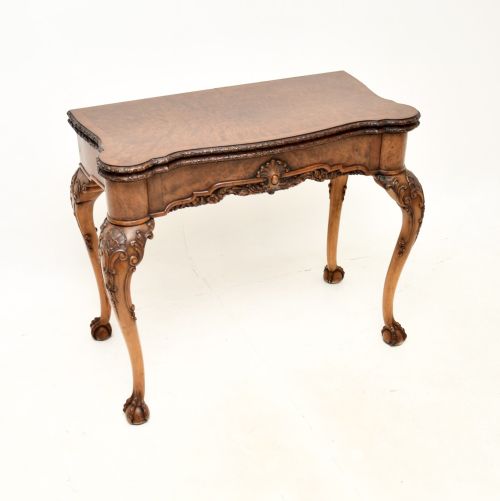
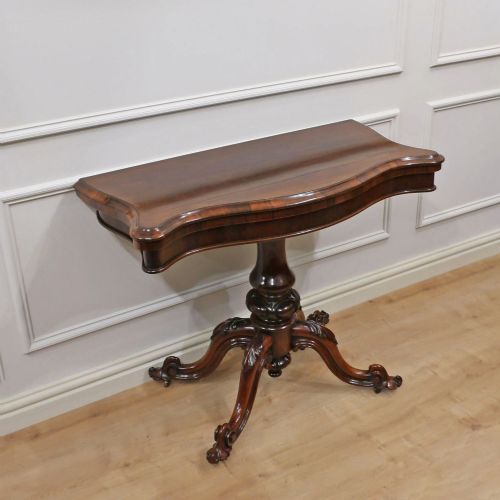
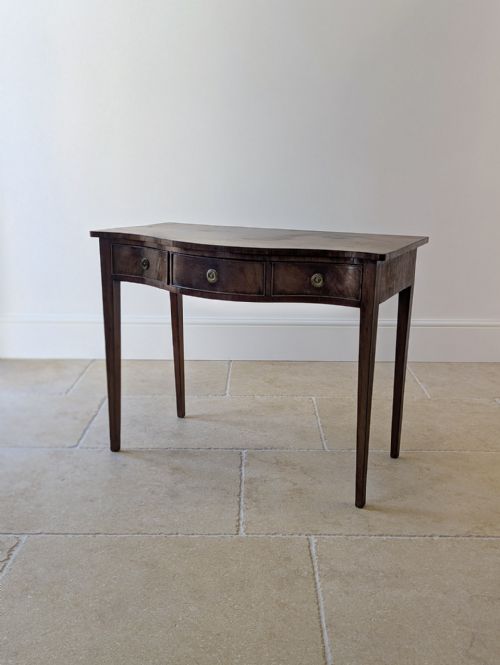
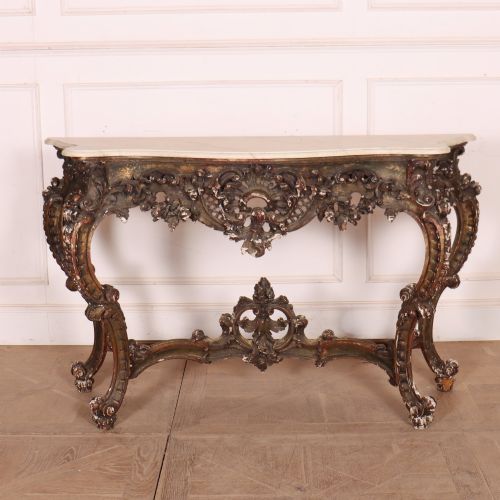
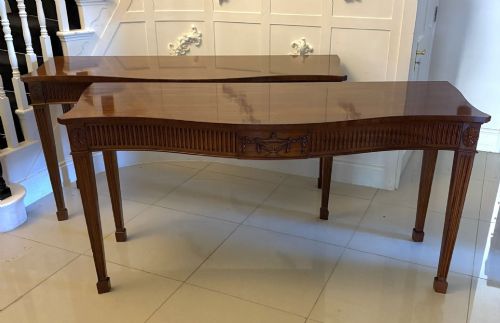
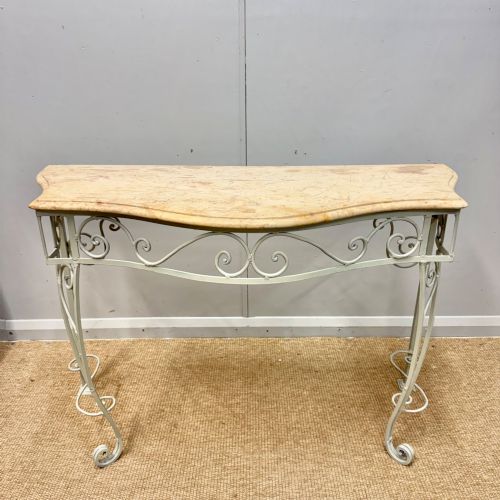
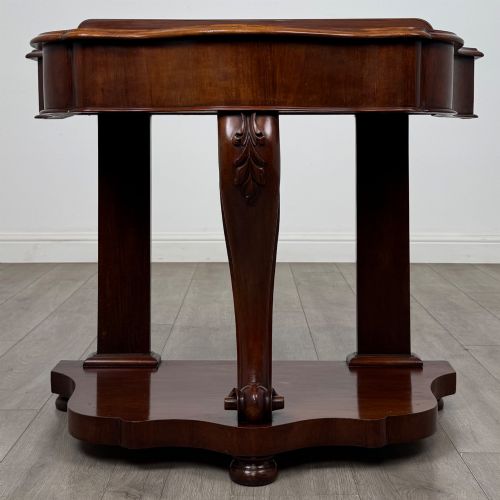
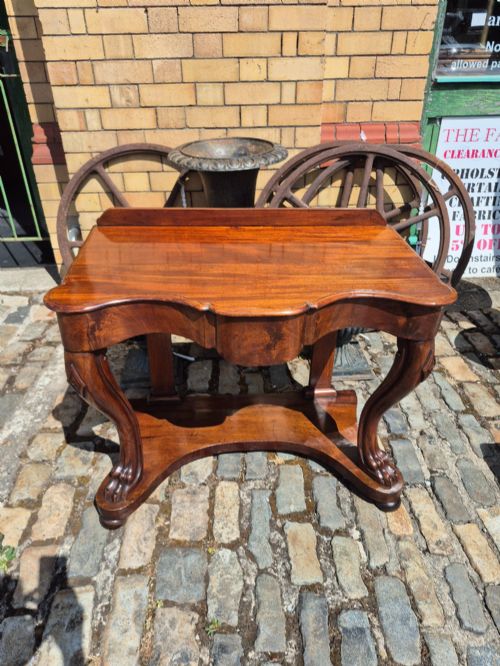
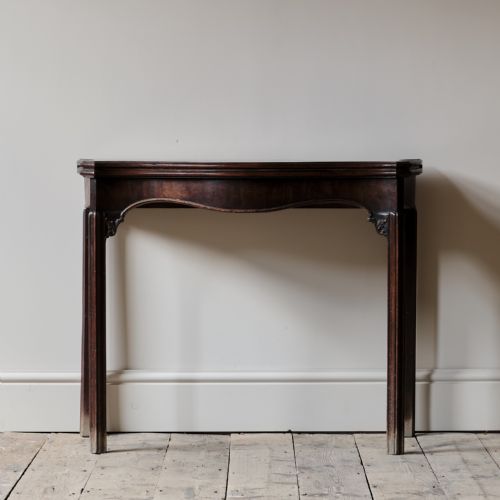
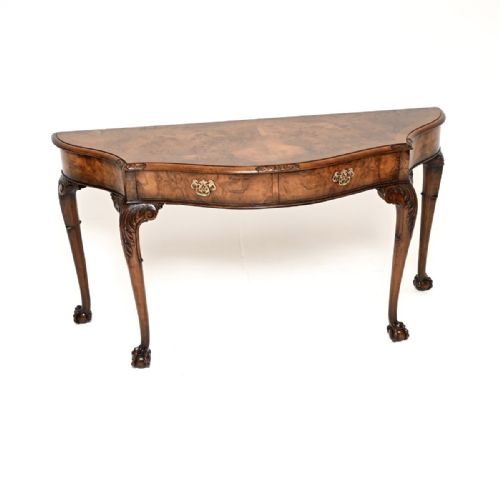
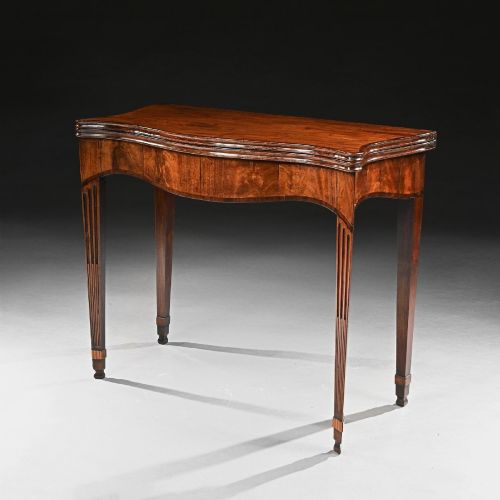
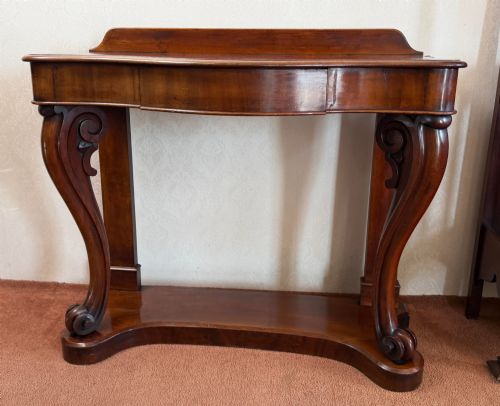
An antique serpentine console presents a front edge curving outward at the centre and inward toward the flanks, creating a fluid silhouette that commands a hallway or reception room.
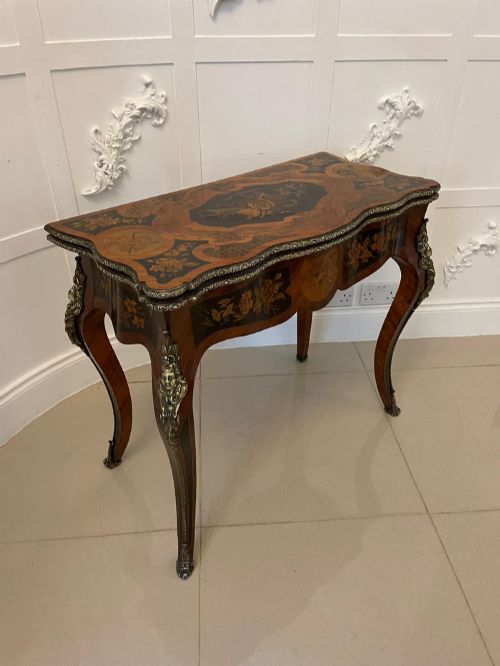
The pieces listed here encompass dedicated console tables, serving tables, and multi-functional folding forms such as card and games tables sharing the serpentine outline.
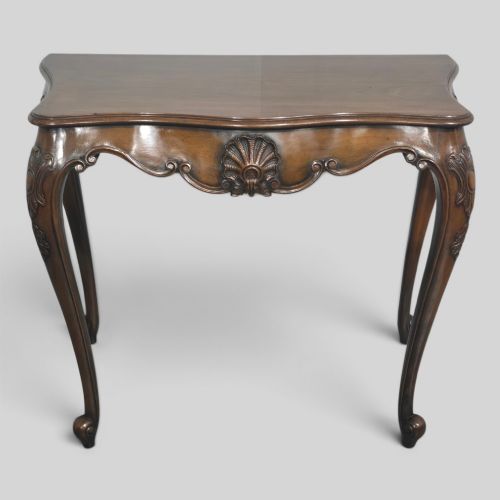
Originating predominantly from Georgian workshops and Victorian drawing rooms, alongside French regional production, these tables balance architectural presence with domestic utility.
Materials and construction methods
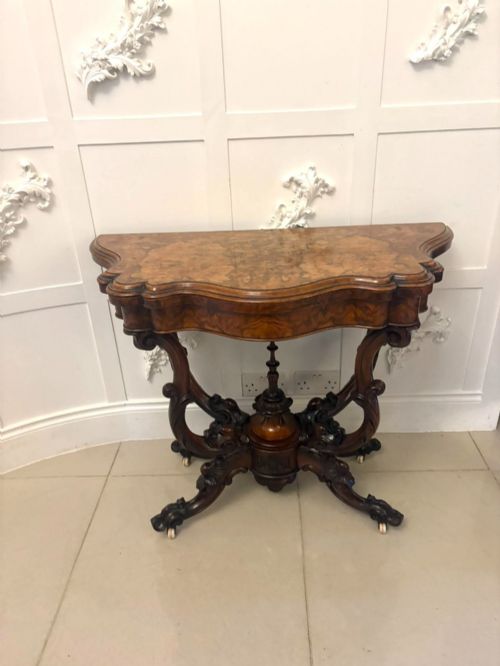
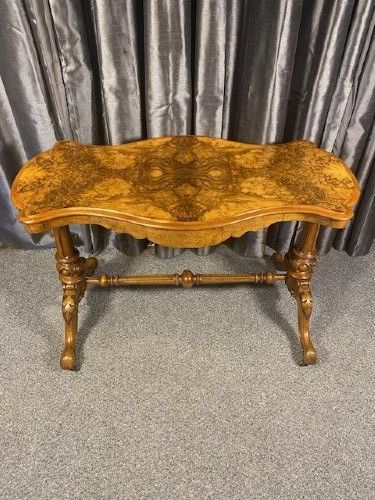
Cabinetmakers constructed these frames using dense hardwoods like mahogany and walnut, frequently applying burr veneers or marquetry inlay to achieve rich surface pattern along the undulating fascia.
Marble slabs and giltwood accents appear across French and Italian examples, requiring specialist stone-cutting and hand-carved mounts of ormolu or wrought iron.
Joinery techniques accommodated the complex curved apron and legs, demanding precise timber selection so the grain followed the rhythmic contour without splitting.
Mahogany and burr walnut dominate the English material record, while marble and giltwood define continental pieces.
Distinctions in craftsmanship
Superior examples display crisp, hand-chiselled carving along the frieze and legs, whereas simpler iterations rely on plain timber faces shaped strictly by the saw.
The integrity of the timber movement and the depth of the original patina separate master-carved George III and Victorian pieces from later revival items.
Finer tables integrate harmonious cross-banding and symmetrical veneer matching that respects the challenging serpentine geometry.
The Antique Serpentine Console Glossary
- Serpentine
- A furniture front characterised by a double-curved line curving outward in the middle and inward at the sides. This contour demands advanced woodworking skill.
- Console
- A table designed to stand against a wall, frequently supported by wall brackets or distinct front legs. It provides display space in reception rooms.
- Ormolu
- Gilded bronze mounts applied to furniture edges and legs. This technique elevates French cabinetwork.
- Marquetry
- Inlay work using various coloured woods to form decorative patterns. It decorates the top surfaces of card tables.
- Patina
- The surface sheen developed through age, handling, and polishing. It indicates authentic period wear.
Antique Serpentine Console: Frequently Asked Questions
Where should I place a serpentine console?
These tables suit narrow entrance halls or reception rooms where their curved outline softens rigid architectural lines.
Because many examples feature shallow depths, they occupy minimal floor space while offering a distinct surface for lamps or decorative objects.
How do I identify a Georgian console?
Georgian versions typically employ solid mahogany with hand-carved neoclassical details and possess a dry, deep-burnished finish.
Later Victorian and Edwardian interpretations often introduce burr walnut veneers, marquetry, or more elaborate revival styling.
Are these tables sturdy enough for daily use?
Most period consoles utilise robust hardwood frames designed to carry heavy items like marble slabs or bronze ornaments.
Folding card table variants require careful handling at the hinges when opened for games or writing.
What is the difference between a console and a side table?
Console tables traditionally anchor against a wall and sometimes rely on architectural support, whereas side tables stand independently on four legs.
In modern usage, the terms frequently overlap, particularly among tables shaped with a curved front.