



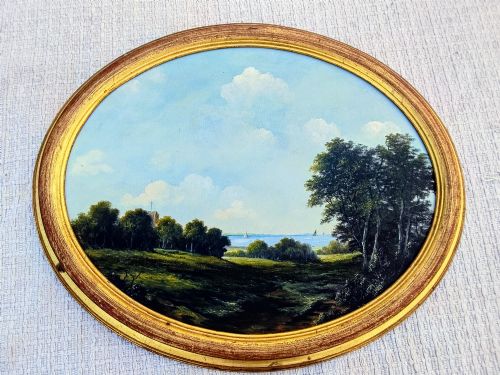
Antique Seascape Wall Art
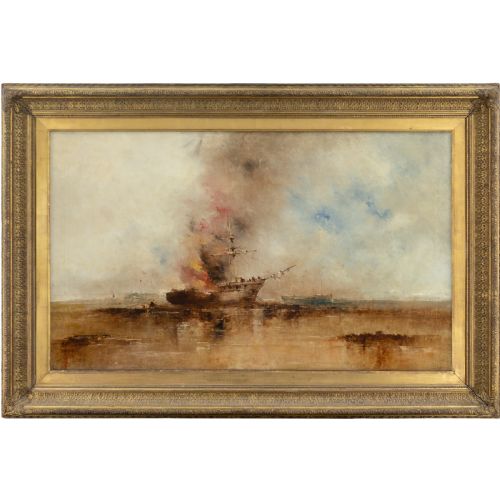
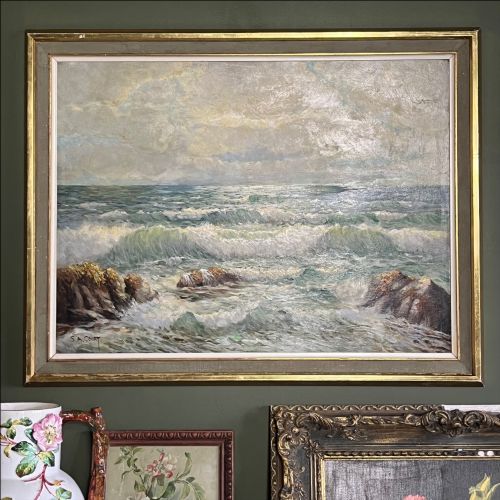
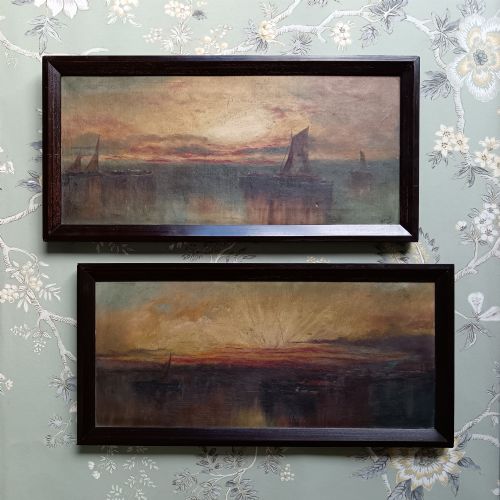
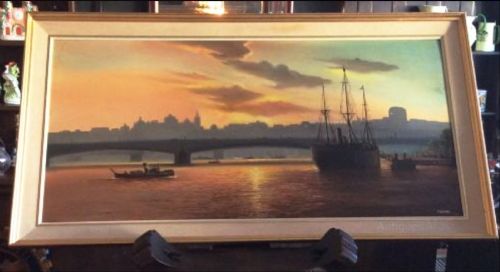
Antique seascape wall art brings coastal water and marine shipping onto the wall through nineteenth-century oils and watercolours.
Antique Seascape Wall Art
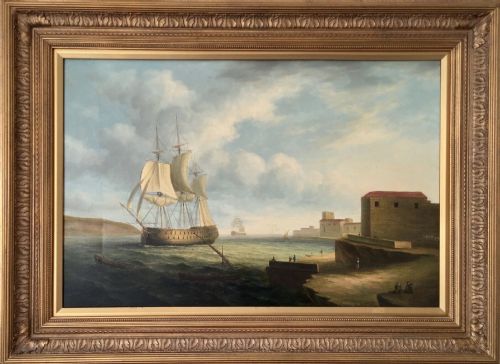
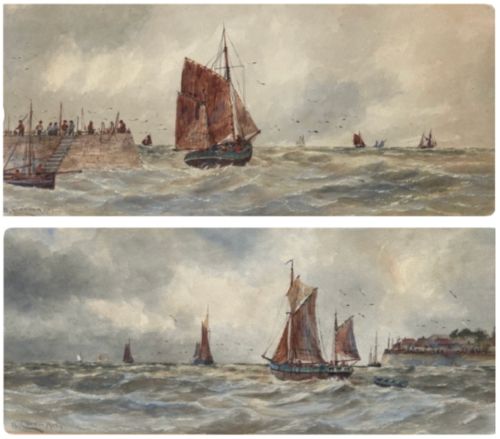
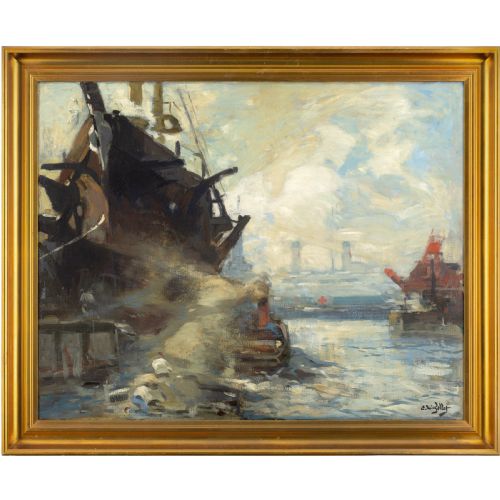
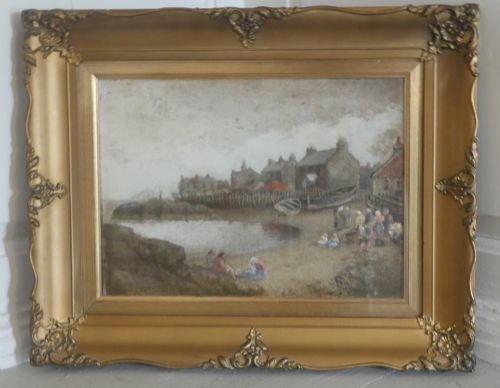
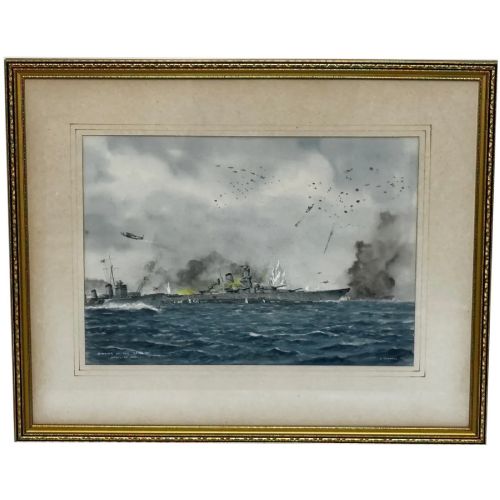
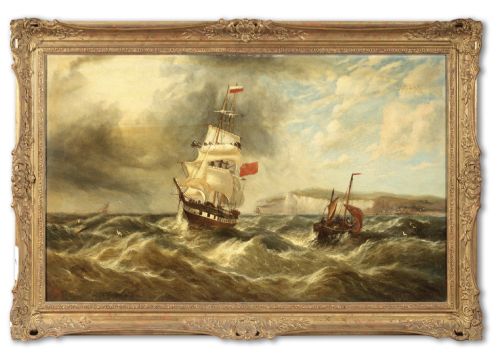
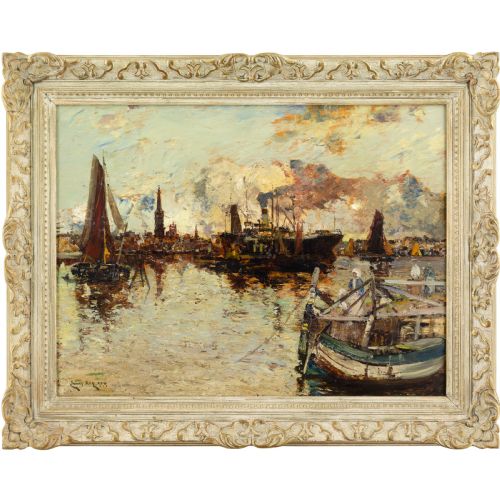
Antique seascape wall art gathers maritime paintings and watercolours depicting coastal views, harbour scenes and ships at sea. These works span nineteenth-century Victorian pieces, Edwardian examples and early twentieth-century British impressionism.
The most common formats on this page are framed oil paintings on canvas or panel alongside delicate watercolour paintings on paper. Subjects range from tranquil Cornish fishing ports to dramatic storms and warships in heavy seas.
Materials and construction methods
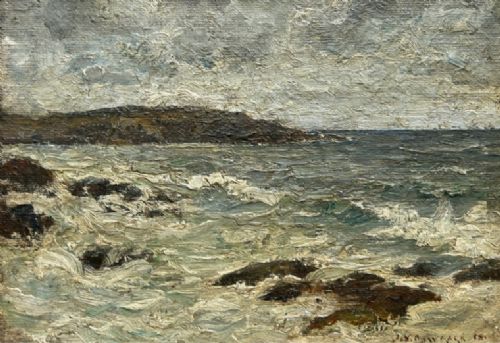
Painters utilised oil on canvas, oil on panel or watercolour on paper, frequently framing the finished artwork in gilt wood moulding. Pigments were applied with traditional brushes or built up in textured impasto to capture the movement of waves and clouds.
Supports varied from stretched linen canvas to paper boards and wooden panels, protected beneath glass in the case of watercolours or left open for oil formulations.
Antique Seascape Wall Art Retail Price Guide 2026
Typical asking prices for seascape wall art among the pieces listed under this phrase on Sellingantiques today, from the lower quarter to the upper quarter. They describe what is for sale here now, not the wider market.
Listings feature works from the nineteenth century through the 1960s, employing oil on canvas, watercolour, and gouache.
Distinctions in quality and execution
Quality rests upon the artist's ability to render light, atmosphere and the correct rigging of vessels rather than simply the scale of the canvas. Finer works display confident brushwork that suggests water and wind convincingly.
The sensitivity of the palette and the preservation of the original pigment without heavy restoration dictate the standing of an individual painting.
James Hardy·James Orrock·William Cannon·Eugène-Louis Gillot·William McAlpine·B. Nash·Edward Mills·William Banks Fortescue·John Rose Miles·James Kay·William Broome·Bernard Gribble·Bonaventura Peeters·F. Corpuz·Francis Moltino·Bernard Benedict Hemy·Thomas Creswick·Willem Bos·Cecil Allan Mould·John Wilson Carmichael·Thomas Hodgson Liddell·William Henry Williamson·Nicholas Condy·William Matthison
The Antique Seascape Wall Art Glossary
- Impasto
- Paint applied thickly to a canvas so that it stands proud of the surface. This technique adds tactile dimension to waves and foaming water.
- Gilt Wood
- Timber framing coated in a thin layer of gold leaf or metallic gilt finish. These frames often accompany Victorian marine oils.
- Watercolour
- Pigments suspended in a water-based, translucent solution applied to paper. It demands precise brushwork as errors cannot easily be painted over.
- Panel
- A flat piece of wood used as a rigid painting support instead of stretched canvas. Artists often utilised panels for smaller harbour views.
Antique Seascape Wall Art: Frequently Asked Questions
How do I date an antique seascape?
Dating relies on the style of clothing, the design of the vessels depicted, and the framing materials. Victorian works often feature heavy gilt mouldings and specific rigging types.
Signatures, artist registry dates, and canvas stamps on the reverse provide further chronological markers for verification.
Where should I hang a marine painting?
These works suit dining rooms, studies, or hallways where natural light can illuminate the brushwork. Avoid placing oil paintings in direct sunlight to protect the pigments.
Keep them away from damp exterior walls to prevent mould growth on canvas or paper supports.
What is the difference between oils and watercolours here?
Oils use thick pigments bound in oil on canvas or panel, offering deep colours and rich texture. Watercolours utilise translucent washes on paper and require protective glass framing.
Oils generally handle turbulent storm scenes with heavier impact, while watercolours excel at bright beach views.