


British Impressionist Landscape Artwork
British impressionist landscape artwork captures light and atmosphere across rural scenes and coastal views, offering collectors a direct window into twentieth-century painting traditions.
British Impressionist Landscape Artwork
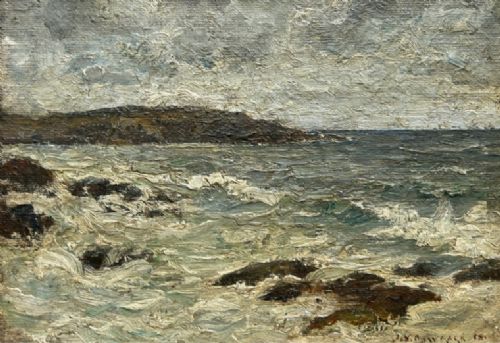
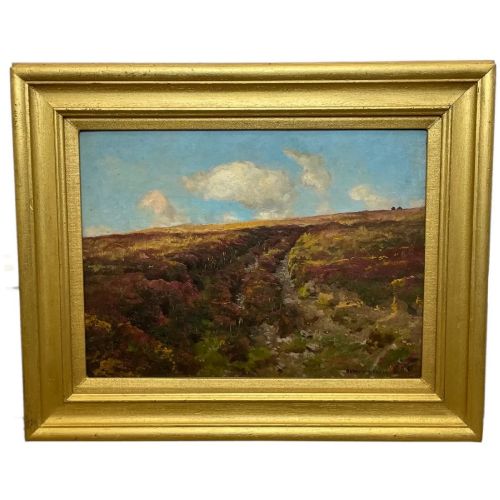
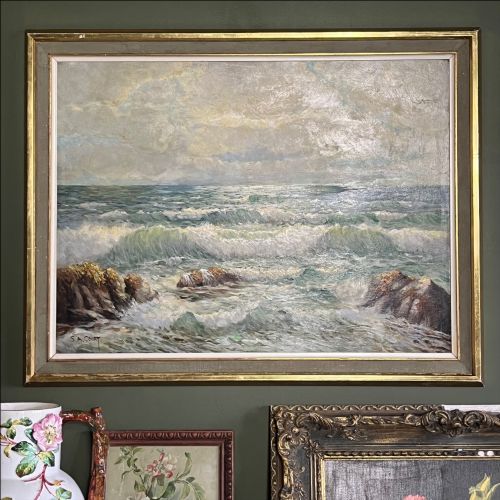
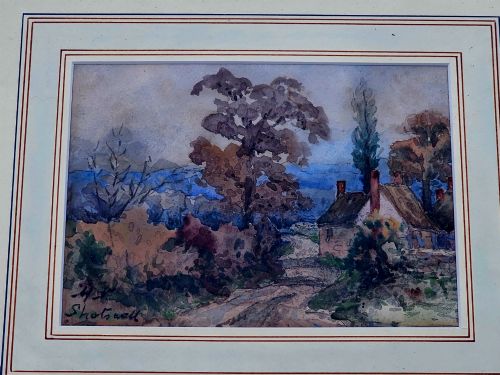
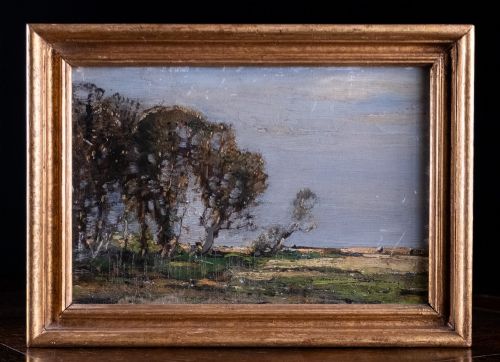
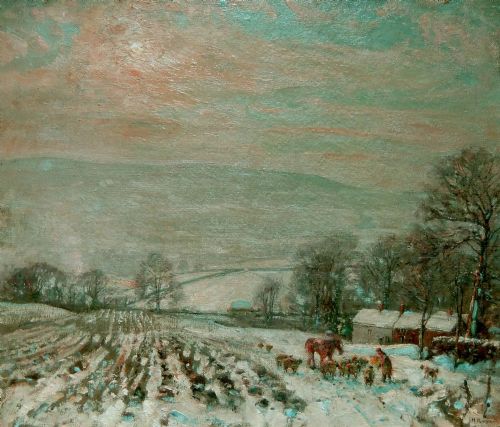
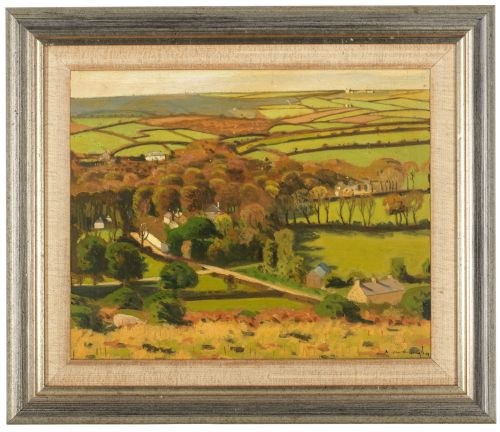
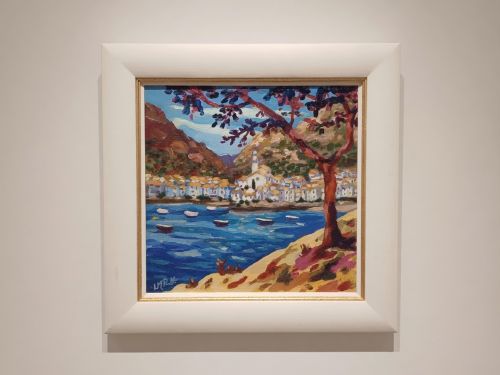
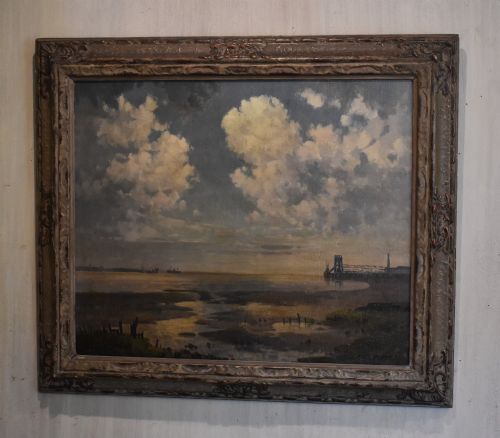
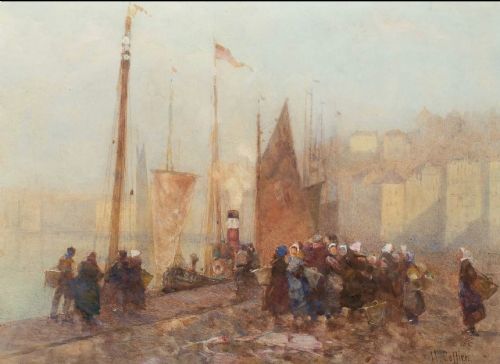
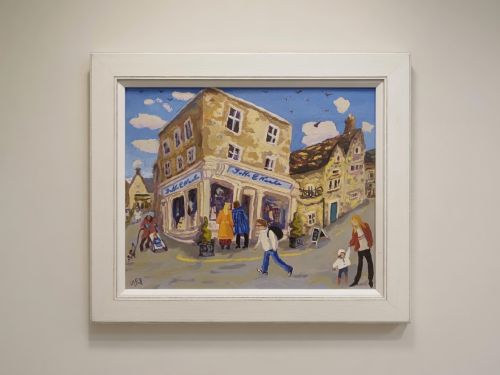
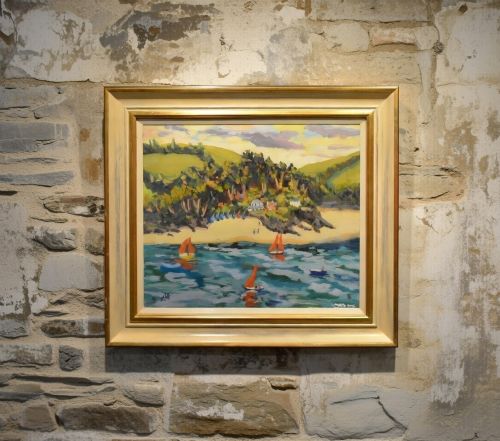
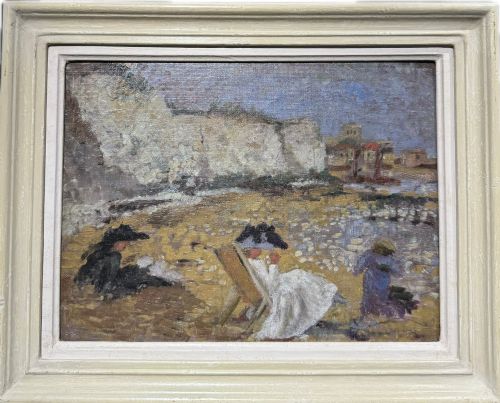
British impressionist landscape artwork encompasses oil paintings, watercolours, and pastels created predominantly during the late nineteenth and early twentieth centuries. These pieces record rural vistas, coastal harbours, and market towns through expressive brushwork and a focus on natural light.
The works on this page frequently originate from regional schools and coastal artist colonies such as St Ives, reflecting both domestic scenery and Mediterranean travels. Oil on canvas and wood panel form the core of the selection, accompanied by delicate works on paper.
How they were made
Artists applied oil paint and watercolour onto canvas, wood panels, and paper, frequently working en plein air to capture immediate atmospheric conditions. Textured impasto marks and visible brushstrokes define the surface of the oil paintings, distinguishing them from traditional academic finishes.
Support materials range from stretched canvas and wooden boards to heavy paper and card, matched with traditional gilt or wooden frames that complement the painting style.
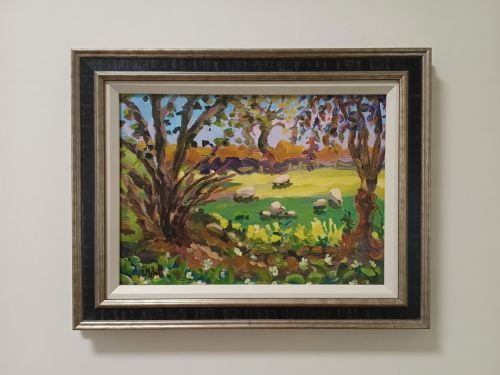
Several canvases record quiet encounters with roaming Romany caravans and sheep resting among wild garlic.
What varies in quality
Quality rests upon the confidence of the brushwork, the handling of light, and the compositional strength of the individual scene. Works that demonstrate a sure command of colour harmony and atmospheric depth stand apart from more formulaic topographical views.
The preservation of the original surface and the integrity of the support material also contribute to the standing of a piece, alongside the documentary value of identified locations.
Clifford Hanney·Arthur Wardle·Herbert Royle·Robert Morson Hughes·Alfred Wolmark
The British Impressionist Landscape Artwork Glossary
- Impasto
- Paint applied thickly to a canvas or panel, standing out in relief from the plane and giving a tactile quality to the surface. This technique allows the artist to capture the physical texture of light and shadow.
- En plein air
- The practice of painting outdoors directly from the subject, allowing the artist to record transient effects of natural light. This method is central to impressionist approaches.
- Panel
- A rigid support for a painting, commonly made of wood or card rather than woven fabric. Panels provide a firm surface that suits direct, expressive brushwork.
- Watercolour
- A paint consisting of pigment suspended in a water-based solution, typically applied to paper. It relies on the white of the paper to provide luminosity and transparent washes of colour.
- Provenance
- The documented history of ownership of a work of art, tracing its path from the artist's studio to the present. Clear provenance adds historical context and authenticity to a piece.
British Impressionist Landscape Artwork: Frequently Asked Questions
What defines British impressionism?
British impressionism combines the light-capturing techniques of French impressionist movements with traditional British landscape subjects. Painters focused on domestic scenery, coastal towns, and changing weather conditions using rapid, visible brushstrokes.
This approach prioritised mood and atmosphere over strict academic detail, resulting in vibrant depictions of everyday rural and maritime life.
Where were these artists working?
Many painters worked in established coastal colonies like St Ives in Cornwall, alongside regional inland locations across Yorkshire, Gloucestershire, and Wales. Others travelled abroad to places like Rome and Venice while retaining a distinctively British sensibility.
Working en plein air brought artists directly into the countryside and seaside villages to record local topography.
How should I care for these paintings?
Keep oil and watercolour works away from direct sunlight and fluctuating humidity to protect the pigments and support materials. Canvas and wood panel paintings benefit from stable indoor environments without extreme temperature changes.
Glazed works on paper require UV-filtering glass to prevent fading and discolouration over time.
How do I date an antique landscape?
Dating relies on stylistic evidence, artist biographical dates, framing materials, and inscriptions left on the reverse of the canvas or panel. Many works bear signatures or exhibition labels that pinpoint their period of creation.
Twentieth-century pieces frequently display looser brushwork and modern colour palettes compared to Victorian academic works.