

Framed Rural Landscape Artwork
Framed rural landscape artwork brings the quiet fields, cottages and farmyards of the nineteenth and twentieth centuries directly to your walls.
Framed Rural Landscape Artwork
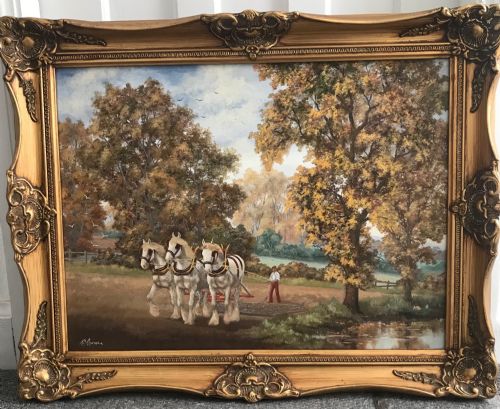
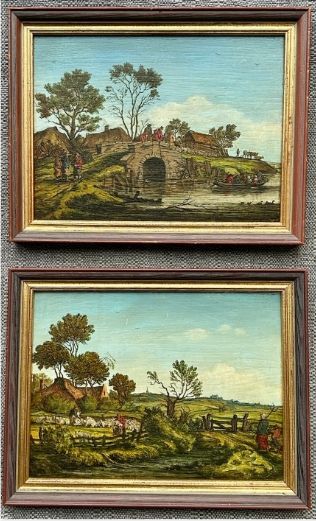
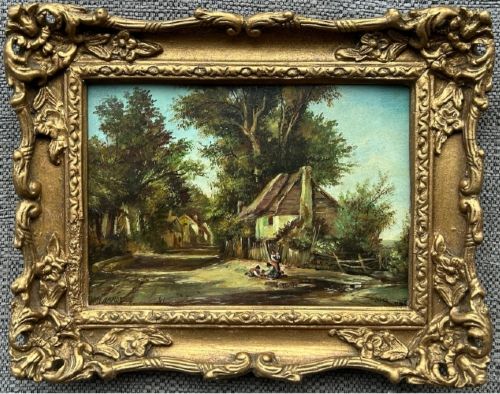
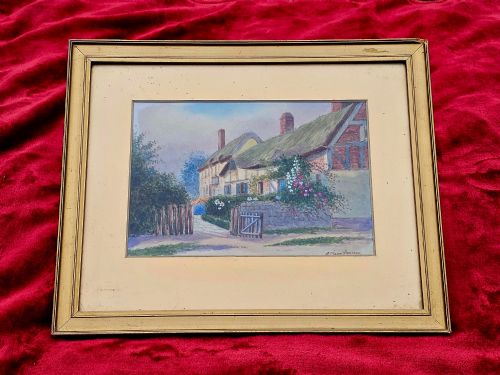
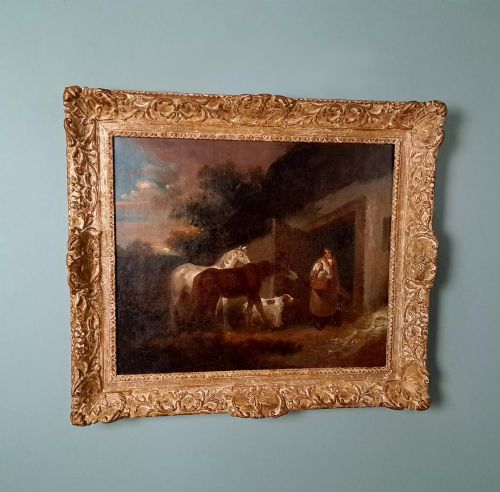
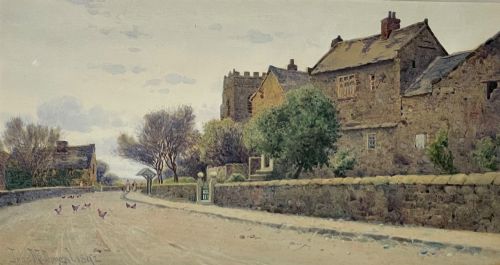
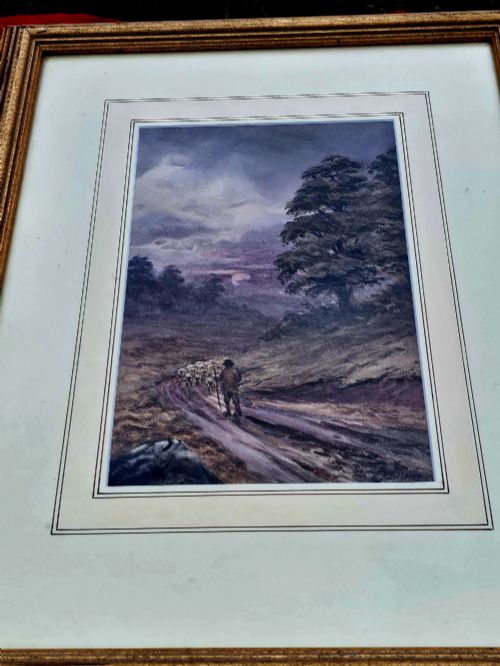
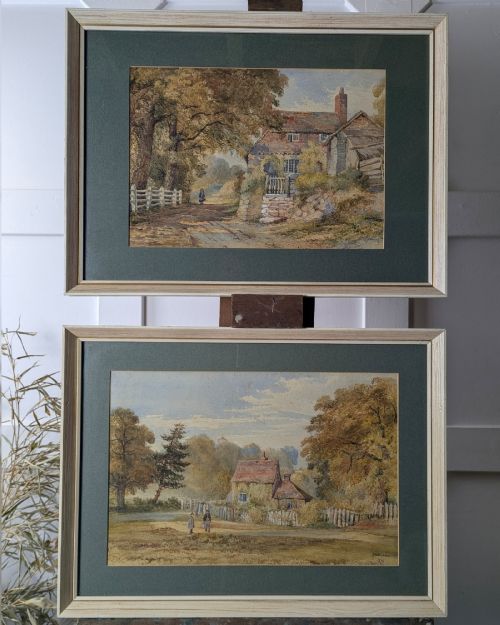
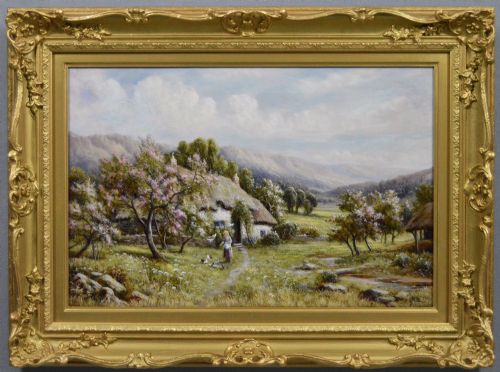
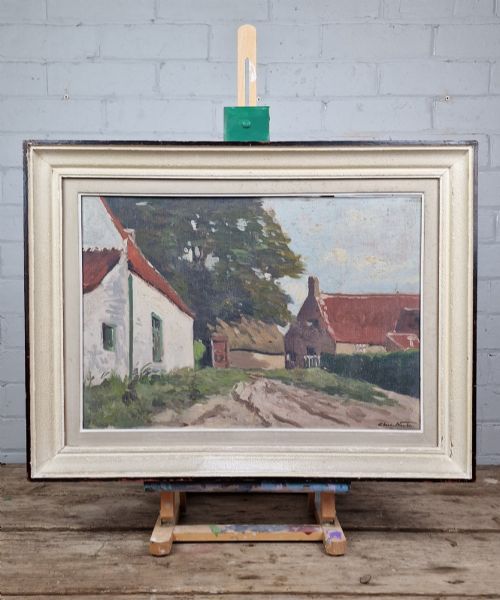
When you search for framed rural landscape artwork, you encounter oil paintings, watercolours, and etchings depicting country scenes, farms, and villages. The pieces span from the nineteenth century through the Edwardian period and into the mid-twentieth century.
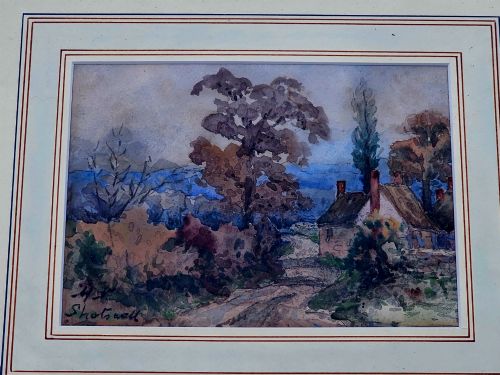
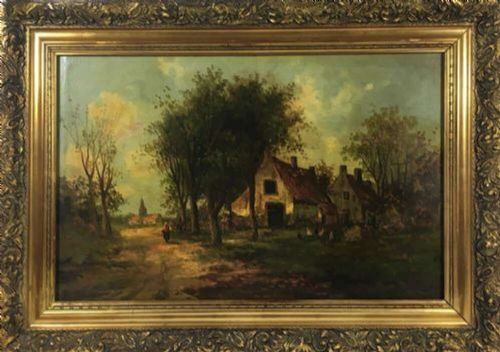
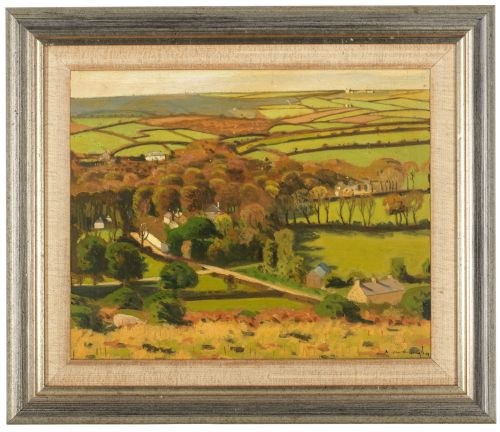
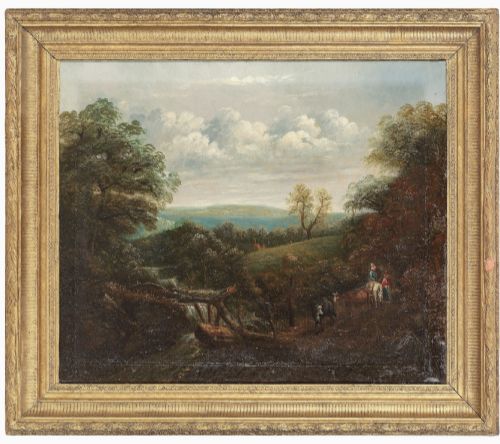
You are most likely to meet works executed in oil on canvas, wood panel, or board, alongside delicate watercolours on paper. Subjects frequently feature agricultural life, cottages, livestock, and harvesters rendered by British and European hands.
Materials and construction
Artists painted using oil and watercolour mediums applied to canvas, wood panels, card, or paper supports. Canvases are stretched over wooden frames, while wood panels and boards provide a rigid base for detailed brushwork.
Framing typically involves wood mouldings, often enhanced with gilt finishes or simple painted surfaces designed to protect the paper or canvas and complement the rural subject.
Listings feature works from the nineteenth and twentieth centuries, utilising oil, watercolour, and etching on wood, canvas, and paper.
Judging quality in rural scenes
Quality rests in the handling of light, atmosphere, and brushwork by the painter. Stronger pieces capture the specific mood of a harvest field, an autumn village, or a riverbank with confident execution rather than mechanical repetition.
The preservation of the pigment, the stability of the wood or canvas support, and the harmony of the period frame contribute to the overall standing of the piece.
W Klombeck·Percy Lancaster·William Howard Hardy·A Marie Parsons·William Joseph Shayer Senior·John McDougal·EJ Letheren·Robert Morson Hughes·David Bates·Robert John Hammond·Charles Houben·Walter Heath Williams·Robert W Macbeth·John Horace Hooper·Raymond Booth·Frederick Walker·Eric Brown·Ernest Higgins Rigg·George Oyston·Frederick James Kerr·John Bond·Umberto Volpato·William Greaves·Miles Birkett Foster·Herman S Melville
The Framed Rural Landscape Artwork Glossary
- Oil on Canvas
- Pigment mixed with drying oil applied to a woven fabric stretched across a wooden frame. This medium allows for rich texture and deep colour layering.
- Watercolour
- Pigment suspended in a water-based solution applied to paper. It provides transparent washes and delicate tonal gradations.
- Wood Panel
- A flat piece of timber used as a rigid painting surface. Artists often utilised panels for smaller, detailed landscape studies.
- Etching
- A printmaking technique where lines are bitten into a metal plate with acid. Ink is then pressed into the grooves and transferred to paper under pressure.
- Gilt Wood
- Wood treated with a thin layer of gold leaf or metallic gilt paint. This finish frequently highlights decorative mouldings on period frames.
Framed Rural Landscape Artwork: Frequently Asked Questions
What periods do these rural landscapes come from?
The works span the nineteenth and twentieth centuries, encompassing Victorian, Edwardian, and mid-century aesthetics.
Creators captured changing rural environments across these decades using traditional painting and watercolour techniques.
How should I hang a framed rural landscape?
Select a wall with balanced lighting to highlight the brushwork and tone of the canvas or paper.
Keep pieces away from direct sunlight and damp conditions to preserve the integrity of the paint and the period frame.
What subjects appear in these countryside artworks?
Common subjects include farmyards, harvest fields, livestock, cottages, and river scenes.
Artists focused on daily agricultural life and natural scenery across Britain and continental Europe.
How do I distinguish watercolours from oil paintings?
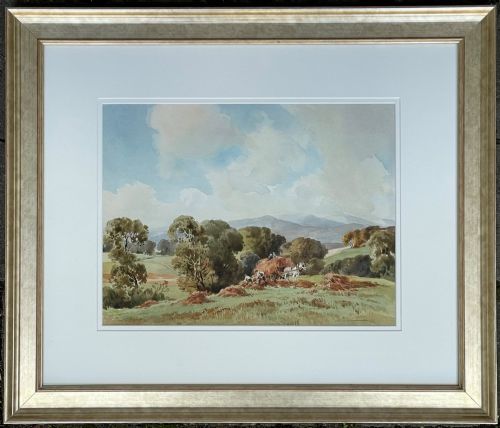
Watercolours feature transparent washes on paper, usually displayed behind protective glass.
Oil paintings display heavier pigment texture on canvas, wood panels, or boards without glass covering.