


Antique Rural Oil Painting
An antique rural oil painting brings the quiet weight of farmsteads, country lanes and distant hills onto a wall.
What They Are
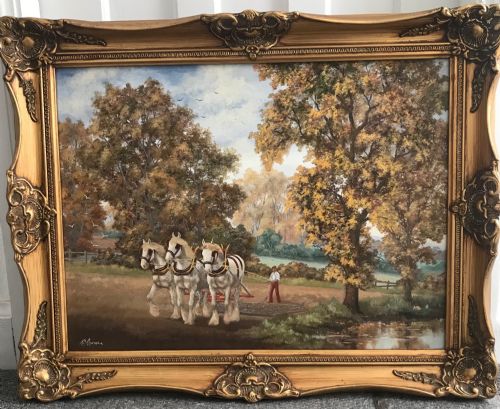
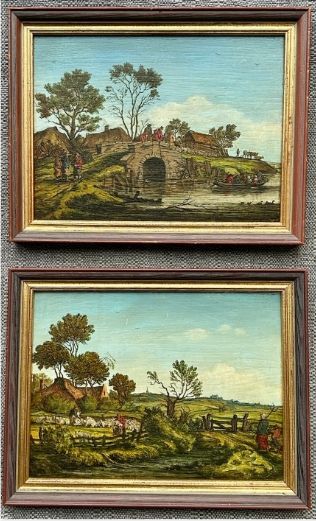
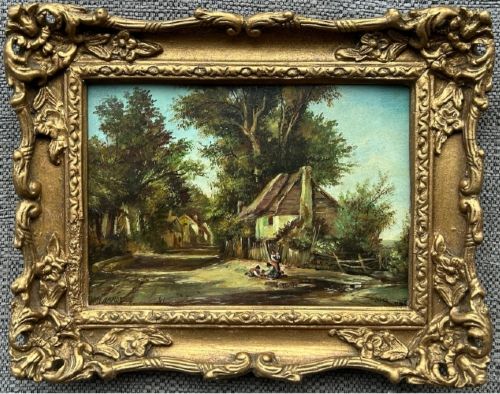
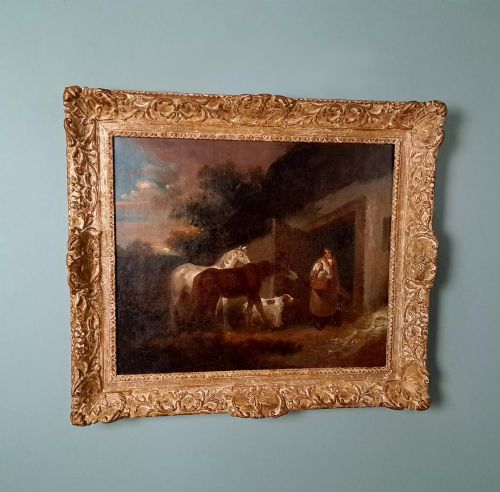
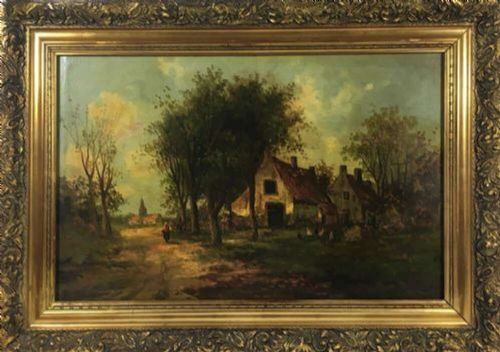
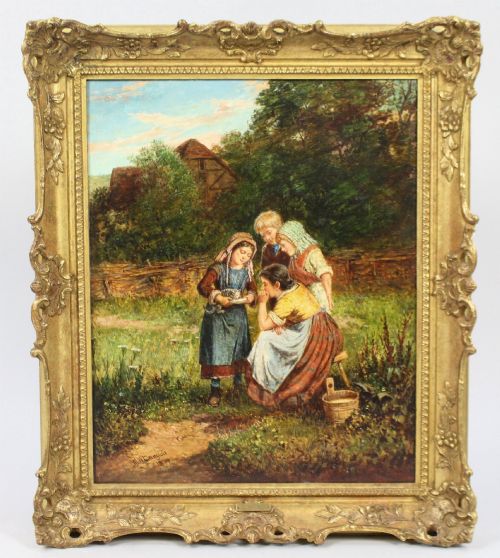
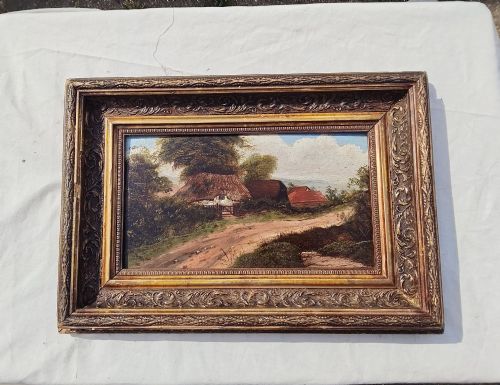
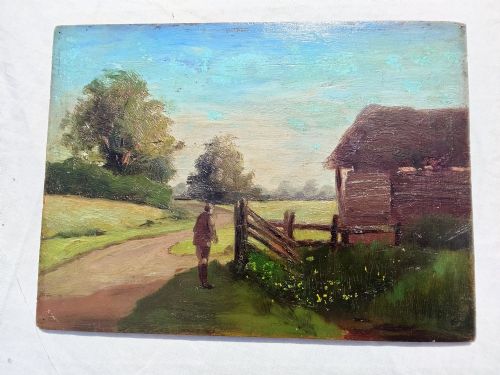
An antique rural oil painting captures agricultural life, country tracks, cottages and farming communities across the nineteenth and twentieth centuries. These works record open fields, livestock and village life through the eyes of artists working in Britain and across Europe.
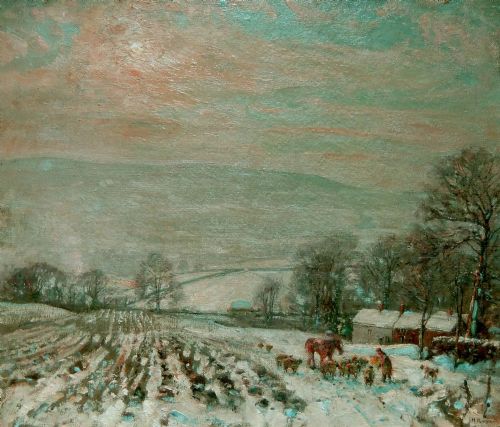
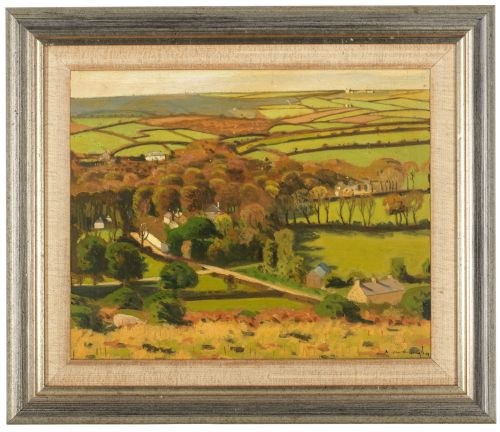
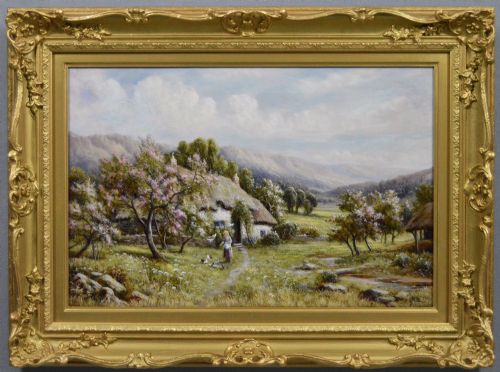
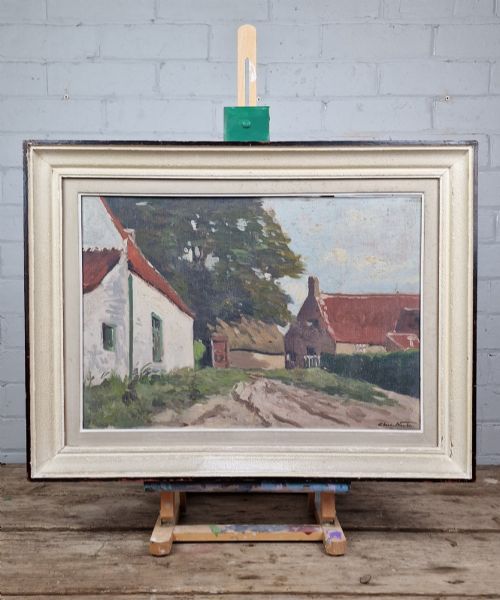
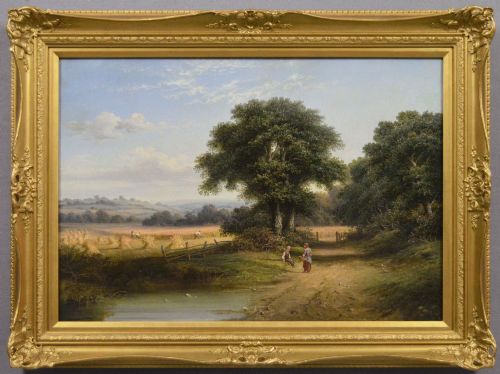
The pieces on this page lean heavily towards British Impressionism, Victorian realism and modern British interpretations of the countryside. A buyer will find canvases depicting Yorkshire vales, harvest scenes and quiet lanes alongside broader pastoral views.
Subjects range from solitary figures by bridges to bustling farmyards with ducks, cattle and thatched cottages. They offer a direct window into rural life before mechanisation altered the landscape permanently.
How They Were Made
These works rely primarily on oil paint applied to stretched canvas, though occasional examples employ wood panels or board as a ground. The pigment is built up in layers, allowing artists to capture shifts in light across fields and water.
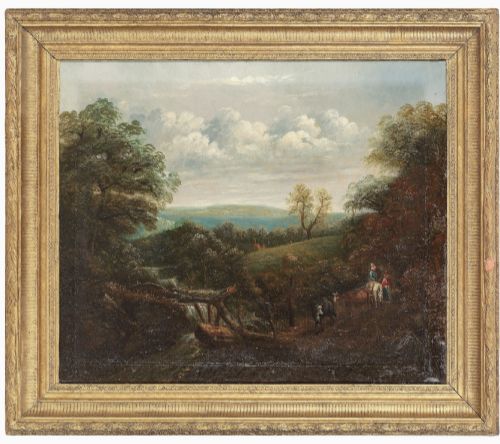
Many paintings sit within their original surrounds of gilt wood and gesso, which provide structural support and frame the composition. The interplay of dense paint texture and carved framing defines the physical object.
Retail Price Guide 2026
Typical UK retail prices for rural oil painting, calculated from the Sellingantiques database of over a million retail prices indexed since 2003. This retail price guide relies exclusively on Sellingantiques data; no external sources or auction records are used, so the figures do not describe the wider market.
Recorded periods span from 1870 to 1950, capturing late Victorian, Edwardian and mid-century rural views.
What Varies in Quality
Quality rests on the sureness of the brushwork and the artist's ability to render light and atmosphere without cluttering the canvas. Stronger paintings handle the weight of skies and the texture of foliage with confident economy.
The integration of the painting with its period frame matters significantly, as original gilt wood mouldings complement the depth of the oils. Finer works show a balanced composition where figures, animals and landscape hold equal pictorial weight.
William Greaves·Frederick William Jackson·Ernest Higgins Rigg·Nora Munro Summers·Joseph Thors·Johannes Philippus Galjaard·Erik Henningsen·James Edward Meadows·Thomas Henry Thomas·David Bates·James Hey Davies·Alfred George Stannard·Dean Wolstenholme·HK Foster·Gustav Vermehren·Carsten Henrichsen·George Farrington Hornibrook·Thorvald Niss·Thomas James Soper·R Percy·C F Watson·FW Hinsley·M Goodman·John Westall
The Antique Rural Oil Painting Glossary
- Canvas
- A heavy woven fabric stretched across a wooden frame to serve as a foundation for oil painting. It provides a slightly flexible surface that holds thick applications of pigment.
- Gesso
- A plaster mix applied to wood or canvas to prepare a smooth surface for painting. It creates a bright white ground that reflects light back through thin layers of oil.
- Gilt Wood
- Wood carved and coated with a thin layer of gold leaf or metallic powder. It forms the decorative border that contains and elevates the artwork.
- Impressionism
- A style focused on capturing the visual impression of a moment, paying close attention to shifting light and colour. It moves away from rigid academic detail towards looser brushwork.
- Pastoral
- A genre of art concerning the rural life of shepherds, farmers and country folk. It idealises or records the simplicity of agricultural landscapes.
Frequently Asked Questions
What periods do these paintings come from?
The available works and historical archive span from the late eighteenth century through the Victorian era and into the mid-twentieth century.
Most examples cluster around the nineteenth and early twentieth centuries, reflecting changing attitudes towards industrialisation and rural nostalgia.
Where were these rural scenes painted?
The subjects are drawn primarily from English and Welsh countryside settings, including Yorkshire vales and country lanes.
Other continental European locations also appear, showing French and Scandinavian farmsteads and rural tracks.
How should I hang an oil painting?
Keep the canvas away from direct sunlight and damp walls to protect the oil paint and underlying support.
Use secure picture hooks rated for the combined weight of the painting and its heavy gilt wood frame.
How do I identify a Victorian rural painting?
Look for characteristic subjects such as thatched cottages, haymaking scenes, farmyard animals and figures in period dress.
Palette choices and framing styles from the period also help distinguish these works from later modern interpretations.