
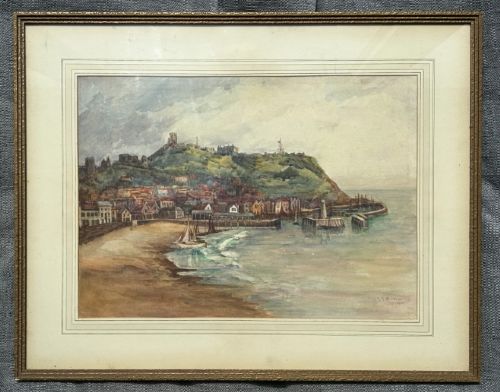


Edwardian Coastal Landscape Artwork
When you search for edwardian coastal landscape artwork, you encounter paintings capturing British maritime life, bustling harbours and quiet shores.
Edwardian Coastal Landscape Artwork
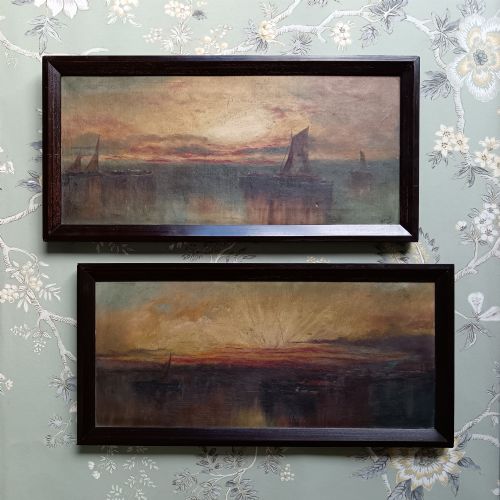
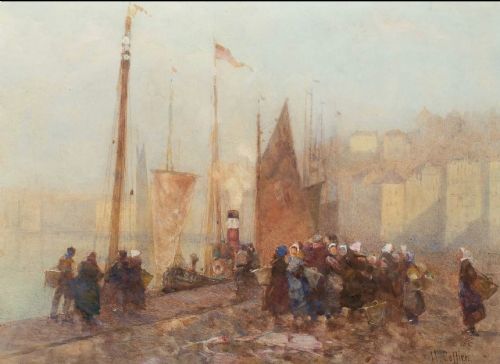
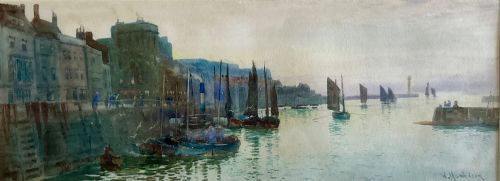
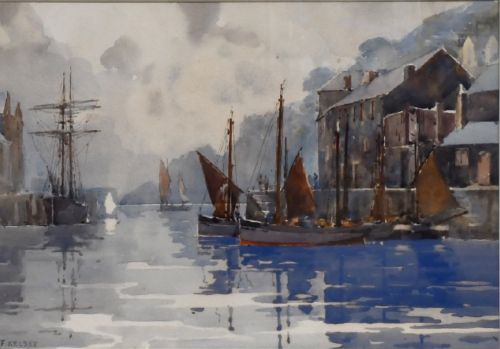
An edwardian coastal landscape artwork captures the maritime topography, fishing fleets and bustling harbours of Britain around the turn of the twentieth century. These works depict specific coastal locations, from Yorkshire fishing ports and Cornish villages to estuaries and broads.
The selections on this page span watercolours and oil paintings created during the Edwardian era, alongside pieces reaching back into the Victorian period and forward into the 1930s and 1940s. Painters recorded daily harbour scenes, boats leaving port, and dramatic coastal weather with direct observation.
Buyers will find both intimate works on paper and larger canvases executed by regional artists and academically trained painters alike. The subjects focus heavily on working harbours, historical docks, and familiar coastal views.
How they were made
Artists utilised watercolour pigment on paper to capture the fluid light and atmospheric conditions of the coast, often working en plein air to record immediate visual impressions. Gouache was frequently added to provide opaque highlights and detail within watercolours.
Oil paint on canvas or wood panels allowed painters to build heavier impasto textures, capturing the rolling movement of choppy seas and the heavy skies above coastal landscapes. These oil paintings rely on supportive wooden stretchers and glass framing to protect the fabric of the canvas.
The application of paint combined traditional brushwork with Impressionist techniques, balancing fine linear draughtsmanship in the architectural elements of harbour walls with looser, energetic strokes in the water and sky.
Listings feature works executed on paper, canvas, and wood using watercolour pigment and oil paint.
What varies in quality
Quality rests upon the artist's handling of light, atmosphere, and spatial depth, separating generic topographical illustration from evocative marine painting. Stronger works demonstrate a confident command of tonal relationships, particularly in capturing shifting coastal weather and water movement.
The preservation of the paper support in watercolours, free from excessive foxing or fading, directly influences the visual impact of the piece. Similarly, oil paintings benefit from stable pigment adhesion and minimal craquelure across the canvas surface.
Hector Caffieri·William Matthison·Frank Kelsey·Alfred George Morgan·Pieter Cornelis Dommersen·Arthur Tucker·Herbert Royle·Tom Clough·Stanley Leader·Fred Waugh·James Watson·George Hamilton Constantine·James Webb·Frank Wood·Leslie Rackham·Sir Herbert Hughes-Stanton·H.E. Tidmarsh·Ernest F. Hill·Frederick Stuart Richardson·Edith E Caswall·Albert Robert Quinton·William Lambert Bell·William Tatton Winter·William Kay Blacklock·John McDougal
The Edwardian Coastal Landscape Artwork Glossary
- Watercolour
- A painting method in which the paints are made of pigments suspended in a water-based solution. This medium allows for transparent washes of colour on paper.
- Oil on Canvas
- A painting technique utilising pigments bound with a drying oil, applied to a stretched woven fabric support. This combination permits rich colour blending and textured brushwork.
- Gouache
- An opaque water-based paint consisting of pigment, water, and a binding agent such as gum. It provides solid, flat areas of colour and sharp highlights in works on paper.
- Marine Art
- Artistic representation of the sea, ships, and coastal views. This genre encompasses historical harbour scenes, shipping vessels, and coastal landscapes.
- Impressionism
- A style of painting emphasising an immediate visual impression of a scene, characterised by relatively small, thin, yet visible brush strokes. It focuses on accurate depiction of light in its changing qualities.
Edwardian Coastal Landscape Artwork: Frequently Asked Questions
What subjects appear in these coastal artworks?
These works feature working harbours, fishing boats, historic coastal villages, and expansive sea views along the British coastline.
Artists frequently documented daily maritime labour, including the return of fishing fleets and hauling catches onto the shore.
How should I frame and display a watercolour?
Watercolours require framing behind glass with acid-free mounts to prevent direct contact between the paper surface and the glazing.
Display these pieces away from direct sunlight to protect the delicate pigments from fading over time.
How do I distinguish between oil and watercolour paintings?
Oil paintings feature a textured, heavier paint layer on canvas or wood panel, often displaying visible brush strokes and a semi-gloss finish.
Watercolours present a flat, translucent finish on paper, allowing the texture of the paper grain to remain visible beneath the pigments.
Where were most of these coastal scenes painted?
Many scenes record specific locations along the Yorkshire and Cornish coasts, including Whitby, St Ives, and Polperro.
Painters also captured estuaries and coastal harbours across Hampshire, Norfolk, and overseas destinations.