



Antique Scottish Sideboard
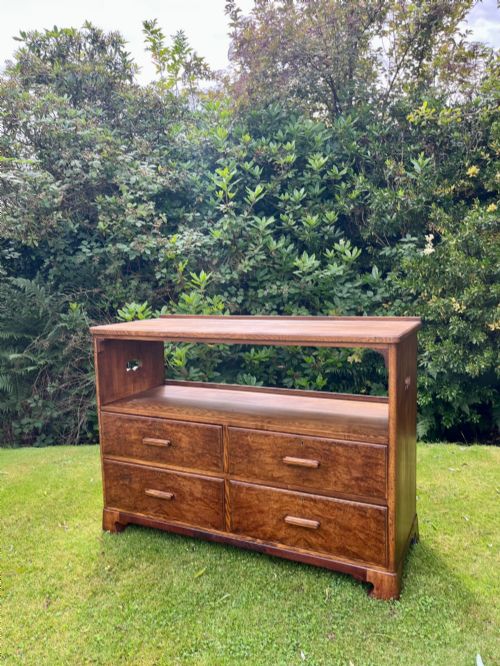
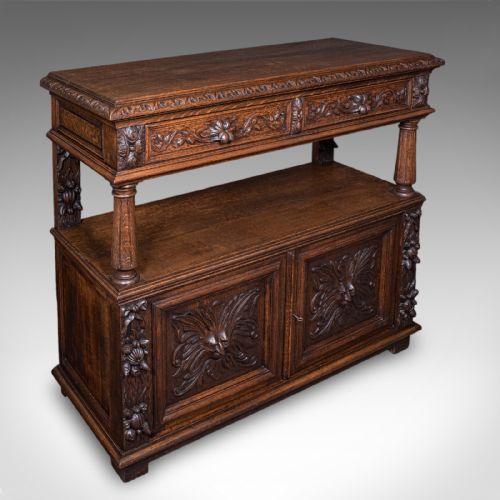
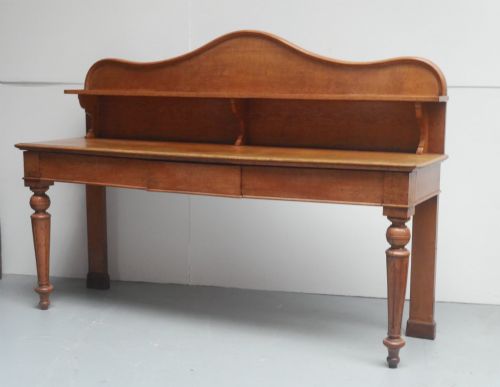
An antique scottish sideboard is a heavy, timber-built dining room server that brings practical storage and serious presence to a room.
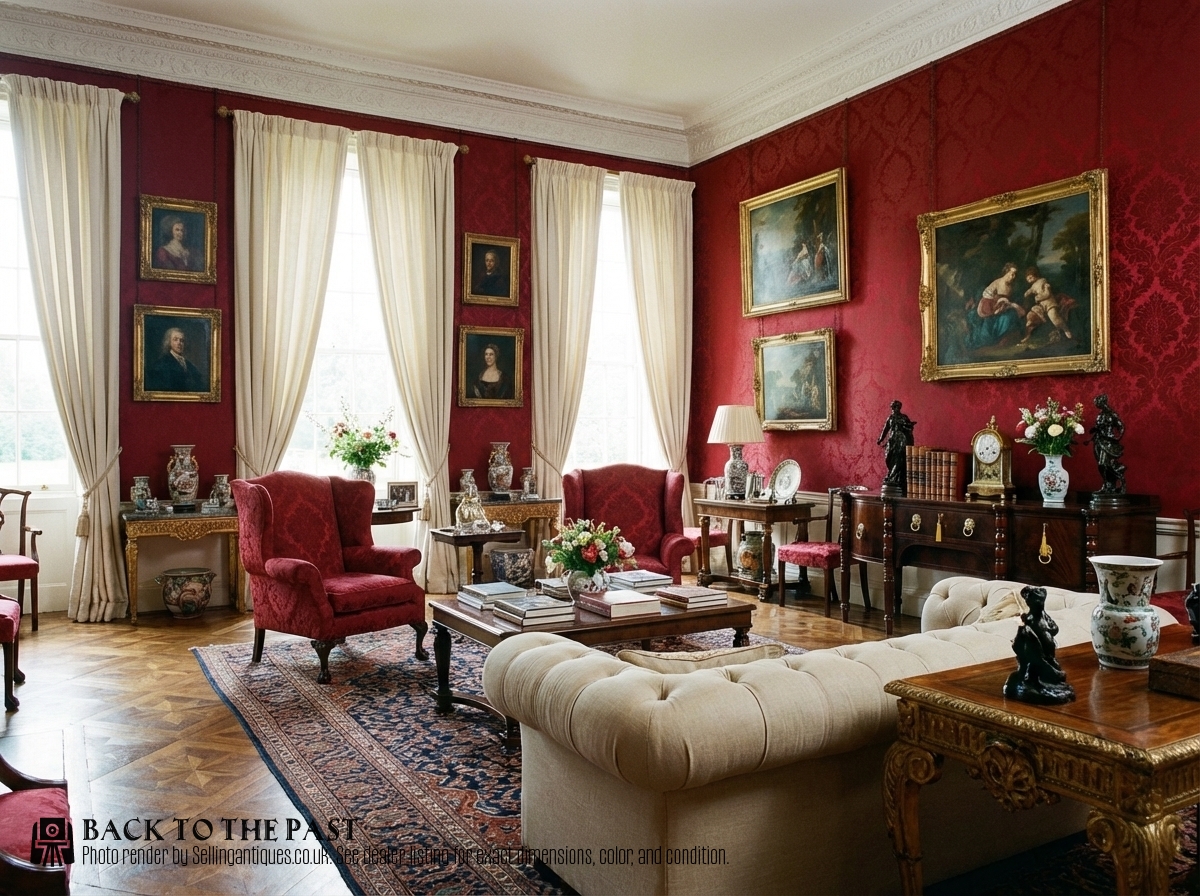
Antique Scottish Sideboard
When searching for an antique scottish sideboard, you encounter substantial dining furniture spanning the Georgian, Victorian, and later periods.
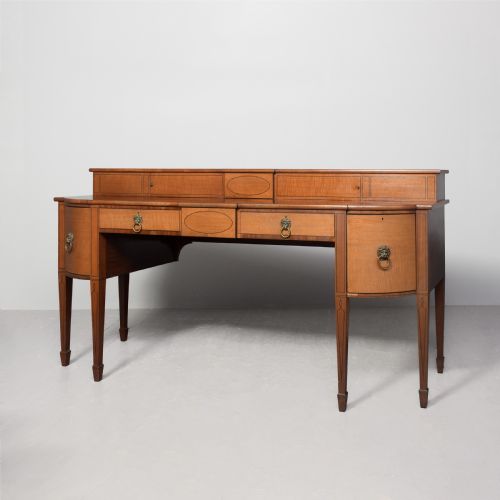
The material record includes standard mahogany alongside flame mahogany veneer, oak, pine, elm, and rosewood, often taking the form of stage-back sideboards, serving tables, and dresser bases.
Earlier Georgian examples favour refined timbers and bowfront profiles, while Victorian pieces lean towards large oak buffets and pine kitchen dressers.
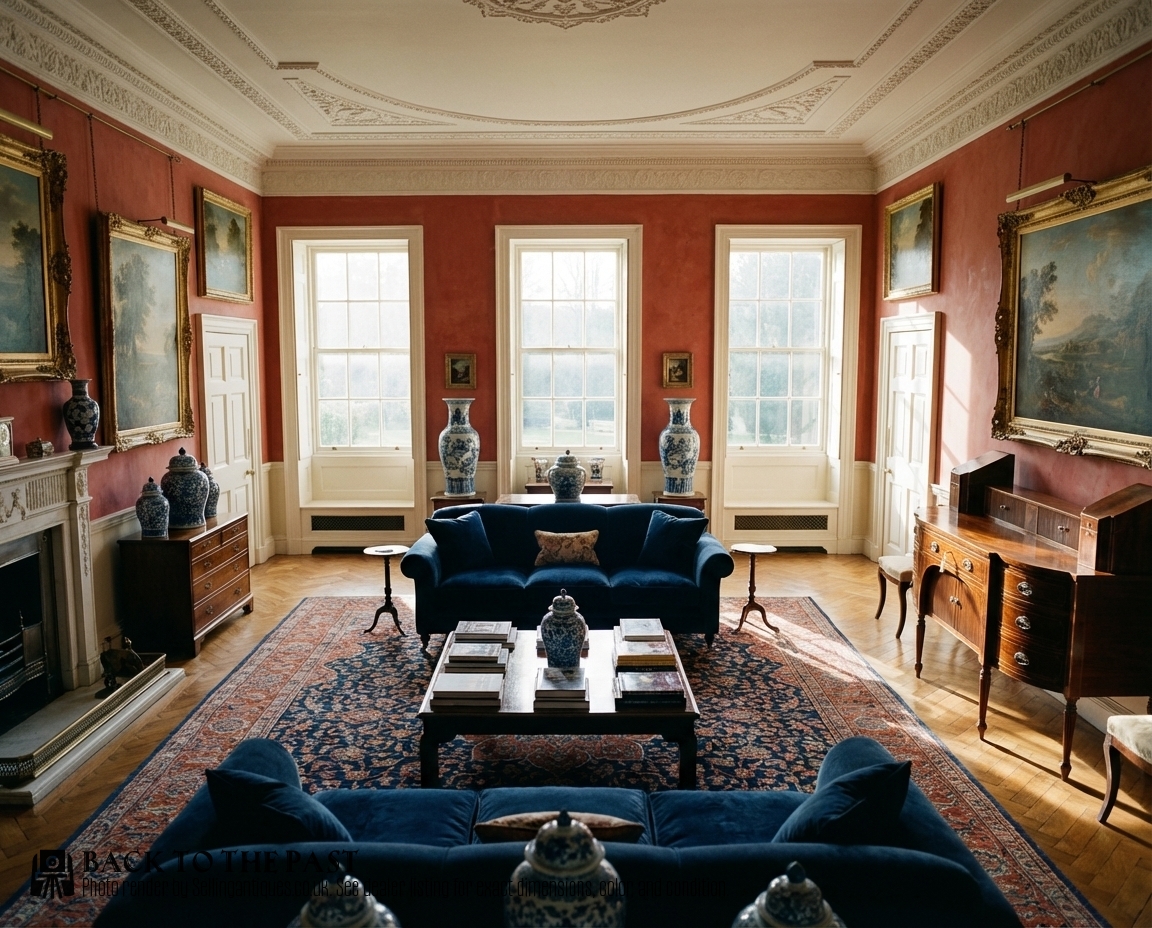
Construction and materials
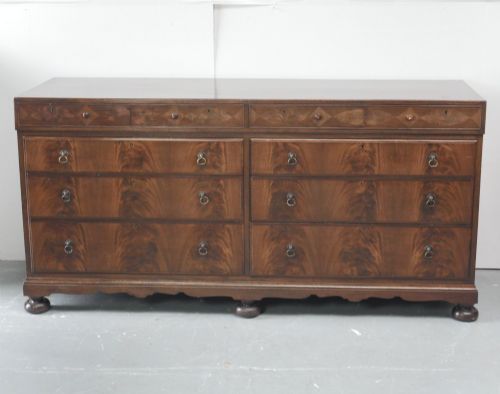
Cabinet makers built these pieces using dense hardwoods like mahogany and oak, frequently applying flame mahogany veneer to primary surfaces for visual depth.
Secondary construction relied on native pines and softer woods for drawer linings and internal framing, while brass hardware and boxwood inlay provided functional and decorative detail.
Antique Scottish Sideboard Retail Price Guide 2026
Typical asking prices for scottish sideboard among the pieces listed under this phrase on Sellingantiques today, from the lower quarter to the upper quarter. They describe what is for sale here now, not the wider market.
Listings feature woods ranging from mahogany and oak to elm, rosewood, and pine.
Judging build and material quality
Quality rests on the selection of timber grain, particularly the choice of figured mahogany or well-matched oak, and the crispness of any inlaid boxwood detailing.
The structural integrity of the stage-back superstructure, the smoothness of deep drawer action, and the retention of original brass handles separate ordinary utility pieces from finer cabinet work.
Whytock & Reid·James Mein of Kelso·James Simpson & Sons
The Antique Scottish Sideboard Glossary
- Stage-back
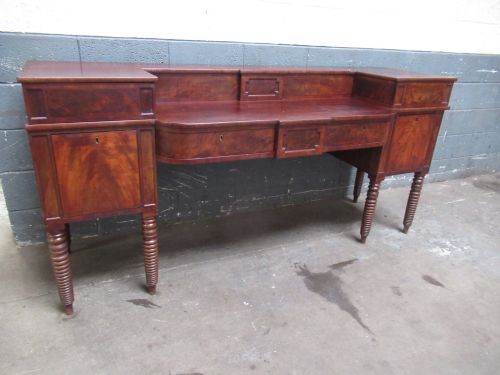
- A raised tier at the rear of a sideboard top, often fitted with shelves or compartments for displaying plate.
- Bowfront
- A convex, curved front profile popular on late eighteenth and early nineteenth-century serving furniture.
- Potboard
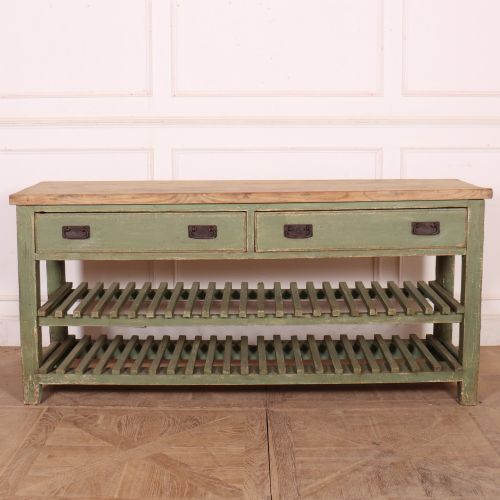
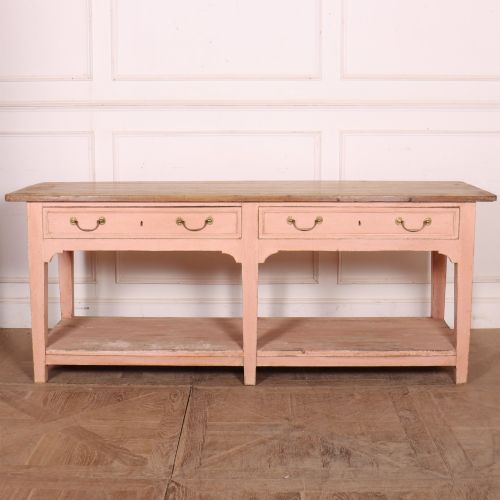
- An open slatted lower shelf on a dresser base, traditionally used for storing pots and heavy kitchenware.
- Scumbled
- A paint-finishing technique applied to pine or softer woods to imitate the grain of more expensive hardwoods.
- Flame mahogany
- Timber cut from the fork of the mahogany tree to produce a dramatic, flickering flame-like grain pattern.
Antique Scottish Sideboard: Frequently Asked Questions
How do I spot a Georgian sideboard?
Georgian pieces typically exhibit clean architectural lines, straight or bowfront mahogany structures, and understated brass fittings.
They often feature stage-backs and fine boxwood stringing rather than the heavy carved ornamentation seen on later Victorian examples.
Where were these sideboards used?
These pieces served primarily in the dining rooms of large houses and country residences to store cutlery, linen, and serving dishes.
Simpler pine and oak variants functioned daily in farmhouse kitchens and dairies for food preparation and storage.
What is a stage-back sideboard?
A stage-back sideboard includes an elevated wooden structure built onto the rear surface of the main serving top.
This addition provided extra display space for platters and decorative ceramics in the dining room.
Are these pieces made of solid mahogany?
Many fine examples utilise solid mahogany for structural elements while applying highly figured flame mahogany veneer to the drawer fronts and doors.
This technique created striking visual patterns across the principal surfaces without compromising the stability of the carcass.