


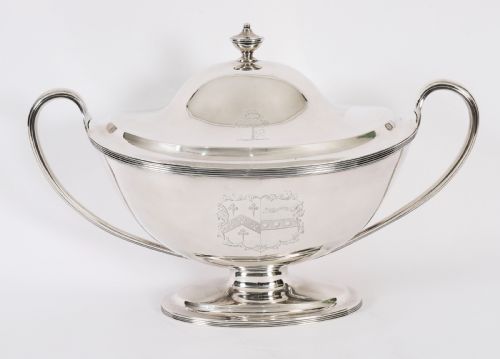


Antique Sauce Tureen
An antique sauce tureen brings formal nineteenth century dining to the modern table, offering a covered vessel designed for gravies and sauces.
Antique Sauce Tureen
An antique sauce tureen is a small covered vessel designed to hold sauces and gravies at the dining table, often accompanied by a matching stand and ladle.
The pieces found here span the eighteenth and nineteenth centuries, taking forms from Georgian silver to Victorian earthenware and porcelain.
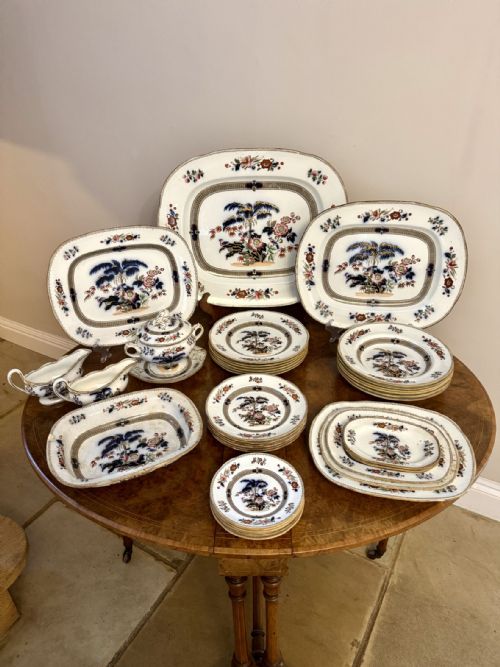
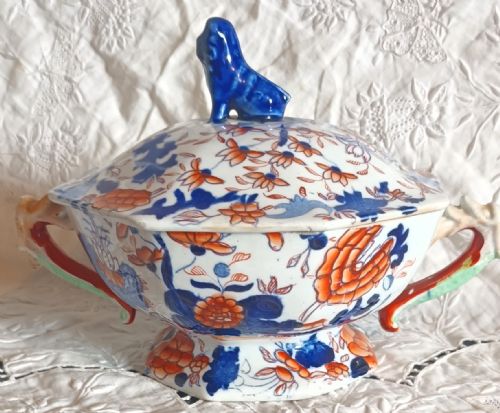
Ceramic examples in ironstone, pearlware and bone china appear frequently, alongside metal vessels in sterling silver and Old Sheffield plate.
How they were made
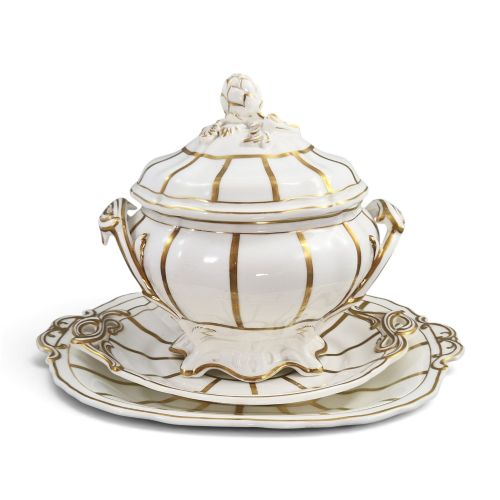
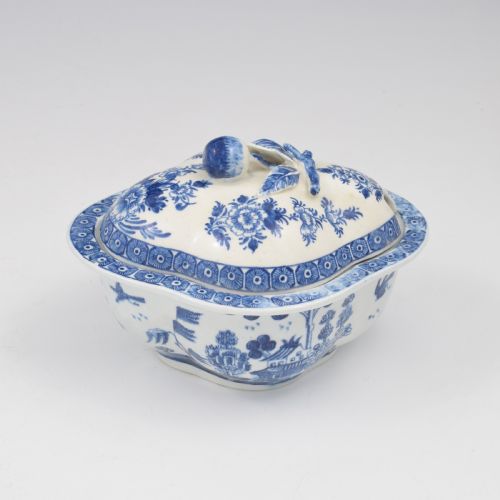
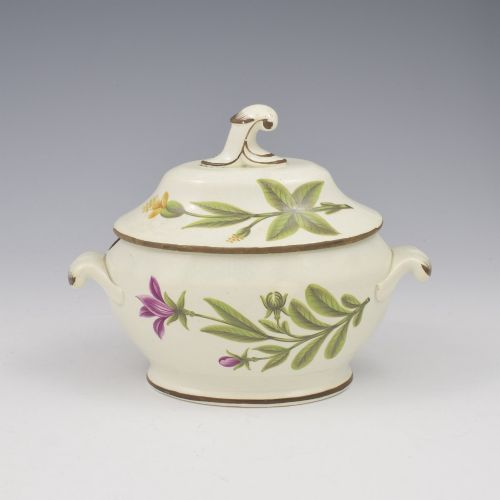
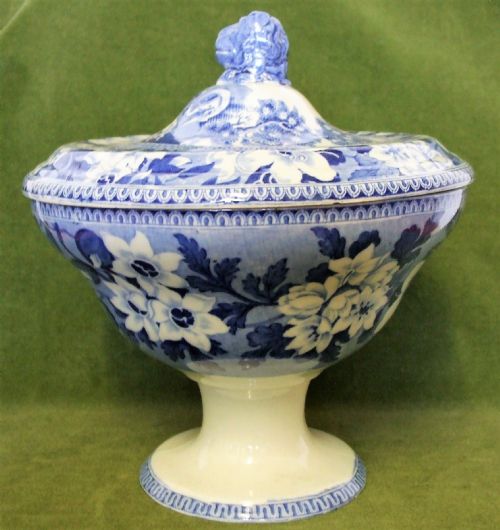
Potters shaped ceramic and porcelain tureens by hand or mould before applying transfer print patterns, cobalt blue details and hand-painted polychrome enamel.
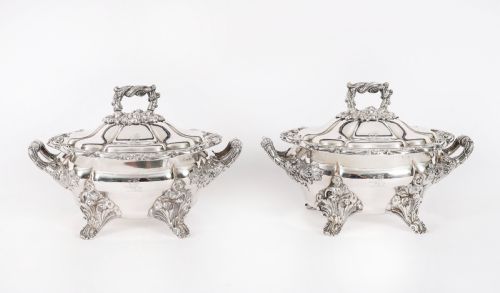
Metal vessels utilised sterling silver or fused silver over a copper base in Old Sheffield plate, shaping the body through hammering and soldering.
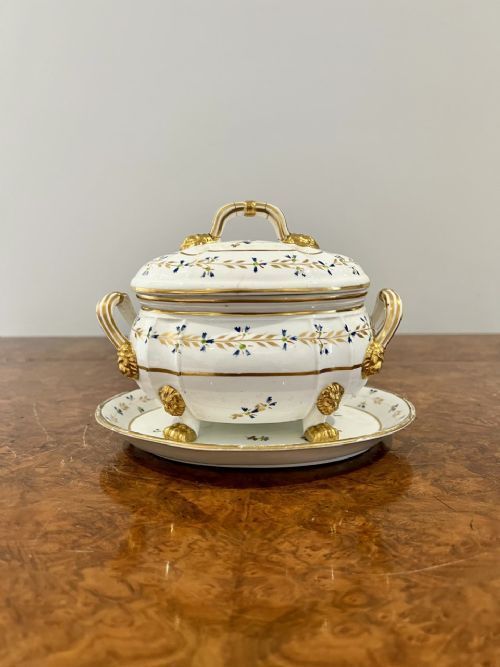
Gilding with gold leaf and applied handles completed many porcelain and ironstone pieces during the Regency and Victorian eras.
Listings include blue and white transfer printed pottery alongside botanical porcelain and sterling silver.
What varies in quality
The clarity of transfer printing and the precision of hand-painted enamel distinguish standard factory production from exceptional artistic output.
The weight of the silver or the thickness of the ceramic body affects the durability and balance of the vessel.
The presence of matching lids, stands and original ladles alters the completeness and historical integrity of the set.
Davenport·Derby·Mason·Spode·Mappin and Webb·Tiffany and Co·William Bennett·Flight Barr and Barr·John Rogers and Son
The Antique Sauce Tureen Glossary
- Ironstone
- A dense, durable type of earthenware patented in the nineteenth century. It resists chipping and provided a strong body for heavy kitchen and table wares.
- Pearlware
- A fine earthenware developed in the eighteenth century with a bluish glaze that pooled in recesses. It bridged the gap between creamware and true porcelain.
- Old Sheffield Plate
- An early fused metal technique created by sandwiching a layer of silver between copper sheets. This produced durable tableware before electroplating became common.
- Transfer printing
- A method of applying detailed designs to pottery by engraving a copper plate and transferring the ink via tissue paper. It allowed complex pictorial scenes to be replicated consistently.
- Finial
- The small decorative knob or handle attached to the top of a tureen lid. It often takes sculptural forms such as animals, fruit or abstract foliage.
Antique Sauce Tureen: Frequently Asked Questions
What was a sauce tureen used for?
These vessels held hot gravies, melted butter or seasoned sauces at large formal dinners. The matching lid kept the contents warm between servings at the table.
Today, they function as decorative centrepieces or serveware for modern dining tables.
How do I clean an antique tureen?
Wash ceramic and porcelain pieces gently by hand using mild soap and warm water. Avoid abrasive sponges that might damage historical glazes or hand-painted enamel.
Silver and plated vessels require specialised metal cleaners applied with soft cloths to preserve the surface without removing the plating.
Can I use them for daily dining?
Many ceramic and ironstone pieces remain robust enough for occasional serving use. However, fragile porcelain or delicate silver plate often suit display better than heavy daily wear.
Sudden temperature changes can crack old ceramics, so avoid pouring boiling liquids directly into cold antique vessels.
How do I identify the period?
Makers' marks stamped or printed on the base provide the most reliable clues to age and origin. Stylistic markers, such as Rococo curves or Victorian transfer prints, also point to specific decades.
Comparing glaze characteristics and weight helps distinguish eighteenth-century porcelain from later nineteenth-century ironstone.