
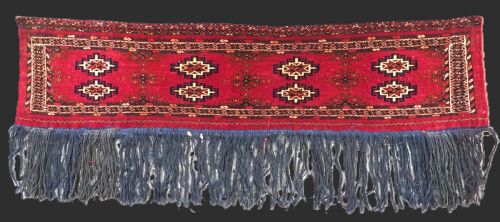


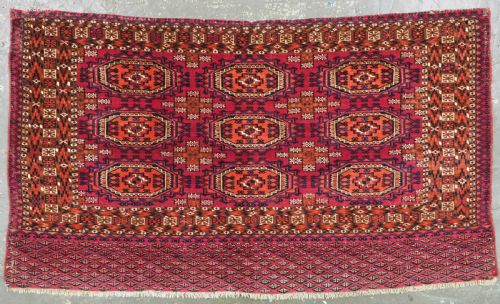


Antique Saryk Rug
An antique saryk rug brings tribal Central Asian weaving into a room, prized for rich wool and distinctive guls.
Antique Saryk Rug
When you search for an antique saryk rug, you encounter tribal Turkmen textiles originating from Central Asia. These pieces include small rugs, chuval faces, ensis, and torbas woven for domestic use and dowries.
The version you are most likely to meet on this page is a torba or chuval face dating from the second half of the nineteenth century. These smaller formats display traditional repeating guls and structural borders typical of the weaving group.
The selection encompasses examples featuring classic Salor designs, kedjebe motifs, and turreted guls. They represent the nomadic textile traditions of the region through distinct structural choices.
How they were made
Weavers utilised natural dyes and wool to construct these textiles, often incorporating cotton and crimson silk for contrast and detail. The reliance on natural colourants yields deep reds and ivories that develop patination over time.
The construction relies on fine weave techniques executed on handlooms, occasionally featuring flat woven details and plain weave backs on complete pieces. Artisans balanced structural density with pliable foundations suited to nomadic life.
Listings span the decades from 1850 to 1900, uniting wool, natural dyes, cotton, and silk within Turkmen tribal designs.
What varies in quality
The standard of execution depends upon the precision of the knotting and the fineness of the weave. Tighter structures allow intricate secondary motifs to remain crisp and legible across the field.
Material selection dictates visual depth, where pieces employing cochineal dyes and selected white cotton highlights display superior contrast. The handling of the primary guls distinguishes standard production from finer weaving.
The Antique Saryk Rug Glossary
- Gul
- A primary medallion motif repeated across Turkmen carpets and torbas. These octagonal or polygonal designs often identify the specific tribal sub-grouping.
- Torba
- A small storage bag or trapping produced for nomadic domestic use. They frequently feature elaborate upper panels and hanging loops.
- Chuval
- A large storage sack used within the Turkmen yurt for bedding and provisions. Surviving examples are often preserved as decorative face pieces.
- Ensi
- A tent door hanging designed with a tiered cruciform field. These textiles served a protective and decorative function at the entrance of the dwelling.
- Kedjebe
- A camel-load wedding litter motif incorporated into Turkmen weaving. The design translates the ceremonial carriage into geometric patterns.
- Cochineal
- A natural insect-derived red dye yielding vibrant crimson tones. Its presence contributes to the rich palette found in select tribal rugs.
Antique Saryk Rug: Frequently Asked Questions
How do I date an antique saryk rug?
Dating relies on assessing the natural dye palette, the handling of the wool, and structural characteristics such as knot density. Pieces from the nineteenth century often exhibit specific structural traits and softer patination.
Comparing the primary guls and secondary ornaments against documented examples helps narrow the decade of production within the broader nineteenth-century timeline.
What distinguishes a chuval from a rug?
A chuval is structurally a large utility sack intended for storing blankets and clothing within a tent. They feature a specific format with a defined border layout suited to a bag face.
By contrast, a rug or small carpet is woven as an open-field floor covering without the functional proportions and side selvedges characteristic of storage sacks.
How should I care for a tribal rug?
Protect the textile from direct sunlight to prevent the natural dyes from fading over years of display. Regular gentle vacuuming without a beater bar removes trapped dust from the wool foundation.
Allowing the piece to breathe and avoiding damp environments preserves the integrity of the cotton and silk highlights found in finer examples.