


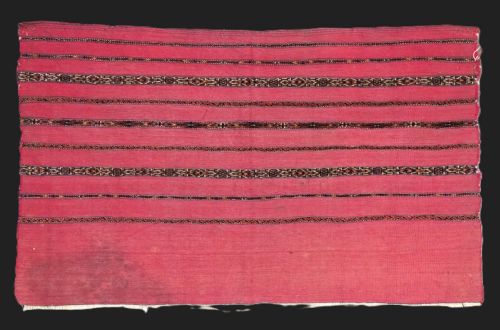
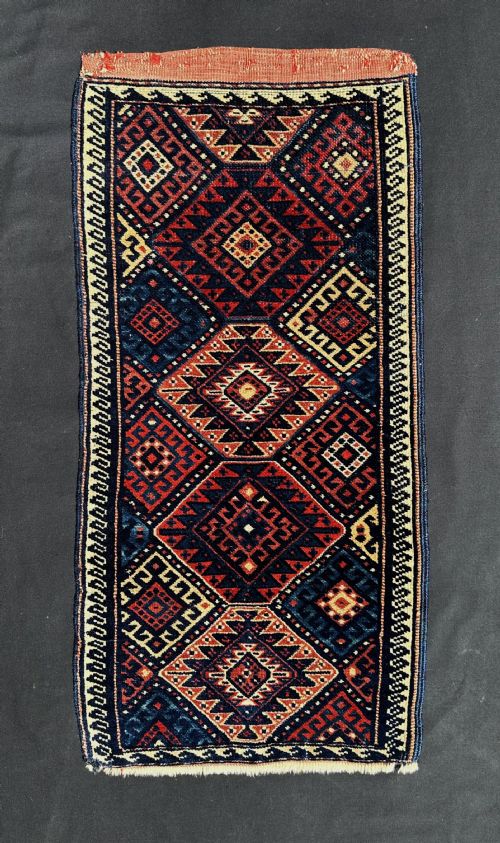
Woven Wool Bag Face
A woven wool bag face is a tribal textile fragment holding the intricate patterns of nomadic life.
Woven Wool Bag Face
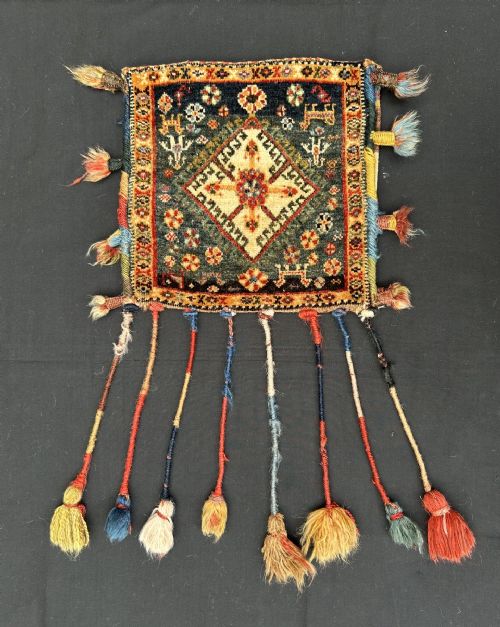
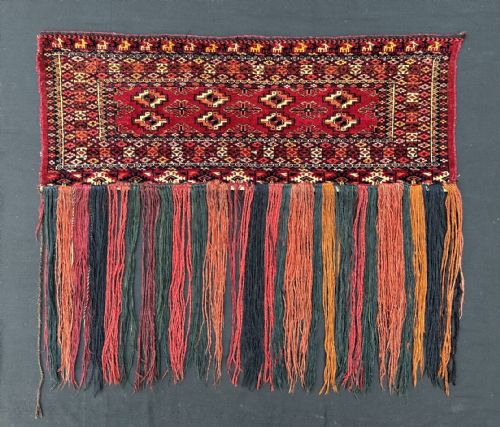
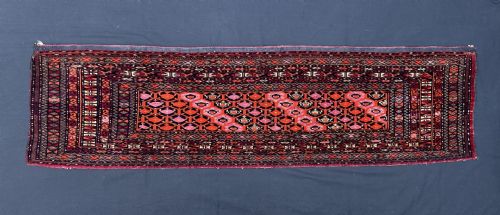
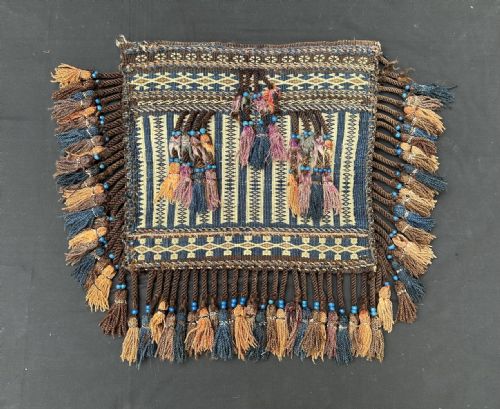
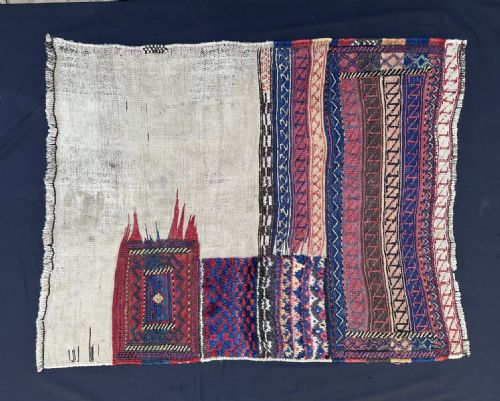
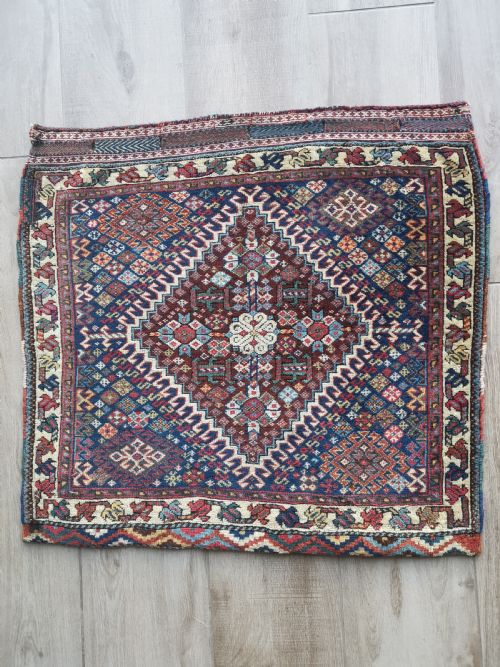
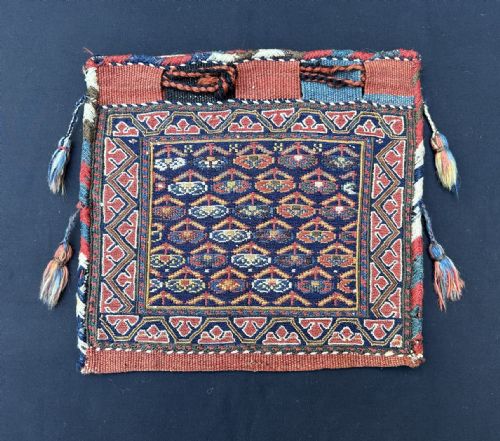
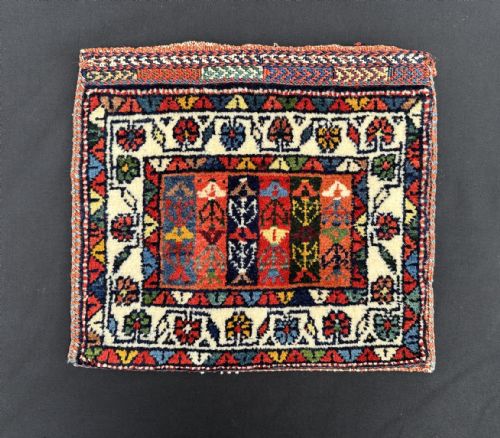
A woven wool bag face represents the decorative front panel of a larger nomadic container, such as a storage sack, grain bag, or bedding bag, which has been separated from its plain-weave back. These textiles originate primarily from tribal groups across Persia, Central Asia, and Afghanistan, spanning the nineteenth and early twentieth centuries.
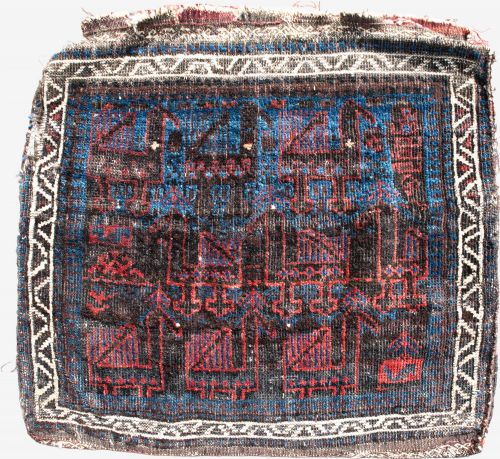
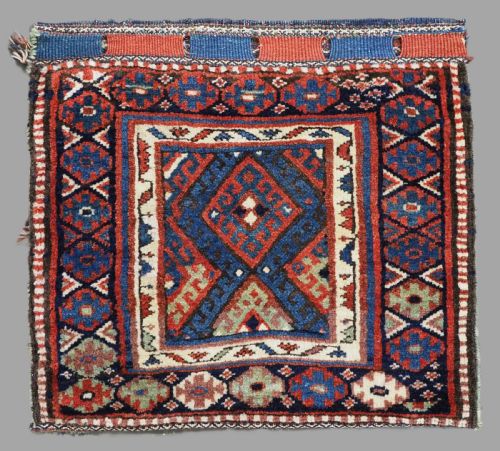
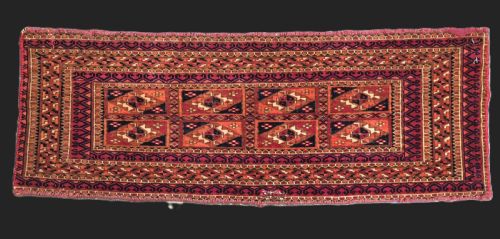
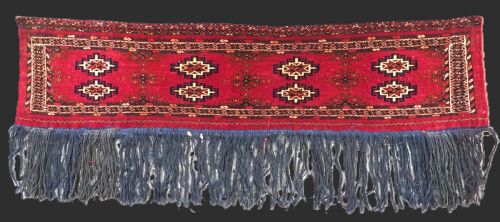
The pieces encountered on this page include specific regional formats such as Turkmen torbas and chuvals, Baluch bird bags, and Persian tribal half-khorjins and vanity bags. Each object displays the distinct tribal iconography and structural weaving traditions passed down through generations of nomadic makers.
How they were made
The construction relies heavily on hand-spun wool manipulated through pile knotting or flatweaving techniques, often supported by cotton foundations and enriched with natural dyes derived from local plants and minerals. Selected examples incorporate supplementary materials such as silk highlights and glass beads to add texture and depth to the field.
Nomadic weavers utilised portable vertical or horizontal looms to produce these dense, durable textiles, ensuring the pile remained tight and resilient for everyday utility within the tent or caravan.
Styles represented include Turkmen Tribal, Persian Tribal, Tekke Turkmen, Baluch Tribal, and Lori-Bakhtiari nomadic work.
What varies in quality
The standard of a piece depends largely on the crispness of the drawing, the saturation and depth of the natural dye palette, and the fineness of the knotting or weaving density across the field. Superior examples display balanced proportions, saturated colour variation, and complex tribal guls executed with precision.
Variations also arise in the completeness of the surviving borders and the structural integrity of the wool itself, where careful preparation of hand-spun yarn yields a more lustrous and enduring surface.
The Woven Wool Bag Face Glossary
- Bag face
- The decorative front panel of a nomadic storage bag, separated from its utility back.
- Gul
- A primary medallion or repeating tribal motif characteristic of Central Asian weaving traditions.
- Torba
- A small horizontal Turkmen storage bag traditionally used for domestic organisation.
- Chuval
- A large Turkmen tent-storage bag designed for blankets and heavy household goods.
- Khorjin
- A traditional pair of saddlebags used by nomadic tribes for transport and storage.
Woven Wool Bag Face: Frequently Asked Questions
What is a woven wool bag face?
It is the decorative front panel of a nomadic storage container, woven in wool using pile or flatweave techniques.
These panels were preserved when the utilitarian plain-weave backs wore out or were removed.
How were these bags used?
Nomadic groups utilised them inside tents for storing grain, bedding, clothing, and personal possessions.
Many functioned as saddlebags or domestic storage sacks during seasonal migrations.
How do I identify tribal designs?
Specific motifs, such as guls and border arrangements, connect each piece to particular tribes like the Tekke, Yomut, or Baluch.
Regional colour palettes and weaving structures further clarify the geographic origin.
How do I care for a textile?
Protect the wool from direct sunlight and damp conditions to preserve the natural dyes and fibres.
Gentle surface cleaning and appropriate mounting help maintain the structural integrity of older pieces.