





Tribal Fringe Hanging
A tribal fringe hanging brings the tactile warmth of Central Asian and Persian nomad tents directly to domestic walls through woven and embroidered textiles.
Tribal Fringe Hanging
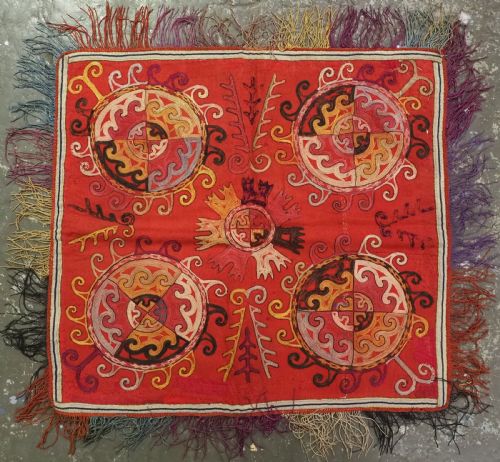
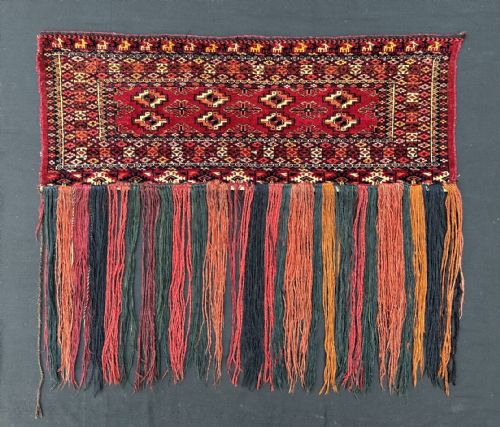
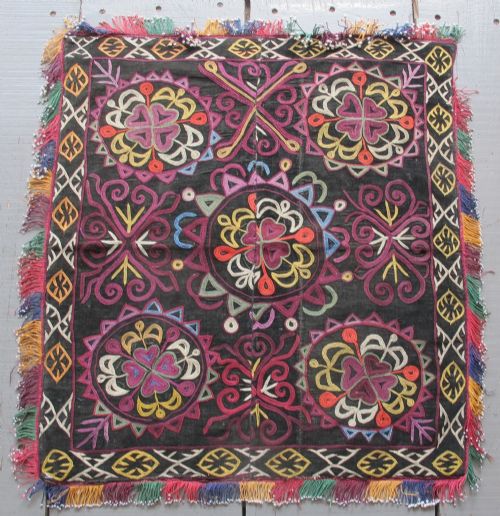
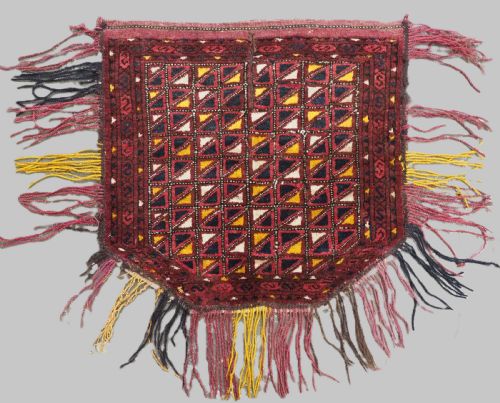
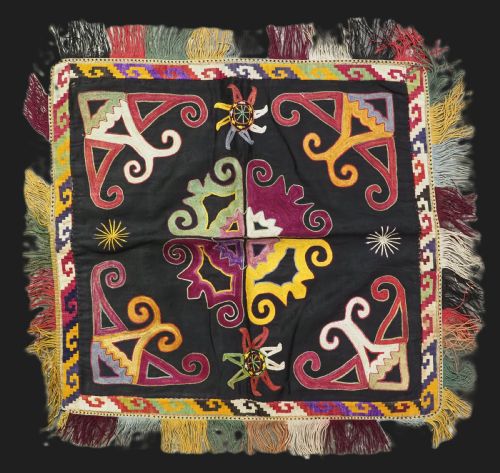
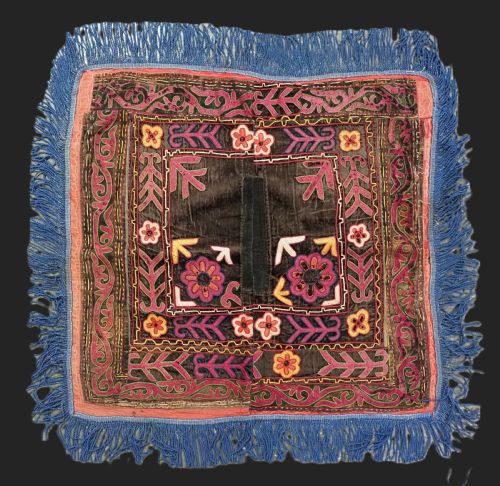
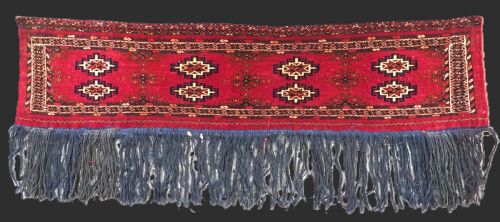
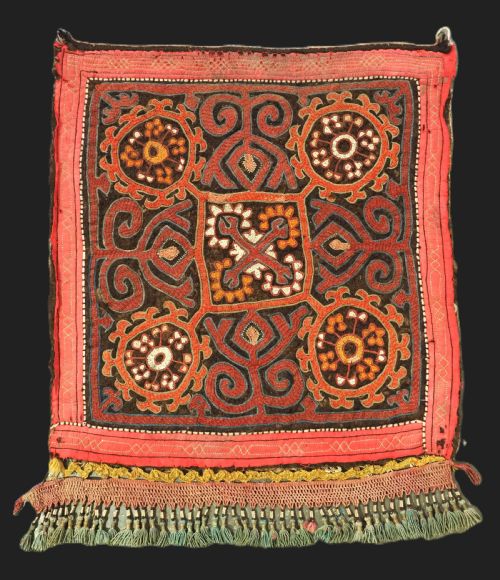
A tribal fringe hanging encompasses pieces searched under this phrase, representing textiles and trappings made by nomadic groups across Central Asia and Persia. These objects range from dowry embroideries and door tent hangings to animal decorations and torbas originating from the nineteenth and early twentieth centuries.
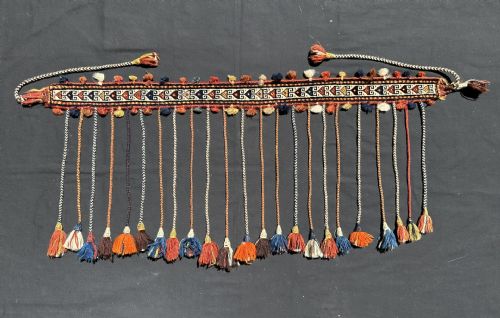
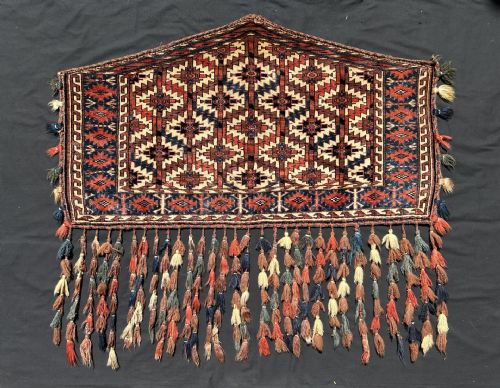
The versions most commonly met on this page include Uzbek Lakai ilgiches, Turkmen torbas, and Qashqa'i nomadic items. Many of these wall hangings and textile art pieces feature applied fringes, tassels, or structural details originally created for functional use within tribal life.
Materials and construction
Makers utilised wool, cotton, and silk as the primary textile foundations, often combining flat weave techniques with detailed embroidery. Natural dyes provide the underlying palette for these cloths, giving depth to the patterned surfaces.
Structural embellishments frequently incorporate felt, velvet, glass beads, and cowrie shells. Original tassels and fringes are attached directly to the base panels, marking the traditional completion of each trapping or hanging.
Listings span from the early nineteenth century through to the 1930s, featuring wool, silk, velvet, and natural dyes.
Evaluating distinction
The standard of execution in drawing and design separates finer examples from simpler utilitarian pieces. Distinctive motifs, balanced composition, and deliberate colour saturation indicate greater skill by the maker.
The survival of original elements such as tassels, backing fabrics, and fringe details preserves the integrity of the textile. Completeness in these vulnerable peripheral areas distinguishes better-preserved examples.
The Tribal Fringe Hanging Glossary
- Ilgich
- Uzbek dowry embroidery created for wall hanging use. These pieces often feature silk thread on a wool or cotton ground.
- Torba
- A small tent bag produced by Turkmen tribes. They were traditionally hung inside yurts for storage.
- Asmalyk
- A large pentagonal trapping used in Turkmen wedding processions. They were mounted on the flanks of camels.
- Gul
- A repeating medallion motif characteristic of Turkmen carpet and trapping design. Each tribal group utilised distinct variations.
- Kapunuk
- A decorative tent door hanging placed over the entrance of a nomadic yurt. These pieces frame the doorway with woven patterns.
Tribal Fringe Hanging: Frequently Asked Questions
What is a tribal fringe hanging used for?
These textiles served various functional and decorative roles within nomadic households and tribal ceremonies. They functioned as dowry pieces, tent decorations, storage bags, and animal trappings.
In modern interiors, collectors mount them on walls as textile art. Their varied textures and traditional patterns bring historical depth to interior spaces.
How do I care for antique wool textiles?
Protect wool and silk textiles from direct sunlight to prevent natural dye fading. Gentle vacuuming through a mesh screen helps remove dust without damaging fragile fibres.
Avoid hanging these pieces in areas with high humidity or fluctuating temperatures. Professional textile conservation cleaning is recommended if deep intervention is required.
How can I tell different tribal groups apart?
Tribal attribution relies on specific design vocabulary, structural formats, and colour palettes. Yomut, Tekke, Ersari, and Lakai makers each employed characteristic motifs and structural techniques.
Examining the border patterns and secondary ornamentation provides reliable clues to regional origin. Comparing specific guls and embroidery stitches helps pinpoint the producing culture.
Are tassels and fringes original to the pieces?
Many surviving examples retain their original wool or silk tassels and applied fringe borders. These elements formed an integral part of the finished trapping or wall hanging.
Close inspection reveals whether fringe attachments share the wear and dye characteristics of the main body. Original tassels add significant historical completeness to the textile.