




Antique Salt Spoons
These antique salt spoons range from delicate Victorian silver-gilt shells to Edwardian cased pairs, offering a touch of formal dining history.
Antique Salt Spoons
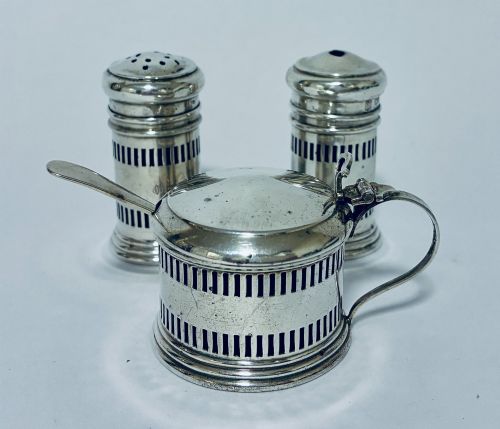
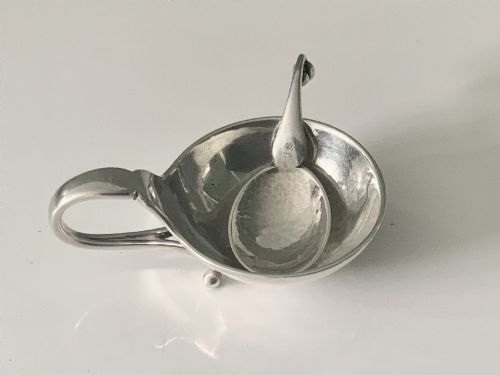
When searching for antique salt spoons, buyers encounter small implements designed for transferring seasoning from open cellars to individual plates. The selection spans the Georgian period through the Edwardian era, featuring both standalone pieces and matching components of larger cruet sets.
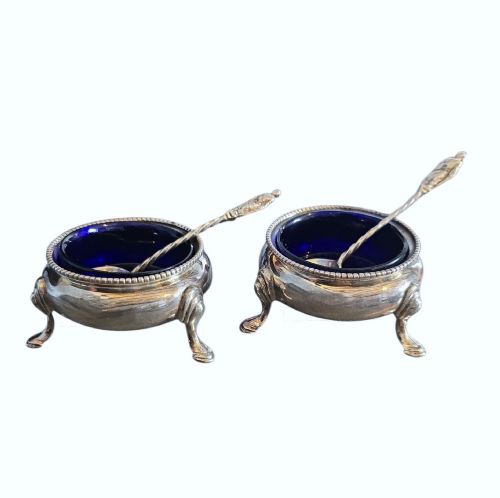
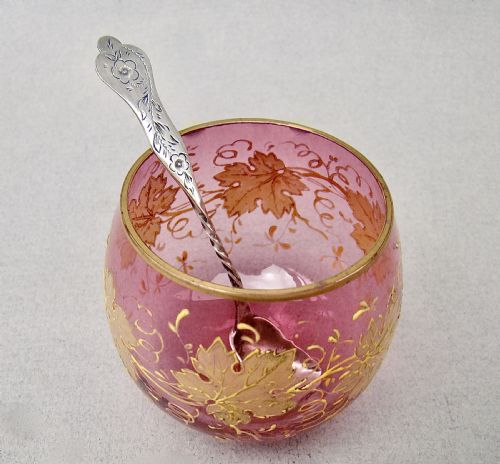
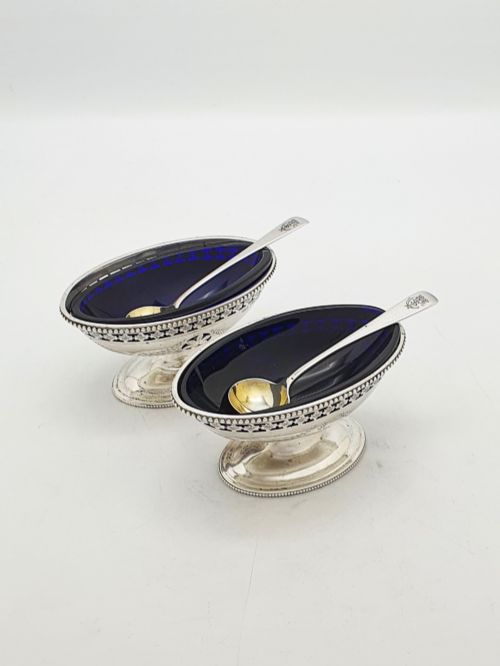
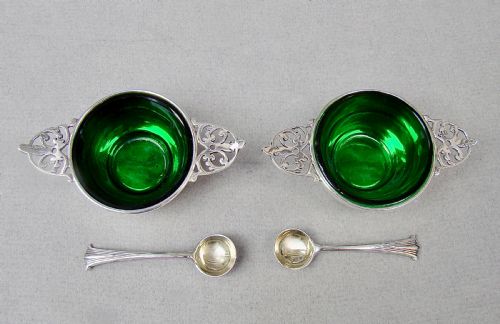
Most examples originate from nineteenth and early twentieth-century British workshops, often paired with cobalt or cranberry glass liners. Collectors find everything from utilitarian sterling silver shovels to elaborate novelty designs shaped like bird claws, thistles, or equestrian horseshoes.
How They Were Made
Makers utilised sterling silver and silver plate, shaping bowls through traditional stamping, casting, or hammering techniques. Handles frequently featured intricate ornamentation such as rococo scrolls, Onslow patterns, or gilt finishes.
Some specialised examples incorporated contrasting media, combining natural wood like fruitwood with precious metals or pairing metalwork with coloured glass inserts.
Some Victorian designers fashioned tiny silver shovels meant to scoop salt from miniature coal-pail cellars.
What Varies in Quality
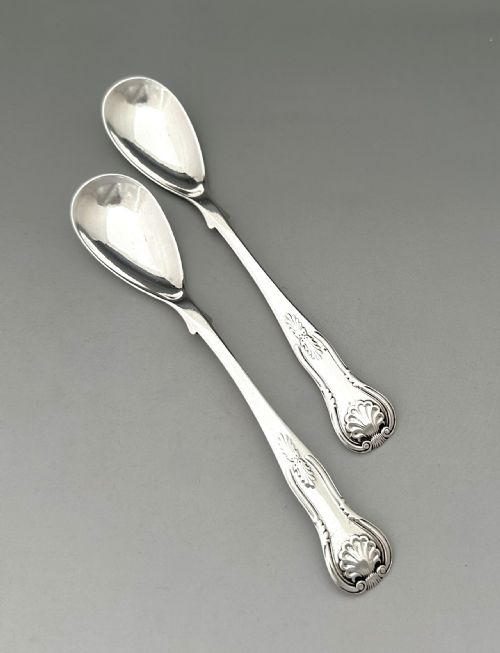
Superior pieces display crispness in cast decorative motifs, such as defined feathering on bird-shaped salts or sharp engraving on shell bowls. Weight and balance in the hand also separate high-grade artisan output from mass-produced wares.
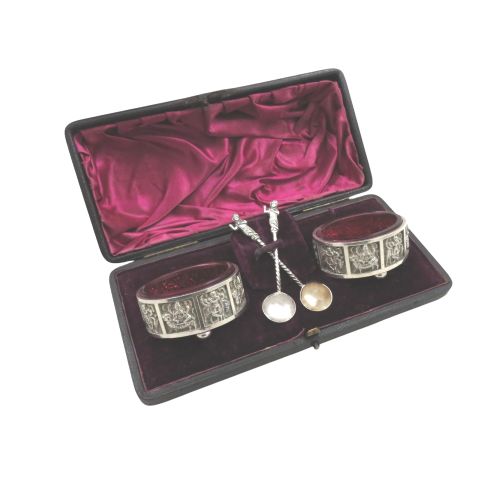
The presence of original fitted presentation cases and matching glass liners elevates the desirability of a set. Maker marks left by notable silversmiths provide historical context that distinguishes standard domestic items from superior studio productions.
Georg Jensen·Elkington & Co·Josiah Williams & Co·Wilmot Manufacturing Co·Hamilton & Inches
The Antique Salt Spoons Glossary
- Cruet set
- A matched collection of condiment containers, typically holding salt, mustard, and pepper, accompanied by dedicated spoons.
- Sterling silver
- A silver alloy containing 92.5 percent pure silver by mass, standard for British hallmarked tableware.
- Gilt
- A thin layer of gold applied to the surface of silver items, creating a warm two-tone appearance inside the bowl.
- Navette
- A boat-shaped decorative form with pointed ends, popular in late nineteenth-century silver design.
- Hallmark
- An official stamp applied by an assay office indicating metal purity, origin year, and maker.
Antique Salt Spoons: Frequently Asked Questions
How were antique salt spoons used?
Diners used these small utensils to transfer salt from communal open cellars onto individual side plates during formal meals.
They prevented guests from using their fingers or personal cutlery to access shared seasonings.
What metals are these spoons made from?
The majority of pieces consist of hallmarked sterling silver or silver plate over a base metal foundation.
Some examples feature silver-gilt applications where a gold wash coats the interior bowl.
Are these spoons usually found in sets?
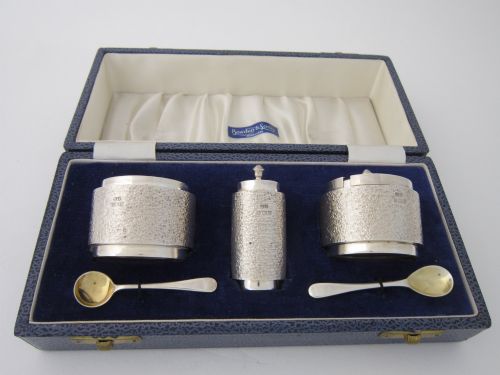
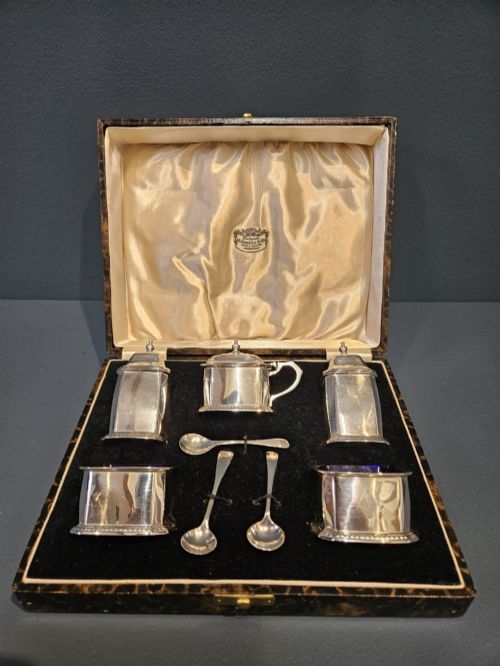
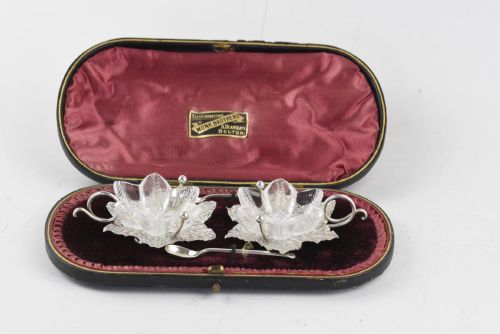
Many survive as matched pairs or sets of four housed within original velvet and silk-lined presentation cases.
Others appear individually or as part of larger condiment and cruet assemblies.
How do I identify the date of a salt spoon?
British pieces typically bear hallmarks that include date letters corresponding to specific assay office registry years.
Stylistic cues such as rococo scrolls or Edwardian proportions also help narrow down the period.