


Pair Silver Cellars
When you look for pair silver cellars, you are searching for matching dining table vessels designed to hold loose salt for individual guests.
Pair Silver Cellars
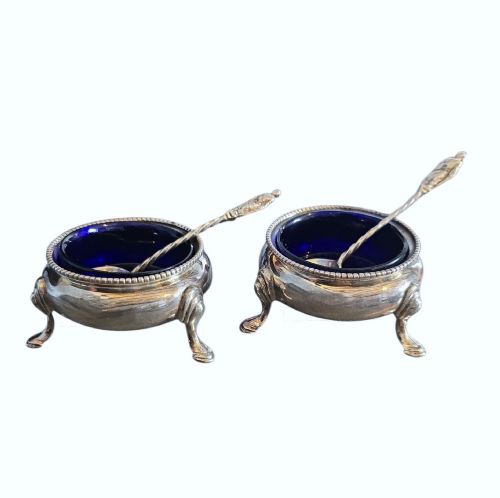
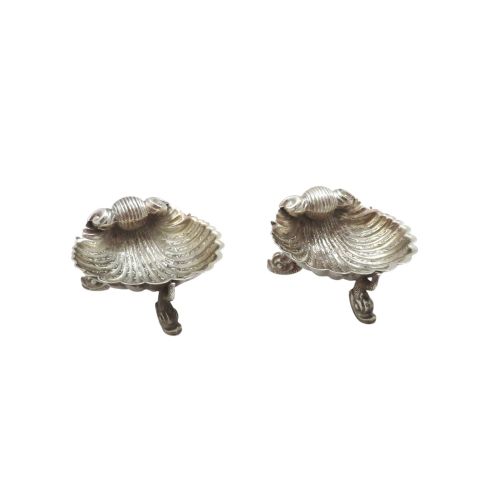
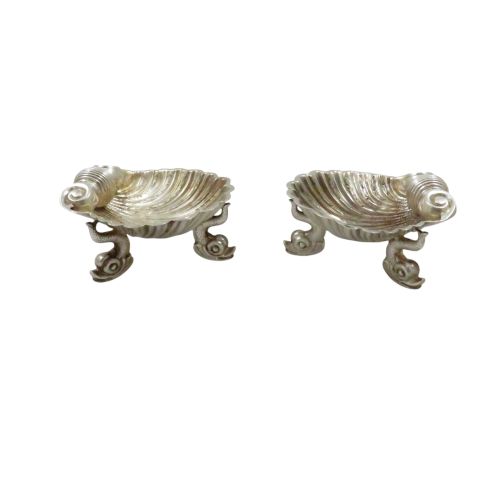
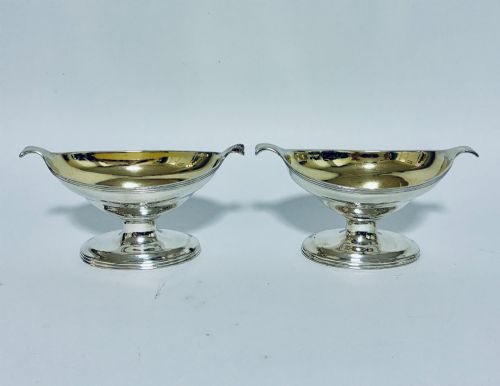
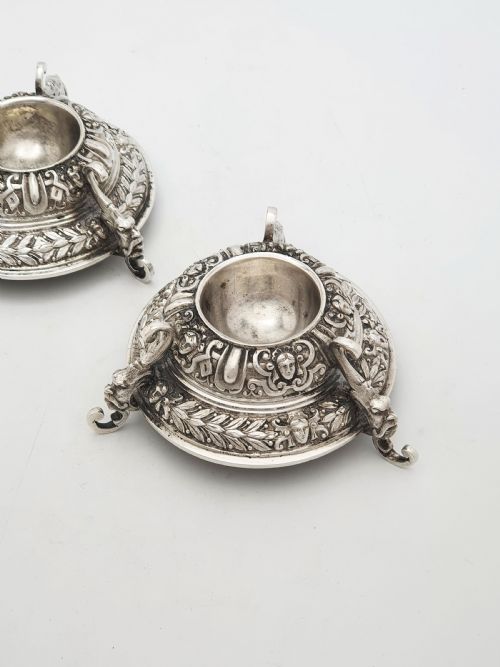
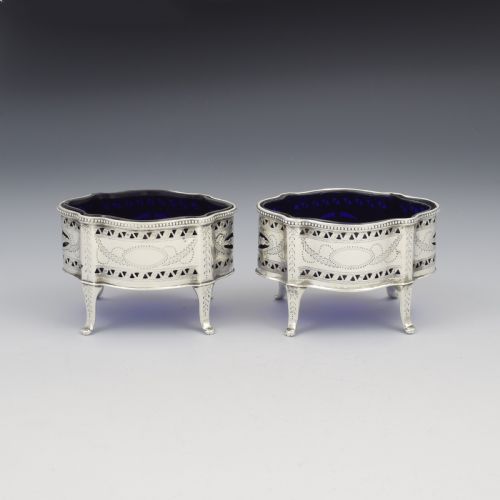
Pair silver cellars encompass small open vessels and enclosed shakers used historically at the dining table for dispensing salt. The examples found here span formal Georgian pedestal designs, elaborate Victorian novelty forms such as shells, birds, and swans, through to cleaner Edwardian and Art Deco lines.
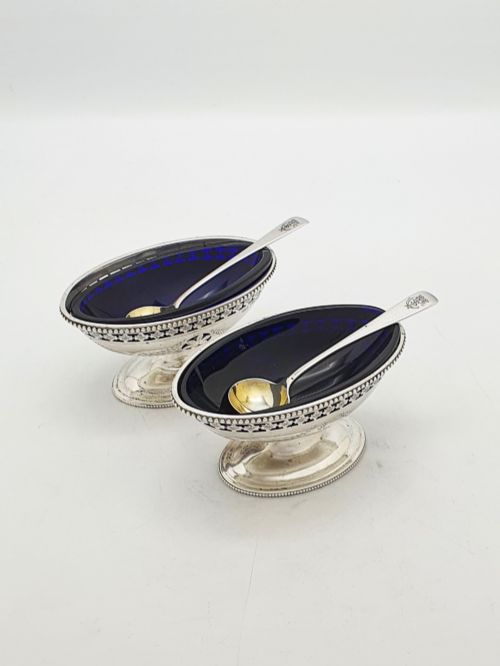
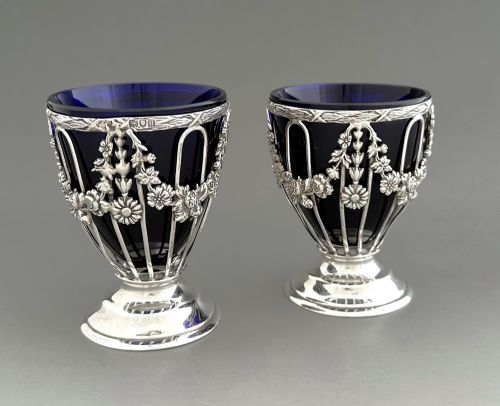
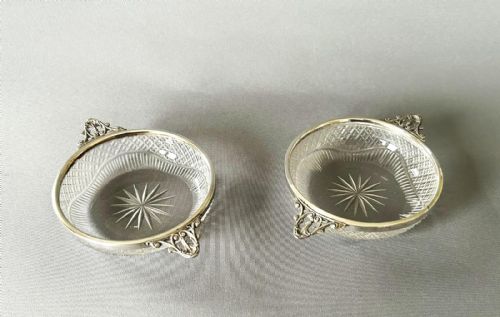
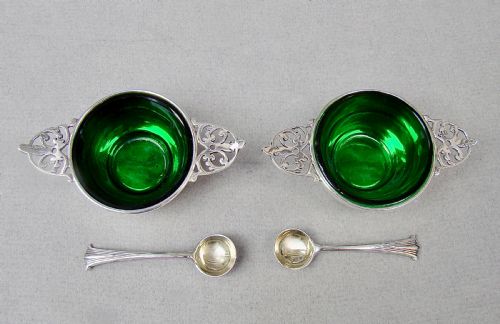
The most common iterations on this page are open salt cellars, often accompanied by matching spoons or paired with coloured glass liners. They appear in diverse stylistic interpretations, from simple boat shapes and cauldron forms to pierced wirework and figural models.
How they were made
Silversmiths employed sterling silver, silver plate, and occasionally vermeil, shaping the metal through casting, piercing, and hand-beating. Many open forms incorporate contrasting glass liners in cobalt blue or cranberry hues, inserted to protect the metal from the corrosive nature of salt.
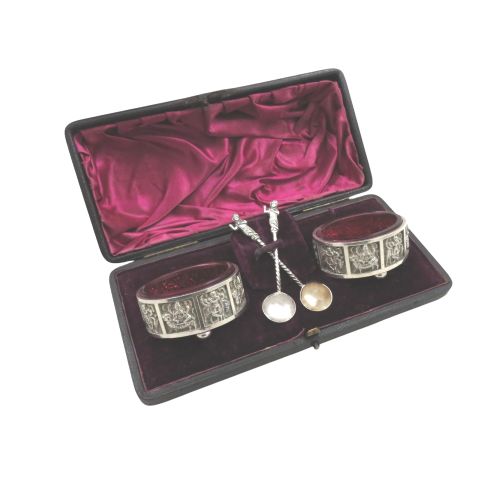
Detailing often involved crisp chasing, repoussé work, or delicate wirework. Fitted velvet-lined presentation cases frequently accompanied these sets, particularly those produced by prominent makers during the Victorian and Edwardian eras.
Listings feature periods ranging from the eighteenth century through to Art Deco designs of the 1930s.
What varies in quality
Quality rests upon the crispness of the original cast or chased detail and the weight of the metal used in the construction. Pieces bearing clear hallmarks from established makers demonstrate superior workshop standards compared to unmarked or heavily worn alternatives.
The presence of undamaged original components, such as matching glass liners or fitted presentation boxes, elevates the standing of a set. Finer examples display meticulous finishing to interior gilding and secure placement of decorative feet or handles.
Josiah Williams & Co·David Hennell·John Edmonstone·Vale Brothers and Sermon·Thomas Johnson·Edward Wood·George Unite·Daniel & John Wellby·Joseph Gloster·William Cripps·Joseph Felix Podio·Robert Harper
The Pair Silver Cellars Glossary
- Open salt
- A small vessel designed to hold salt accessed by a miniature spoon rather than a shaker lid. These often feature glass inserts.
- Trencher salt
- An early form of salt cellar, typically flat-bottomed and geometric, sitting directly on the dining surface before individual place settings became standard.
- Vermeil
- Sterling silver coated with a thin layer of gold on the interior or exterior surface. This technique provided protection against chemical tarnishing from food substances.
- Hallmark
- A series of official stamps applied to precious metals indicating the standard of purity, the assay office, and the year of manufacture.
- Repoussé
- A metalworking technique where the artisan hammers the design from the reverse side to form a raised relief pattern on the front.
Pair Silver Cellars: Frequently Asked Questions
What are pair silver cellars used for?
These vessels historically held loose table salt for individual diners before modern free-flowing salt was invented. Guests used small spoons or pinched the salt directly from the open bowl.
Today, collectors utilise them as decorative table accents or small trinket dishes for storage on dressing tables.
How do I clean silver salt cellars?
Maintenance requires gentle washing in warm soapy water, particularly if the piece includes a glass liner that can be removed. Harsh abrasive dips should be avoided to preserve antique surface patination.
Soft cloths and dedicated silver polish help maintain the shine without wearing away delicate chased or engraved details.
Are glass liners original to the salt?
Many Victorian and Edwardian open salts retain their original cobalt or cranberry glass inserts, shaped specifically to fit the metal frame. Replacements are common, so snug placement and matching period hue indicate originality.
The glass protected the silver base from corrosion caused by direct contact with salt over long periods of use.
How do I identify the date of a silver salt?
British pieces typically rely on standard assay office marks, maker's initials, and date letters stamped directly onto the metal. Consulting a hallmark guide correlates these symbols to specific years of production.
Stylistic cues, such as Georgian pedestal forms or Art Deco geometric lines, provide a reliable secondary indicator of age.