


Antique Salt Glaze Jug
These heavy stoneware vessels bring dense history to a shelf, built from clay and fired with salt to hold everything from ale to cider.
Antique Salt Glaze Jug
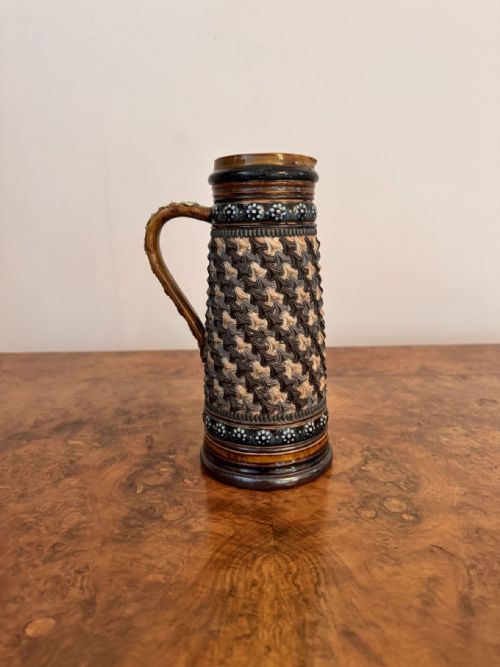
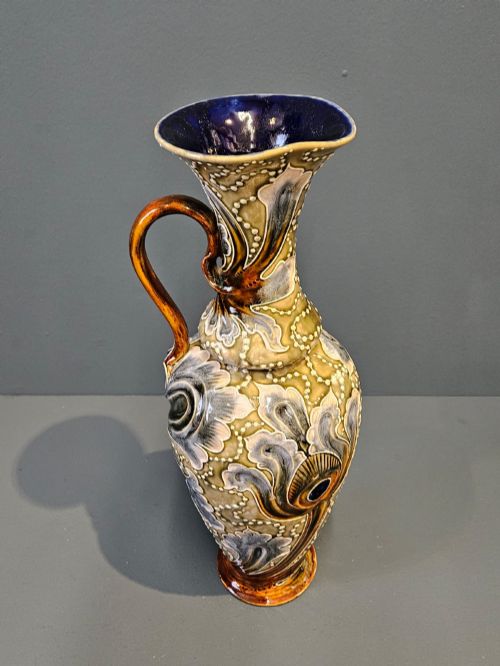
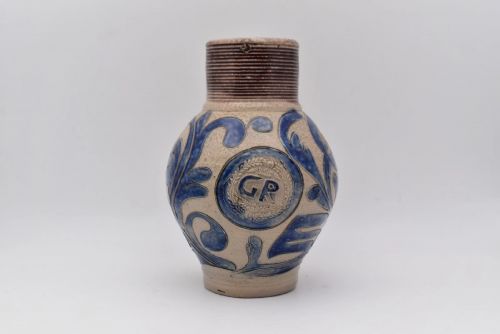
When someone searches for an antique salt glaze jug, they encounter heavy stoneware pieces spanning from the sixteenth century through the Victorian era. The selection ranges from German Westerwald flagons bearing royal ciphers to English Doulton Lambeth harvest jugs with silver rims.
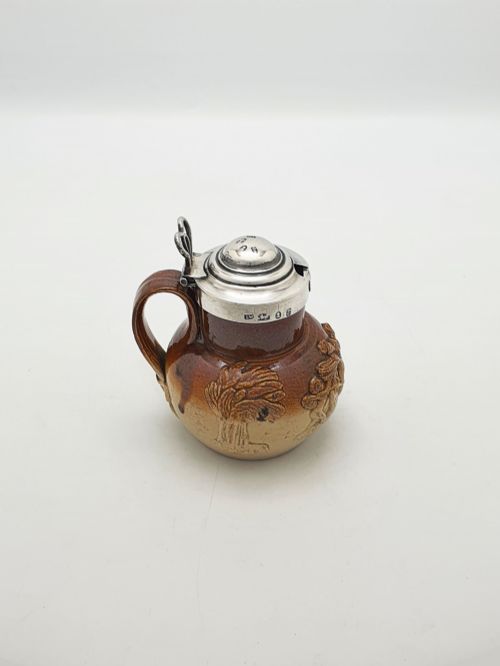
The most common examples on this page date to the nineteenth century, particularly the Victorian period. These pieces frequently appear in harvest forms, often decorated with sprigged details and fitted with sterling silver collars or hinged lids.
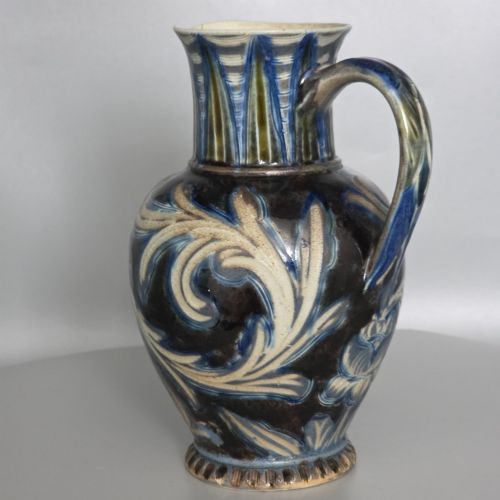
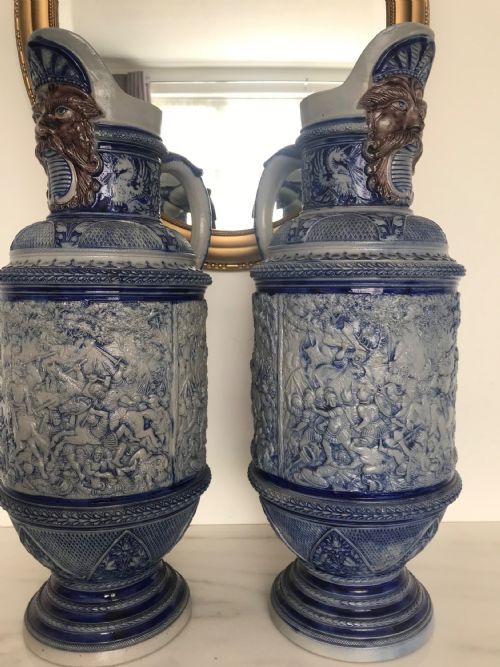
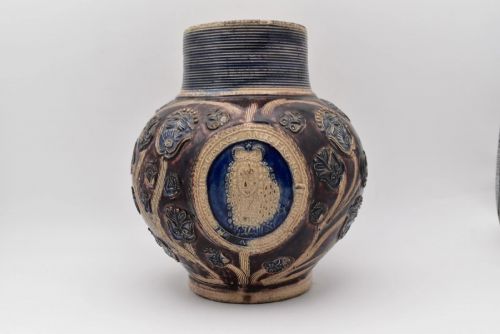
Early continental examples also emerge in the archive and current listings, featuring cobalt blue motifs, Roman battle scenes, or moulded portraits. English ale pitchers and puzzle jugs represent domestic barware from various centuries.
Clay, salt and kilns
Potters threw dense clay on a wheel to form the body of an antique salt glaze jug before adding handles, lips or applied reliefs. Artisans pressed sprigged ornaments separately and applied them to the wet surface before firing.
During the high heat of the kiln, common salt was thrown into the firebox. The salt vaporised and combined with the silica in the clay, producing a characteristic pitted, orange-peel texture across the surface.
Many English and German pieces received cobalt blue or manganese purple pigments painted beneath the glaze. Metalworkers later mounted sterling silver rims, collars and hinged lids onto finished stoneware bodies.
Materials across the selection combine stoneware clay bodies with salt glazes, occasionally augmented by sterling silver or silver-plated metalwork.
Distinguishing the finer examples
The clarity and crispness of the moulded relief work distinguish superior pieces from ordinary production. Crisp cobalt decoration and sharp sprigged figures indicate a skilled hand in the workshop.
The integration of precious metal mounts alters the standing of a vessel. Sterling silver rims, collars and hallmarked lids executed by silversmiths elevate standard utilitarian stoneware into presentation pieces.
Early provenance and historical association separate standard domestic containers from exhibition-grade works. Pieces bearing specific royal ciphers or portraits carry greater documentary weight.
Doulton Lambeth·Emma Shute·Simon Peter Gerz
The Antique Salt Glaze Jug Glossary
- Salt glaze
- A vitreous coating formed on stoneware by throwing common salt into the kiln during firing. This process creates a distinctive textured surface resembling orange peel.
- Stoneware
- A robust, non-porous ceramic fired at high temperatures until the clay body vitrifies. It resists liquids naturally without requiring an interior lead glaze.
- Sprigged
- A decorative technique where separately moulded clay reliefs are applied to the surface of an unfired vessel using slip as an adhesive.
- Westerwald
- A German region renowned for producing salt-glazed stoneware decorated with cobalt blue incisions and impressed medallions. Pieces from this area span several centuries.
- Puzzle jug
- A ceramic vessel with a perforated neck that prevents normal drinking, requiring the user to imbibe through hidden spouts. These items served as tavern novelties.
Antique Salt Glaze Jug: Frequently Asked Questions
What is an antique salt glaze jug used for?
These vessels originally served practical household and tavern functions such as storing and pouring ale, cider, wine, or water. Sturdy stoneware kept liquids cool and protected contents from contamination.
Today, collectors display these items as decorative objects or utilise them as flower vases. Their robust construction allows them to remain functional decorative accents in modern homes.
How do I date an old salt glaze jug?
Dating relies upon stylistic markers, manufacturing marks, and historical ciphers stamped into the clay. Early German pieces often feature Westerwald blue floral patterns or specific monarchical stamps from the seventeenth and eighteenth centuries.
Later Victorian pieces frequently carry factory stamps from makers like Doulton Lambeth. Attached silver mounts with legible hallmarks also provide precise calendar years for production.
Why do some jugs have silver rims?
Silver rims and collars were added to reinforce fragile spouts and upper edges that took heavy wear during daily pouring. Silversmiths mounted these precious metal bands to enhance the presentation of the vessel.
These additions often transformed utilitarian tavern flagons into respectable dining table accessories. Hallmarks on the silver also help historians date the mounting period.
How do I clean an antique stoneware jug?
Dust the exterior gently with a dry, soft cloth to remove everyday accumulation. Avoid harsh chemical cleaners or abrasive scouring pads that might scratch the salt-glazed surface.
If the interior requires washing, use warm water and mild soap without submerging silver-plated or sterling mounts for extended periods. Dry the piece thoroughly after cleaning.