




Sprigged Stoneware Jug
These sprigged stoneware jugs are durable vessels with applied moulded reliefs, offering tactile decoration and practical utility for everyday pouring.
Sprigged Stoneware Jug
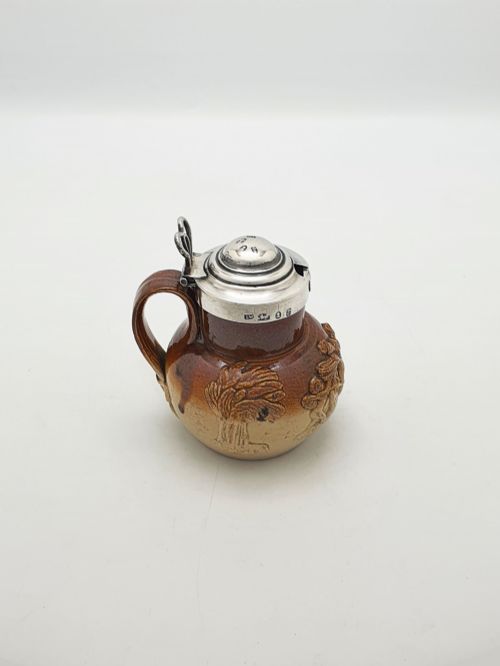
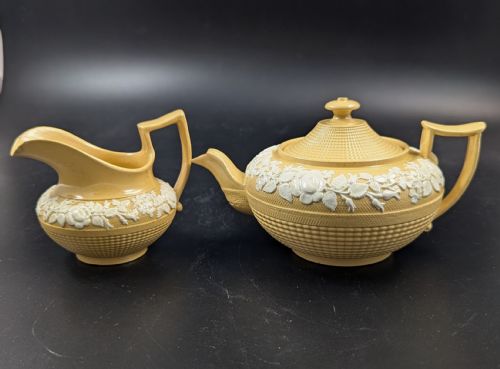
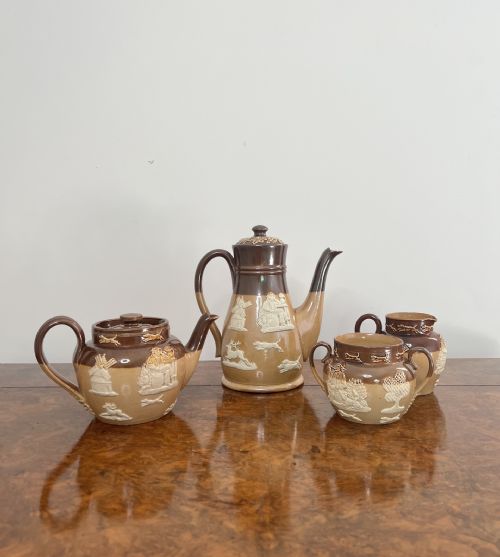
When you search for a sprigged stoneware jug, you are looking at robust ceramic vessels decorated with low relief ornamentation applied to the body before firing. These pieces commonly emerge from the nineteenth century, ranging from early Georgian examples with sterling silver collars to later Victorian harvest jugs and tavern pieces. The forms vary from large ale pitchers and harvest cups down to smaller creamers and graduated sets.
You are most likely to meet nineteenth century salt glazed and cream sprigged stoneware jugs on this page, often featuring applied figures, hounds, or foliate motifs. Makers such as Doulton, Wedgwood, and Copeland Spode appear across the listings, alongside regional tavern pieces and Bargeware items. The styles span Georgian, Regency, and Victorian folk art traditions, reflecting both domestic utility and exhibition quality craftsmanship.
Materials and construction
The body of a sprigged stoneware jug is formed from dense, vitrified clay fired at high temperatures to ensure impermeability. Stoneware provides a hard, durable matrix that requires no interior glaze for holding liquids, though salt glazing and lead glazes are frequently utilised to create textured or glossy exterior surfaces.
Decoration relies on the sprigging technique, where individual motifs are pressed into small moulds and applied by hand to the unfired vessel using liquid clay as an adhesive. Many examples are finished with metal mounts, incorporating sterling silver collars, silver plated lids, and hinged fixtures fitted securely to the ceramic rim.
Early tavern goers trusted these heavy stoneware jugs to keep their ale cool and their drinking vessels intact through many rowdy toasts.
Distinctions in quality
Quality in a sprigged stoneware jug rests upon the crispness of the applied moulded reliefs and the precision of the clay body. Superior examples display sharp detail in the sprigged figures and foliage, whereas lesser pieces show blurred or muddy application where the mould detail has worn away.
The integration of metalwork also determines the calibre of the piece, with hallmarked sterling silver collars and intact hinged lids elevating the standard above simpler ceramic rims. Exhibition pieces demonstrate finer throwing and more ambitious scale, while domestic kitchenware prioritises sturdiness over sculptural finesse.
Doulton Lambeth·Wedgwood·Copeland Spode
The Sprigged Stoneware Jug Glossary
- Sprigging
- The technique of applying separately moulded clay reliefs onto the surface of an unfired ceramic vessel. This method creates decorative scenes and motifs that stand in sharp contrast to the background body.
- Salt glaze
- A vitreous coating formed by throwing common salt into the kiln during high temperature firing. This produces a characteristic orange peel texture on the stoneware surface.
- Harvest jug
- A large vessel traditionally used for serving ale during agricultural harvest celebrations. These pieces frequently feature applied hunting scenes, drinking motifs, and brown salt glaze finishes.
- Sterling silver collar
- A metal band fitted around the rim of a jug to provide structural reinforcement and support for a hinged lid. These mounts often bear hallmarks indicating the date and maker of the silver.
Sprigged Stoneware Jug: Frequently Asked Questions
What is a sprigged stoneware jug?
A sprigged stoneware jug is a ceramic vessel made from dense, high fired clay decorated with separately moulded relief ornaments applied to the exterior.
These pieces range from utilitarian tavern pitchers to exhibition items, often finished with salt glazes and silver collars.
How were these jugs used?
These vessels were primarily utilised for serving beverages such as ale, water, or milk in domestic and tavern settings.
Larger harvest jugs served community gatherings, while smaller creamers formed part of matching tea and coffee sets.
How do you date a stoneware jug?
Dating relies on stylistic markers, manufacturing techniques, and associated metal mounts like silver collars with legible hallmarks.
Georgian examples often feature refined proportions, while nineteenth century Victorian pieces frequently display heavier salt glaze or folk art characteristics.
How should I care for antique stoneware?
Antique stoneware is robust due to its vitrified body, but pieces with silver mounts or applied reliefs require gentle handling.
Wash them by hand in warm water without harsh detergents to preserve the glaze and any delicate applied ornamentation.