
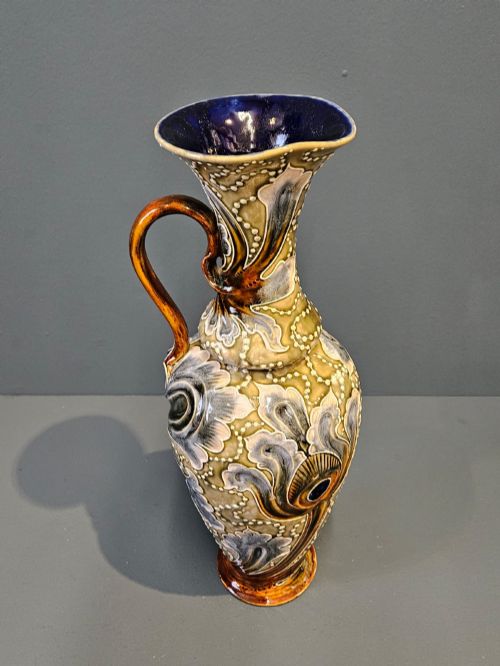


Doulton Stoneware Jug
These salt-glazed and ceramic vessels are solid Victorian and early twentieth-century domestic ironware, collected for their tactile relief decoration and salt-glazed surfaces.
Doulton Stoneware Jug
A doulton stoneware jug takes many forms across domestic utility and decorative arts, spanning harvest pitchers, whisky flasks, and sporting vessels. The versions most commonly encountered on this page belong to the late nineteenth and early twentieth centuries, emerging primarily from the Lambeth potteries during the Victorian and Edwardian eras. These pieces range from utilitarian brown salt-glazed containers to elaborate exhibition pieces bearing applied sprigs and commemorative motifs.
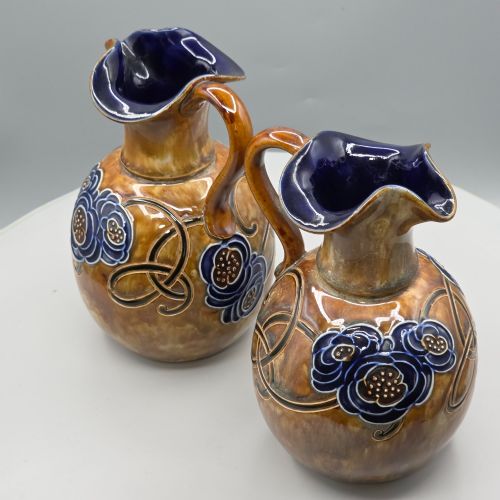
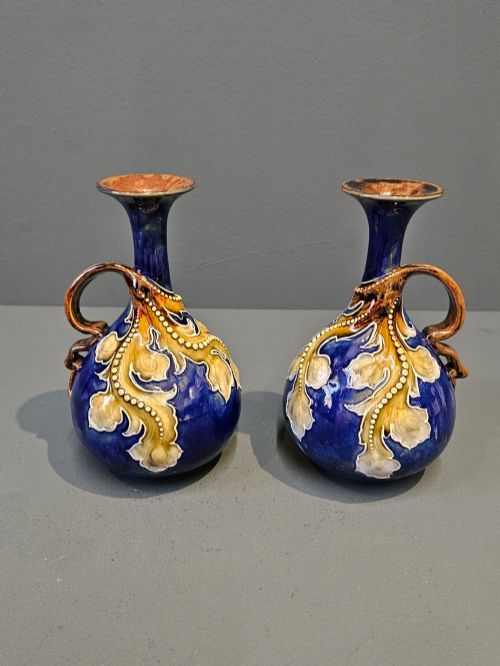
Makers and decorators utilised distinct regional styles, moving from traditional harvest designs into the rich botanical motifs of the Arts and Crafts and Art Nouveau periods. Collectors encounter everything from plain salt-glazed water vessels to silver-rimmed jugs and specialised whisky flasks commemorating figures like Emin Pasha or featuring golfing scenes. The physical weight of the ceramic and the distinct texture of the glazed body define the core of the selection.
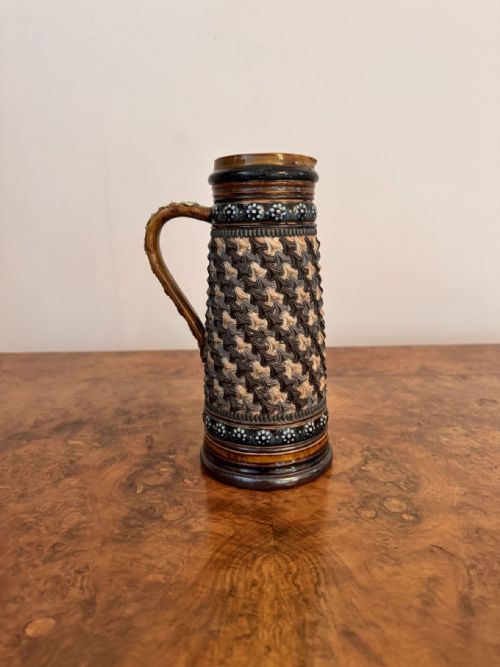
The aesthetic vocabulary encompasses Victorian decorative traditions, Aesthetic Movement patterns, and Slater's Patent textures alongside simple blue and white patterns. While some items appear as isolated jugs, others form parts of larger drinking suites or tea sets with matching bowls. Every example displays the dense, impermeable body characteristic of historic salt-glazed stoneware production.
Materials and methods
The foundational body consists of dense ceramic fired at high temperatures to achieve vitrification, rendering the vessel completely impermeable to liquids without requiring internal lead glazes. Salt-glazing represents the primary technique, where common salt thrown into the kiln during firing vaporises and reacts with the silica in the clay body to form a characteristic pebbled, orange-peel texture. This tough skin protects the underlying clay and gives historic salt glaze its resilient quality.
Decoration often involved applied sprigs, incised geometric patterns, and coloured enamels applied directly to the raw or partially fired surface before the salt kiln run. Many pieces incorporated metal mounts, specifically silver or silver plate rims added by silversmiths to reinforce the lip and elevate the status of the domestic pitcher. The integration of ceramic body, reactive salt glaze, and metal hardware defines the manufacturing process of the period.
Golfers and cricketers share shelf space with historic explorers, immortalised forever in brown salt-glazed stoneware.
Assessing the work
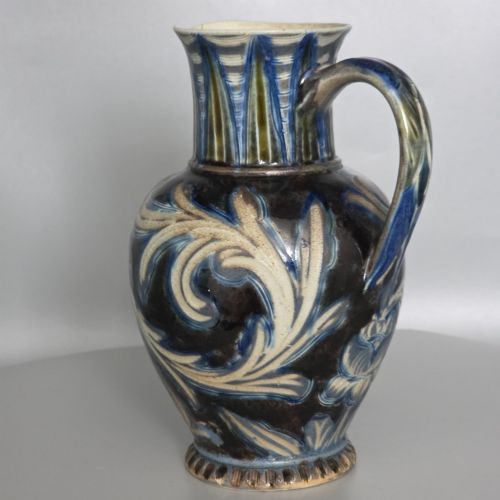
The refinement of the incised ornament and the crispness of the applied sprigs dictate the upper tiers of the range. Artisans who spent hours hand-carving botanical foliage or figurative sporting motifs produced pieces with a sculptural depth that stamped production cannot replicate. Colour application also separates standard utility pieces from exhibition grade works, where cobalt blues and rich browns achieve a controlled, luminous saturation.
The presence of hallmarked silver rims and specialised thematic motifs, such as cricket, golf, or historical commemorations, elevates the desirability of a piece. Condition of the salt glaze, uniformity of the kiln flash, and the integrity of any applied enamel further distinguish cabinet examples from everyday tavern or household jugs.
Doulton Lambeth·Royal Doulton·Emma Shute
The Doulton Stoneware Jug Glossary
- Salt glaze
- A vitreous coating formed by throwing common salt into the kiln at peak temperature. This creates an orange-peel texture across the stoneware body.
- Sprigging
- The technique of pressing small moulded clay reliefs into a separate mould and applying them to the wet body of the vessel. These motifs often depict hunting scenes or floral sprays.
- Incised
- A method of decoration where patterns are cut directly into the leather-hard clay body using a sharp tool. This allows for fluid hand-drawn lines prior to firing.
- Kingsware
- A dark brown glazed stoneware developed by the pottery featuring pale moulded figures in relief against a deep background. It frequently appears on commemorative whisky flasks.
- Aesthetic Movement
- A late nineteenth-century design style emphasising visual beauty over narrative or moral function. It introduced asymmetrical compositions and Japanese-inspired motifs.
Doulton Stoneware Jug: Frequently Asked Questions
How do I clean a salt glaze jug?
Wash the ceramic gently in warm soapy water using a soft cloth to protect the historic salt glaze surface. Avoid abrasive pads that can dull the orange-peel texture.
Dry the vessel thoroughly with a lint-free towel, taking particular care around any applied silver rims or metal mounts to prevent moisture retention.
Were these jugs used for daily drinking?
Many of these vessels served practical domestic roles, holding water, beer, or cider on Victorian dining tables and in public houses. Their robust stoneware construction made them ideal for heavy daily use.
Other examples, particularly those with intricate exhibition carving or precious metal rims, were kept primarily for display or special commemorative occasions.
What is a harvest jug?
A harvest jug is a traditional bulbous vessel decorated with raised sprigged motifs depicting rural scenes, hunting dogs, and agricultural symbols. They were traditionally filled with cider or ale during harvest celebrations.
On this page, these jugs often feature brown salt glazing and occasionally bear contemporary silver rims added to mark their importance.
How do I date an antique stoneware jug?
Dating relies on examining the factory stamps, impressed registration marks, and stylistic shifts between Victorian Gothic revival, Arts and Crafts, and Art Nouveau design. Makers altered their base marks over decades, providing a reliable chronological framework.
The presence of specific patents, such as Slater's Patent, or commemorative subjects like Queen Victoria jubilees also narrows the production window.