




Antique Russian Icon
An antique russian icon is a sacred wooden panel painting or cast metal devotional object intended for prayer, offering a direct window into Orthodox spirituality.
Antique Russian Icon
When you search for an antique russian icon, you encounter religious artwork spanning from the seventeenth century through to the early twentieth century. The selection ranges from devotional panel paintings to cast metal crosses and folding triptychs.
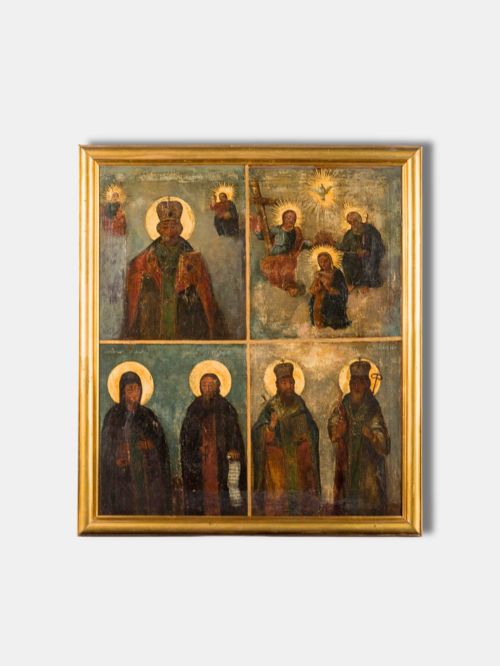
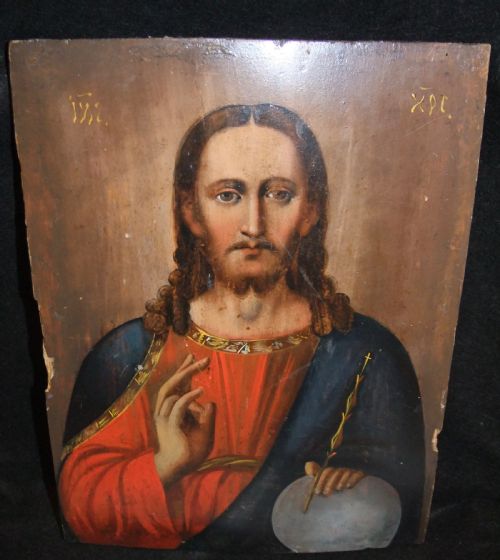
Wooden panel paintings form the core of what appears on this page, often depicting subjects such as Christ Pantocrator, St George, or the Passion of Christ. These pieces often originate from traditional workshops and regional centres associated with Russian Orthodox heritage.
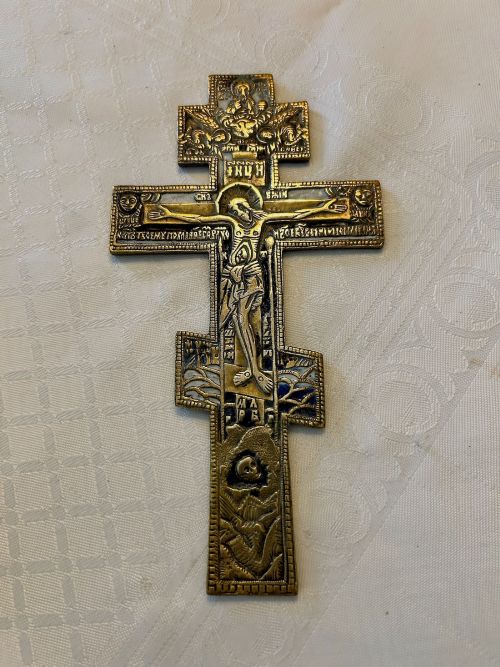
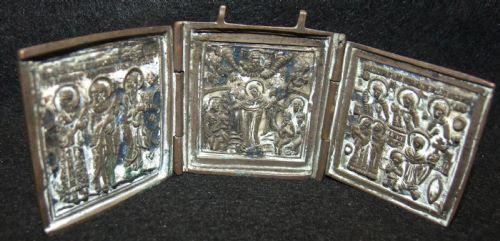
Metal devotional objects also feature among the items, including brass and bronze plaque icons incorporating blue enamel details. These travel-friendly folding pieces and crucifixes provide a portable form of sacred imagery.
Materials and construction
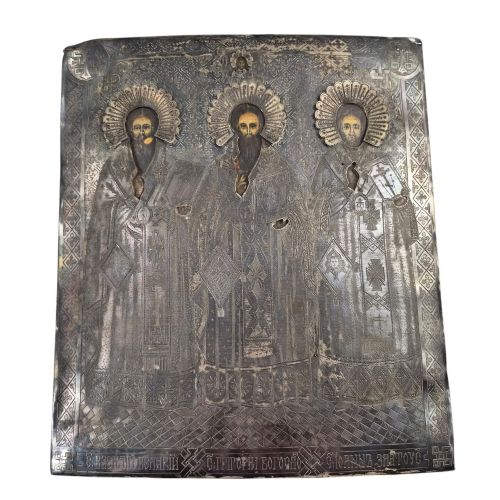
Makers utilised wood as the primary substrate for panel paintings, applying tempera paint or oil alongside gold leaf and gilt accents. Some examples also incorporate silver oklads or rizas to protect and adorn the sacred image.
Metalwork pieces rely on cast brass and bronze, frequently embellished with blue enamel work to highlight crosses and inscriptions. These techniques reflect traditional Imperial Russian metal-founding methods.
Antique Russian Icon Retail Price Guide 2026
Typical asking prices for russian icon among the pieces listed under this phrase on Sellingantiques today, from the lower quarter to the upper quarter. They describe what is for sale here now, not the wider market.
Listings feature items from the 17th Century, 18th Century, 19th Century, and early 20th Century, utilising wood, tempera, gold leaf, brass, bronze, and silver.
Distinctions in quality
The sophistication of the brushwork and the precision of the gilding set individual panel paintings apart. Finer examples display meticulous attention to facial expressions and traditional iconography.
The inclusion of metal revetments such as silver rizas or oklads introduces another tier of distinction. The craftsmanship of the metal embossing influences the overall character of the piece.
Heinrich Grünbaum·Volga Masters
The Antique Russian Icon Glossary
- Riza
- A metal cover protecting all but the hands and face of an icon. This protective metal layer is often embossed in silver or brass.
- Tempera
- A permanent, fast-drying painting medium consisting of pigmented powder mixed with a water-soluble binder. Painters traditionally used this medium on wooden panels.
- Triptych
- A picture or relief carving on three panels, hinged side by side and able to be folded shut. These served as portable devotional items for travel.
- Oklad
- A metal protective plaque placed over an icon. It serves a similar protective and decorative function to a riza.
- Pantocrator
- An icon depicting Christ as ruler of all. This traditional representation shows him holding gospels and raising his right hand in blessing.
Antique Russian Icon: Frequently Asked Questions
How do I hang a wooden icon?
Most wooden panel icons are designed for display in a corner or specific wall space within an Orthodox home, typically resting on a small shelf or hung securely from a sturdy bracket.
Because these are historic objects, ensure the mounting method supports the weight of the wood without stressing the panel structure.
Are bronze icons meant for travel?
Cast bronze and brass icons, particularly folding triptychs and small crosses, were traditionally produced for portable devotion and travel use. Their durable metal construction allowed worshippers to carry their faith on journeys.
These robust objects frequently incorporate blue enamel to emphasise sacred inscriptions and decorative borders.
How do I tell an eighteenth century icon from a nineteenth century one?
Differentiating between centuries involves examining the style of painting, the preparation of the wooden panel, and the characteristics of any accompanying metalwork. Eighteenth-century examples often display distinct regional school traits and older pigment formulations.
Nineteenth-century pieces frequently show broader industrial influences in their silver rizas and standardised panel preparation.