


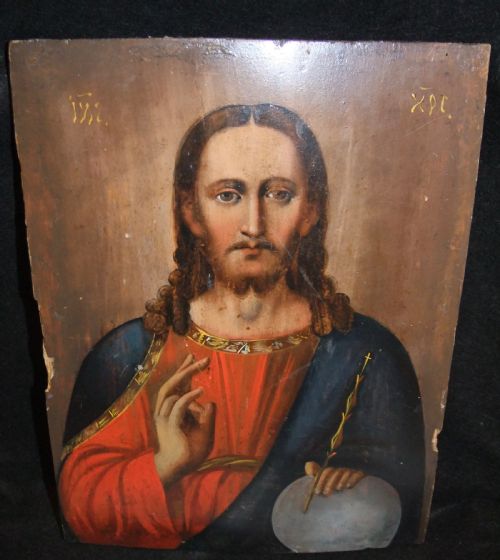


Orthodox Wooden Icon
An orthodox wooden icon brings sacred devotion into the home through centuries of prayer, crafted in styles from Russian Orthodox to Imperial Russian.
Orthodox Wooden Icon
When you search for an orthodox wooden icon, you encounter panel paintings and religious artwork created for veneration and domestic devotion. The pieces span periods from the eighteenth century to the early twentieth century, reflecting traditional workshop practices.
You are most likely to meet nineteenth-century examples on this page, often depicting subjects such as Christ Pantocrator, the Crucifixion, or St George. These devotional works originate primarily from Russian makers and circle traditions.
The objects take the form of wall art and mounted panels, serving both liturgical functions and personal prayer. Their forms range from simple wooden boards to complex compositions incorporating multiple scenes.
How they were made
Maker workshops built these icons on solid wood panels, applying grounds of gesso before executing the imagery in tempera paint, egg tempera, or oil. Painters worked within strict canonical traditions to render sacred figures with recognisable iconography.
Many panels incorporate precious embellishments alongside the painted surface, utilising gold leaf, silver, and gilt elements to highlight halos and vestments. Secondary mountings and fixtures frequently employ brass or bronze for structural and decorative support.
Listings span from the seventeenth century to the early twentieth century, utilising wood, tempera, gold leaf, silver, and bronze.
What varies in quality
The integration of precious materials such as gold leaf and silver ornamentation marks the distinction between simpler devotional objects and high-status commissions. The preservation of the original painted surface and panel substrate dictates the visual integrity of the surviving work.
The Orthodox Wooden Icon Glossary
- Tempera paint
- A permanent, fast-drying painting medium consisting of coloured pigment mixed with a water-soluble binder material such as egg yolk. This traditional medium forms the primary painted surface on older wooden panels.
- Gold leaf
- Gold beaten into extremely thin sheets used for gilding backgrounds and halos. It provides the reflective ground essential to orthodox devotional aesthetics.
- Egg tempera
- A paint made by mixing pigments with whole egg or egg yolk. It allows for meticulous layering and fine detail work on sacred panels.
- Panel painting
- A painting made on a flat panel made of wood. These form the structural support for the religious imagery.
- Gilt
- Covered thinly with gold leaf or gold paint. This technique enhances the divine light associated with holy figures.
Orthodox Wooden Icon: Frequently Asked Questions
What is an orthodox wooden icon?
An orthodox wooden icon is a sacred image painted on a wooden panel according to traditional religious canons. These pieces served as focal points for prayer in churches and homes.
They represent holy figures, saints, and biblical narratives, functioning as windows to the divine within Orthodox Christian practice.
How were orthodox wooden icons used?
Believers placed these panels in homes for daily prayer, often in a designated corner known as the red corner. They were also used in church settings for veneration during services.
People lit candles and oil lamps before them, integrating the artwork directly into their spiritual lives.
How do I date an icon?
Dating relies on stylistic analysis of the painting technique, the preparation of the wood panel, and any accompanying inscriptions or metalwork. Eighteenth-century examples often display different pigment handling compared to nineteenth-century pieces.
Examining the reverse of the panel and the method of construction provides further clues to its age.
How should I care for a wooden icon?
Keep the panel away from direct sunlight, radiators, and rapid changes in humidity to prevent the wood from warping or cracking. Avoid cleaning the painted surface with water or chemical solvents.
Stable environmental conditions ensure the tempera paint and gold leaf remain preserved for the future.