
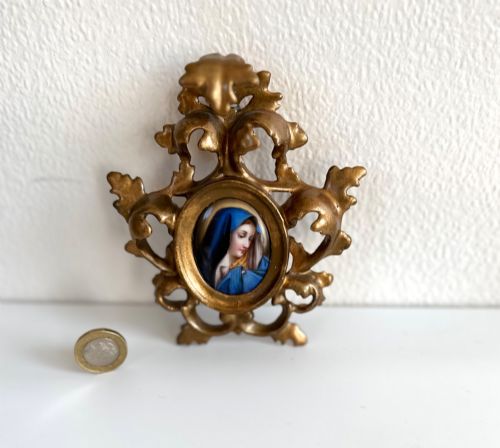


Virgin Mary Icon
A virgin mary icon brings centuries of devotion into a room, spanning modest household pieces and grand devotional works.
Virgin Mary Icon
When you search for a virgin mary icon, you encounter a diverse range of devotional art forms, from oil paintings on canvas to carved wooden sculptures and metal medals. The pieces on this page cross multiple periods, notably the nineteenth century, alongside earlier seventeenth-century works and later twentieth-century interpretations.
You will find formats ranging from small pendants in eighteen-carat rose gold to large religious oil paintings and wall art. Styles span from Russian Orthodox traditions to Spanish Colonial, Victorian Gothic Revival, and primitive outsider art.
The selection reflects both intimate personal items, such as miniature portraits and bronze or brass plaquettes, and substantial architectural or domestic wall pieces. Each object carries the distinct material and stylistic hallmarks of its origin and era.
Materials and construction
Makers utilised traditional supports including carved applewood and standard wood panels, frequently pairing them with painted surfaces in oil or tempera. Metalwork pieces incorporate silver plate, gilt metal, and eighteen-carat rose gold, sometimes featuring intricate engraving.
Russian examples often employ protective oklad coverings over painted imagery, while other devotional pieces utilise linen foundations and printed paper under glass or within framed wall art. Sculptural works rely on direct carving techniques in wood or casting in base metals and brass.
Listings feature wood, silver plate, gilt metal, enamel, carved wood, oil on canvas, linen, and eighteen-carat rose gold across multiple centuries.
Assessing quality and execution
The distinction between standard devotional objects and superior examples lies in the execution of the painted or carved detail. Finer works display accomplished brushwork in oil on canvas or precise chisel marks on carved wood, particularly in facial expressions and drapery folds.
Material choice elevates certain pieces, such as those incorporating solid eighteen-carat rose gold or substantial carved applewood rather than simpler prints or silver-plated substitutes. The integrity of preserved oklads and original frames also contributes significantly to the overall standing of an icon.
The Virgin Mary Icon Glossary
- Oklad
- A protective metal cover placed over a painted icon, typically leaving only the face and hands visible. It is often embossed or chased with intricate patterns.
- Pieta
- A specific depiction of the Virgin Mary mourning over the dead body of Christ. This subject appears in European painting and sculpture.
- Pendant
- A small devotional object designed to be worn on a chain or carried on the person. These frequently take the form of engraved metal medals.
- Art Brut
- A term for outsider or primitive art created outside traditional academic boundaries. Pieces in this category display raw, unpolished execution.
- Rococo Revival
- A nineteenth-century decorative style marked by ornate, asymmetrical scrolls and naturalistic floral motifs. It influences the framing and presentation of certain religious pieces.
Virgin Mary Icon: Frequently Asked Questions
How do I date an older icon?
Dating relies on examining the materials, pigments, wood preparation, and style of the piece. Diagnostic clues include the type of panel construction, nail types, and framing methods.
Later Victorian and twentieth-century examples often use machine-cut elements or modern pigments, whereas seventeenth and eighteenth-century works show distinct hand-tool marks and aged crackleur in the paint layers.
Where were these displayed?
Devotional icons served different functions depending on their scale and format. Large painted works and carved sculptures hung in domestic corner shrines or religious institutions.
Smaller pieces, such as brass plaquettes and gold medals, functioned as portable personal devotions carried during travel or worn daily.
Are painted icons fragile?
Painted wooden panels and canvas works require stable environmental conditions to prevent wood movement and paint flaking. Direct sunlight and humidity fluctuations pose risks to old surfaces.
Handling should be minimised, and pieces are best kept away from heat sources to preserve the integrity of the original gesso, paint, and varnish layers.