


Antique Crucifix Pendant
An antique crucifix pendant brings centuries of devotion and craftsmanship together in a wearable form.
Antique Crucifix Pendant
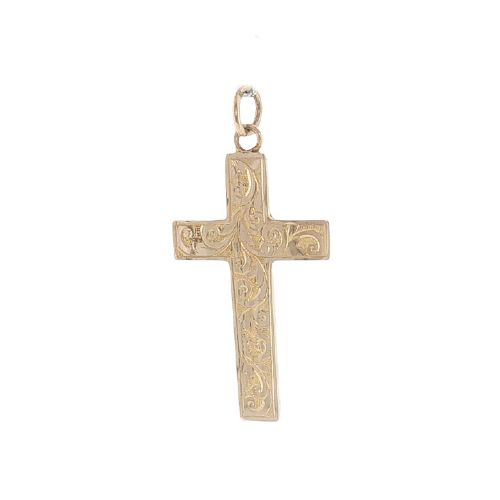
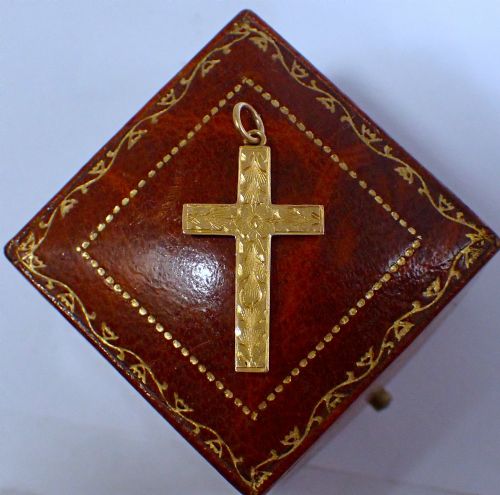
An antique crucifix pendant represents a devotional object transformed into personal jewellery over generations of wear. When searching for an antique crucifix pendant, buyers encounter forms ranging from simple engraved gold crosses to elaborate gem-set pieces originating from Georgian, Victorian, and Edwardian workshops.
The pieces on this page span several distinct periods, with Victorian and Edwardian examples appearing most frequently alongside Georgian and early twentieth-century designs. Formats vary from straightforward pendants to convertible brooch-pendant combinations and locket variants.
Materials and Construction
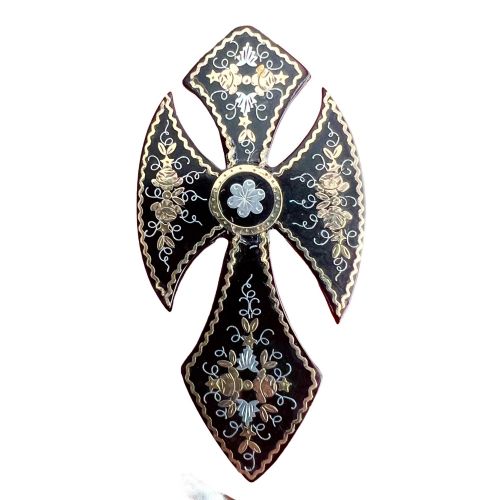
Gold and silver form the foundational metals of these pieces, utilised across various purities including nine-carat, fifteen-carat, and eighteen-carat gold alongside sterling and continental silver. Metalsmiths employed techniques such as hand engraving, pique work, and casting to shape the cross framework.
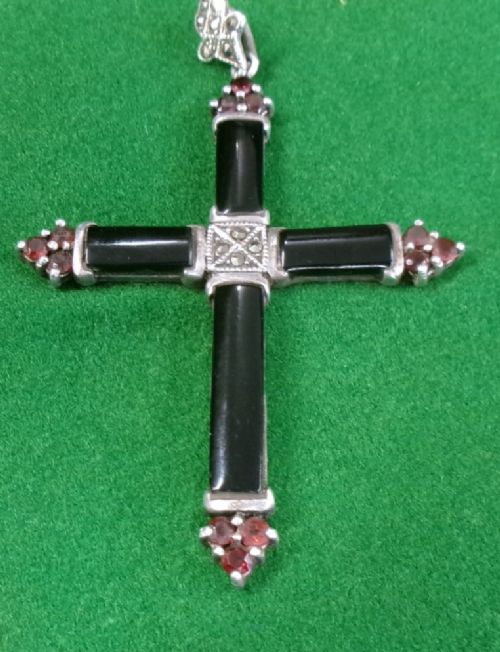
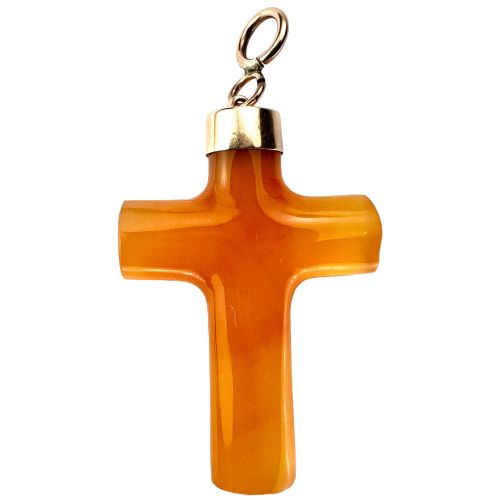
Gemstones and decorative mediums frequently enhance the metalwork, incorporating seed pearls, diamonds, sapphires, rubies, turquoise, coral, onyx, and agate. Coloured enamel work, particularly in blue tones, adds vibrant contrast to both silver and gold structures.
Some Victorian crosses double as secret lockets, allowing wearers to keep tiny locks of hair hidden behind the sacred motif.
Distinctions in Quality
Quality in these pieces depends on the precision of the metal engraving and the security of the stone settings. Finer examples display crisp hand-carved details on materials like agate or wood, and meticulous flush or prong settings for diamonds and pearls.
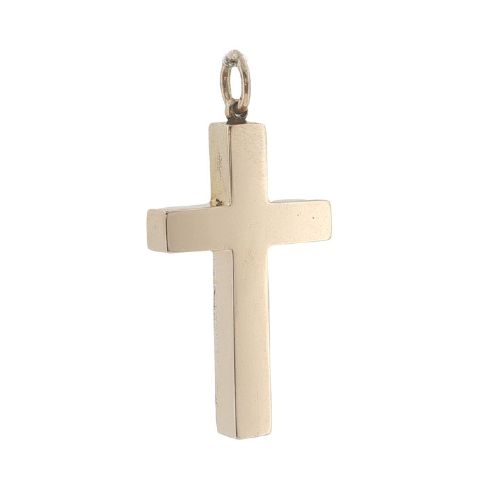
The integration of maker marks or assay office stamps provides verifiable provenance that elevates a piece. Superior workshops balance structural durability with delicate aesthetic proportions, ensuring the suspension loop and reverse side receive the same attention as the front face.
Omar Ramsden & Alwyn Carr·Henry Cook
The Antique Crucifix Pendant Glossary
- Pique
- A technique involving the inlay of tiny pins of gold or silver into a non-metallic base such as tortoiseshell or amber. This method requires immense patience and steady hands to achieve geometric or floral patterns.
- Brooch-pendant
- A dual-purpose jewellery item fitted with both a pin mechanism and a suspension loop. This versatility allows the owner to wear the piece pinned to clothing or suspended from a chain.
- Seed pearl
- A very small, naturally occurring pearl often used in Victorian jewellery clustered around central stones. Their delicate size demands careful hand-threading or wire-securing.
- Georgian
- Pertaining to the period from 1714 to 1830, characterised by hand-cut gemstones and closed-back settings that enhance stone colour. Pieces from this era often feature foiled gems to increase brilliance under candlelight.
Antique Crucifix Pendant: Frequently Asked Questions
How do I date an antique crucifix pendant?
Dating relies on hallmarks, metal purity standards, gemstone cuts, and overall manufacturing techniques typical of specific eras like Georgian or Edwardian times.
Assay office stamps and maker marks provide the most precise chronological anchor for pieces bearing official silver or gold guarantees.
Can these pendants be worn daily?
Most solid gold and silver crucifixes withstand regular wear provided the chain is secure and the pendant is removed before strenuous activities.
Pieces set with softer organic materials like seed pearls or coral require gentler treatment to prevent moisture damage or displacement.
Were these always worn as necklaces?
Historical evidence shows these items functioned in multiple ways, frequently doubling as brooches or resting inside locket compartments alongside devotional photographs.
Convertible mounts allowed owners to adapt the piece to changing fashions and personal wardrobe preferences across the nineteenth and twentieth centuries.