


Victorian Religious Jewellery
Victorian religious jewellery brings together devout symbolism and fine nineteenth-century goldsmithing, offering wearable crosses, lockets and pendants that carry centuries of rich iconography.
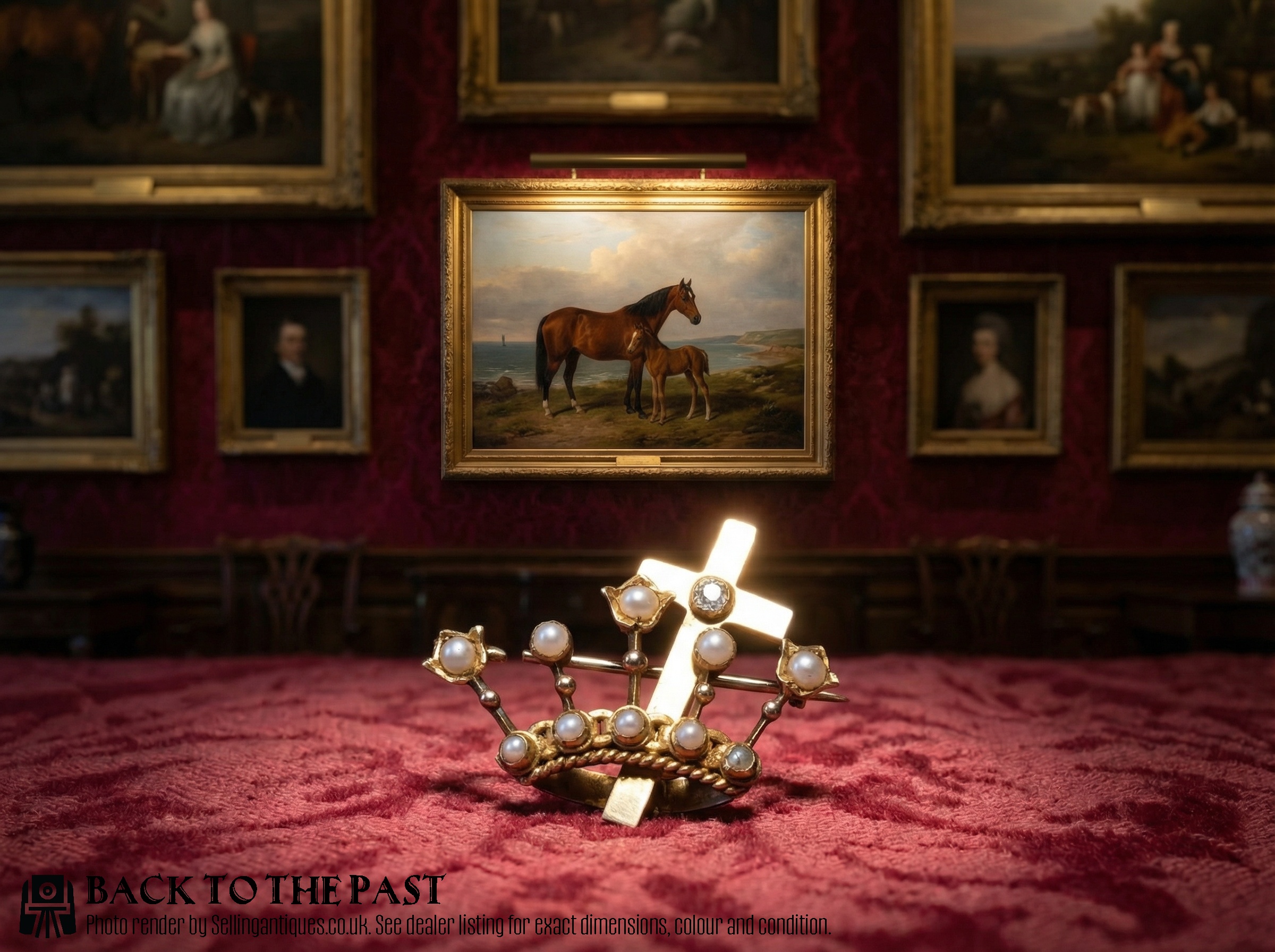
Victorian Religious Jewellery
Victorian religious jewellery encompasses devotional pieces such as crosses, crucifixes, pendants and medals created during the nineteenth century and adjacent periods. When searching for victorian religious jewellery, buyers encounter items ranging from simple gold crosses to elaborate combinations of silver, diamonds and enamel.
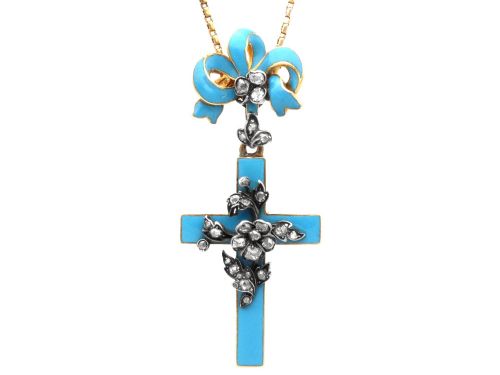
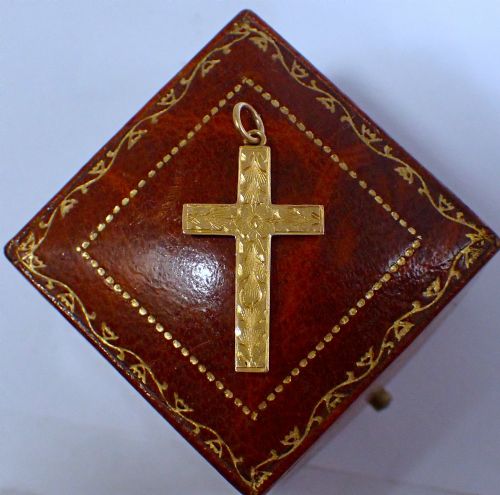
The selections on this page demonstrate the prominence of cross and crucifix forms, alongside devotional medals depicting figures like the Virgin Mary. These pieces frequently double as lockets or convert between brooches and pendants, reflecting the versatile jewellery design of the era.
Origins span British Victorian workshops to French antique pieces and Italian Grand Tour cameos. While the core of the selection remains strictly Victorian, related Edwardian and later pieces occasionally appear to complement the primary style.
How they were made
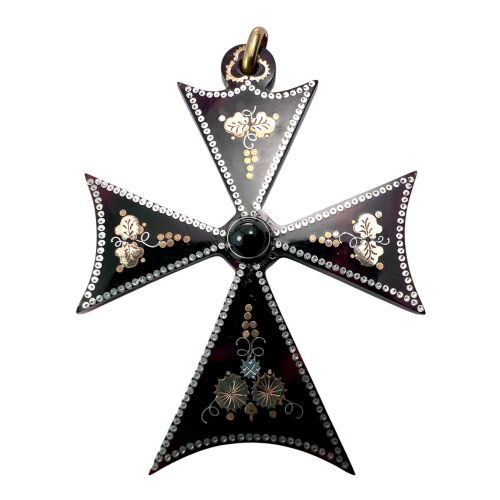
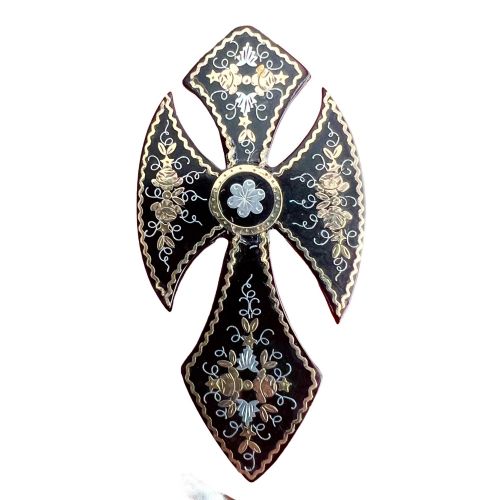
Goldsmiths utilised yellow gold, 15ct gold and silver, often combining metals inlays to create high-contrast settings for gemstones. Pique work and tortoiseshell also appear, alongside rolled gold for larger locket forms.
Lapidary and setting techniques include rose cut diamonds, seed pearls, turquoise, sapphires and hand-carved mother of pearl or shell cameos. Enamel work provides rich colour backgrounds, while intricate hand engraving decorates the metal surfaces.
Cherubs peer out from mother of pearl, watching silently over the wearer from their tiny golden frames.
What varies in quality
The distinction between standard items and superior examples lies in the intricacy of the metalwork and the grade of the stones utilised. Finer pieces display crisp hand engraving, secure stone settings and sophisticated multi-metal inlays rather than simple stamped construction.
Artisanal execution dictates the overall merit, particularly in hand-carved cameos or detailed enamel work where precision defines the visual depth. The integration of functional elements, such as convertible brooch and pendant fittings, also marks higher tier craftsmanship.
Henry Cook
The Victorian Religious Jewellery Glossary
- Crucifix
- A cross bearing the figure of Jesus Christ. This form serves as a central devotional object in religious adornment.
- Pique
- A technique involving the inlay of gold or silver pins into a dark organic material like tortoiseshell. It creates delicate geometric or floral patterns across the surface.
- Rose cut
- An antique diamond cut featuring a domed top with triangular facets and a flat base. This cut produces a soft, candlelit shimmer rather than modern brilliance.
- Grand Tour
- A cultural journey of Europe undertaken by wealthy nineteenth-century travellers. Items acquired along the way often included Italian cameos and local devotional medals.
- Rolled gold
- A material made by bonding a thin sheet of gold to a base metal core. It provided the appearance of solid gold at a more accessible cost during the period.
Victorian Religious Jewellery: Frequently Asked Questions
What materials are used in Victorian religious jewellery?
Makers of the period utilised gold, silver and rolled gold as the structural base for their devotional pieces. Gemstones such as diamonds, pearls, turquoise and sapphires frequently accent the design alongside enamel and carved mother of pearl.
These materials were often combined, such as gold and silver inlay work, to enhance the visual contrast of the crosses and pendants.
How do I wear an antique cross pendant?
Many Victorian crosses and crucifixes were designed with versatile fittings, functioning simultaneously as pendants and brooches. This allows them to be suspended from a chain around the neck or pinned to garments.
Heavier locket versions can hold small photographs or mementoes inside, combining sentimental utility with religious devotion.
Are these pieces strictly from the Victorian era?
While the core aesthetic is distinctly Victorian and Victorian Gothic, the selection includes related pieces from French antique and Edwardian origins. Items range from the late nineteenth century into early twentieth-century interpretations.
Each period brings slight shifts in material preferences, such as the use of white gold or platinum accents in later decades.
What is a devotional medal pendant?
Devotional medals are small wearable pieces stamped or carved with religious figures, most commonly the Virgin Mary or cherubs. They served as personal expressions of faith and protection for the wearer.
French makers frequently produced these medals in high-karat yellow and rose gold, often surrounded by seed pearls or floral motifs.