

Silver Locket Pendant
A silver locket pendant holds a hidden portrait or keepsake close to the heart, carrying personal history from the Georgian era through to the Art Deco period.
Silver Locket Pendant
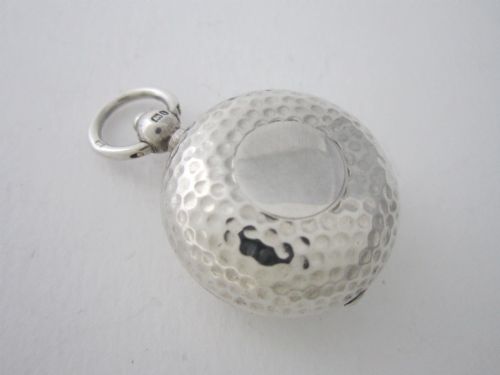
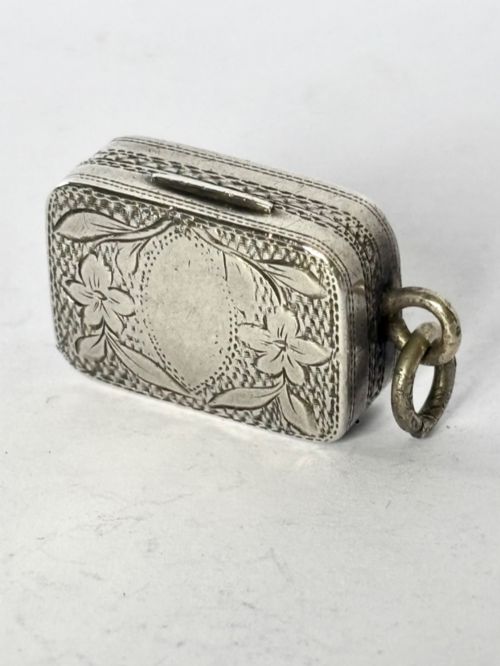
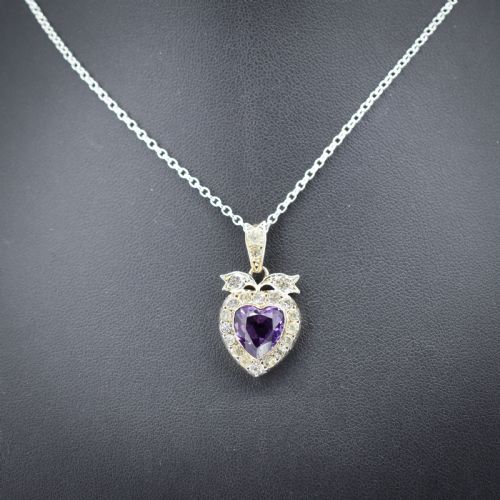
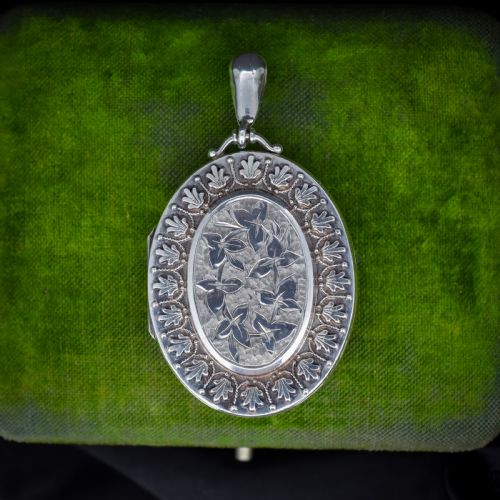
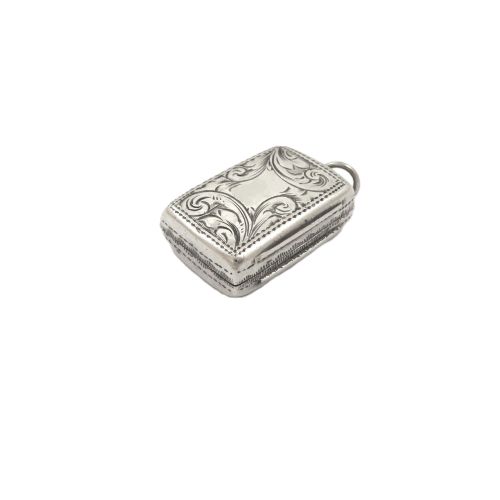
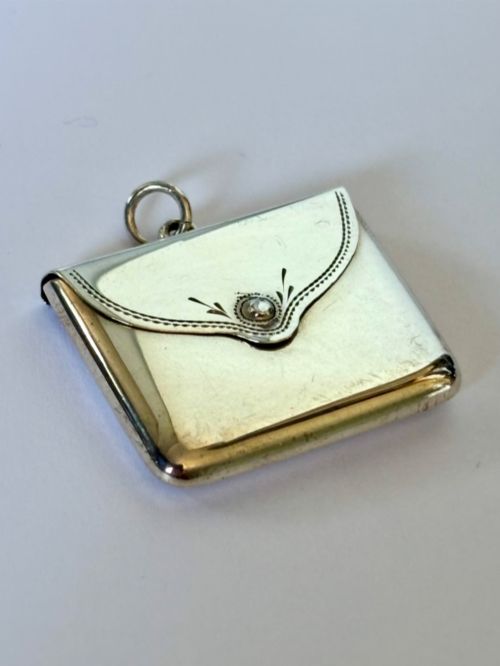
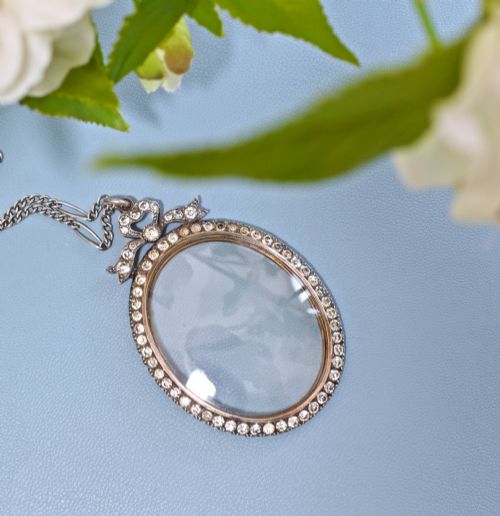
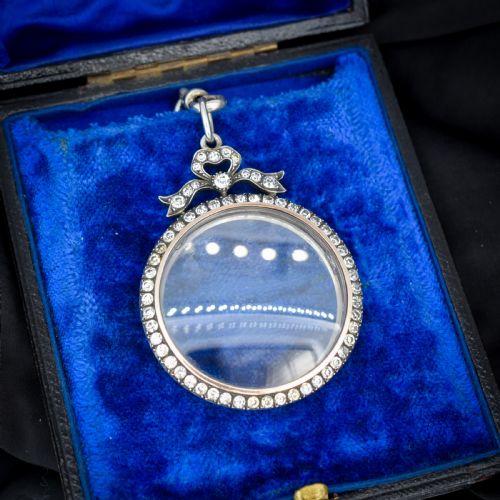
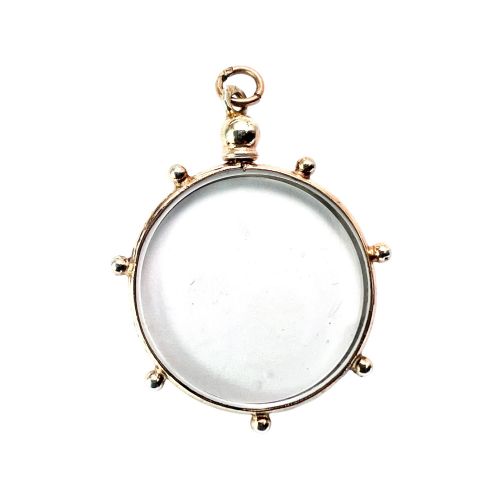
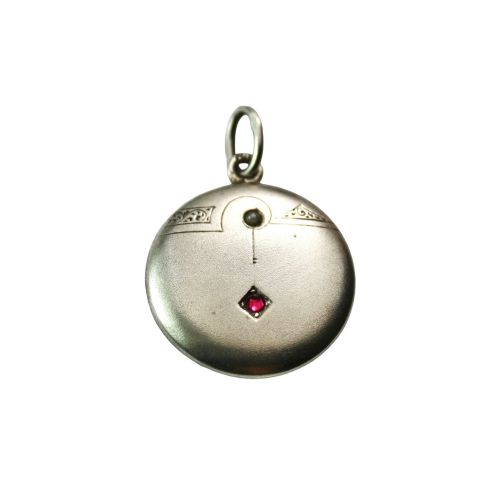
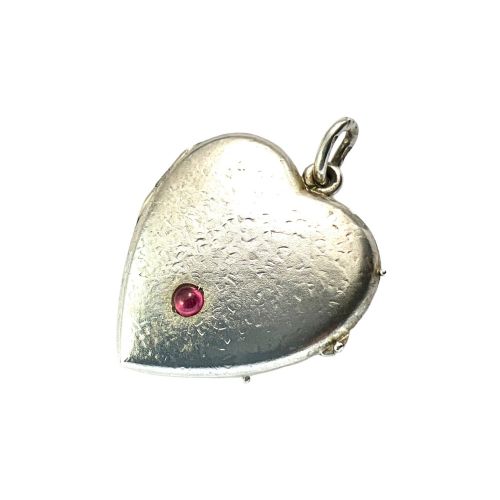
A silver locket pendant bridges ornamental jewellery and functional container, appearing frequently in Victorian and Edwardian variations designed to hold photographs, hair, or mementos. Pieces on this page range from oval photo lockets and heart-shaped hinged cases to specialised accessories such as vinaigrettes, stamp cases, and compacts.
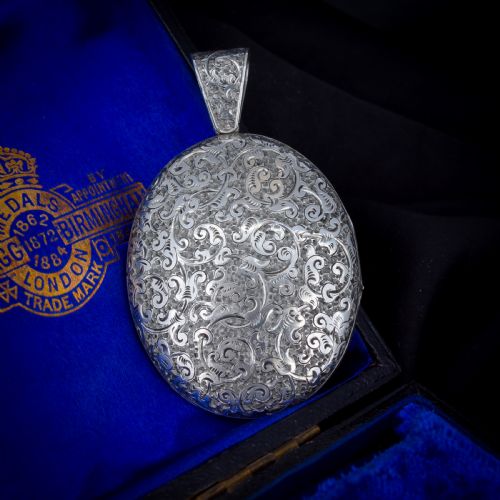
Victorian examples dominate the selection, often decorated with floral engraving, swallows, ivy, or monograms like AEI, while later Edwardian and Art Deco iterations introduce enamel, paste, and geometric motifs. Makers span English assay offices, Scottish workshops utilising horn and agate, and continental centres producing Viennese enamel and Danish silver.
The objects serve as wearable archives, shifting from the sentimental black enamel and pearl pieces of the nineteenth century to the lighter, stylized designs of the 1920s and 1930s.
Materials and Techniques
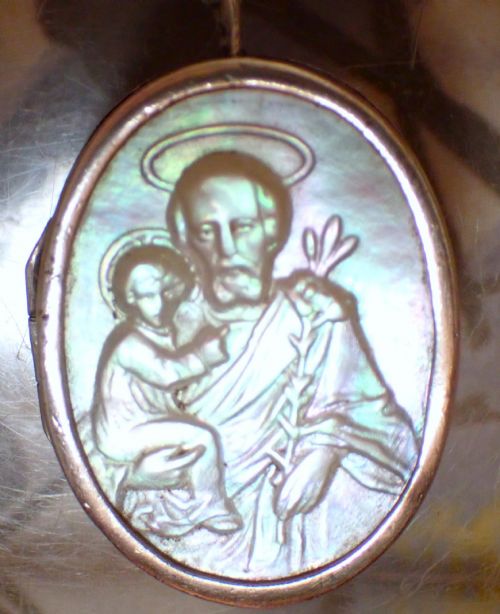
Silversmiths constructed these pieces primarily in sterling silver and silver gilt, occasionally combining them with gold accents, tortoise shell, Scottish horn, or mother of pearl. Engraving, filigree, and repoussé work formed the structural decoration of the metal surfaces.
Internal components relied on secure hinges and glass bezels to protect photographs or watercolours, while surface colour was added using black enamel, guilloche enamel, or polychrome Viennese techniques. Gemstones such as paste, seed pearls, opals, diamonds, citrines, and turquoise were handset to accent the silver mounts.
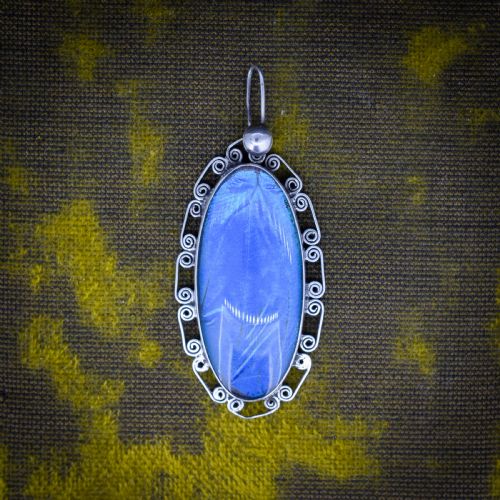
Swallows, ivy leaves, and butterfly wings flutter across the centuries, proving Victorians and modernists alike possessed a soft spot for winged things.
Standards of Craftsmanship
The distinction between standard production and exceptional work rests on the crispness of the hand-engraving and the structural integrity of the bezel settings. Pieces featuring deep floral carvings, precise ivy leaf motifs, or detailed swallows demonstrate superior hand-skill compared to mass-stamped alternatives.
Quality also resides in the complexity of the materials, where integrated gold highlights, undamaged guilloche enamel, and well-preserved internal frames elevate the piece above simple stamped silver containers.
SAMUEL PEMBERTON·CRISFORD AND NORRIS·ALBERT ERNEST JENKINS·HENRY PERKINS AND SONS
The Silver Locket Pendant Glossary
- Vinaigrette
- A small ornamental box or pendant fitted with a pierced internal grille, originally used to hold a sponge soaked in aromatic vinegar. These date primarily from the Georgian and Victorian periods.
- Guilloche enamel
- A decorative technique where a precious metal surface is mechanically engraved with intricate repetitive patterns and then covered with transparent enamel. It appears frequently on pieces from the Edwardian and Art Deco eras.
- Sknvirke
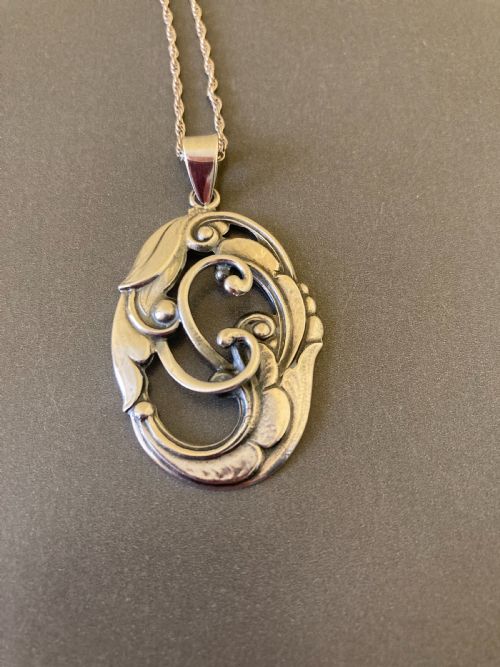
- A Scandinavian stylistic movement associated with Art Nouveau design, emphasising organic lines and craftsmanship in silver jewellery.
- Stamp case
- A small, book-shaped or envelope-form silver case designed to hold postage stamps. These were popular novelty items during the reigns of George III and George V.
Silver Locket Pendant: Frequently Asked Questions
What fits inside a silver locket pendant?
These hinged compartments were originally designed to hold miniature watercolours, locks of human hair, dried flowers, or early photographic prints.
Many retain their original glass covers and tiny bezels to secure these keepsakes safely against the body.
How do I date a silver locket pendant?
Dating relies on a combination of hallmarks, decorative motifs, and manufacturing techniques. Victorian pieces often display heavy floral engraving or sentimental monograms, while later Edwardian and Art Deco examples feature geometric lines or guilloche enamel.
Assay office stamps and maker marks provide precise years of production where hallmarks remain clear.
Were all silver lockets worn as necklaces?
While the majority hung from silver chains, many historical pieces served multiple functions. Some incorporated brooch fittings to be pinned directly to garments, while others functioned as chatelaine attachments or pocket accessories.
Objects like vinaigrettes and stamp cases were similarly suspended from chains or carried in pockets.
What is the difference between sterling silver and silver gilt?
Sterling silver consists of solid silver alloyed for durability, representing the primary material for the majority of Victorian and Edwardian pieces on this page.
Silver gilt, or vermeil, is sterling silver that has been coated with a thin layer of gold, a technique frequently observed on earlier Georgian items such as vinaigrettes.