
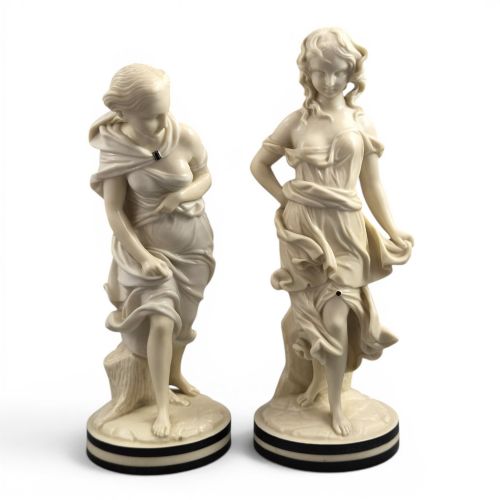


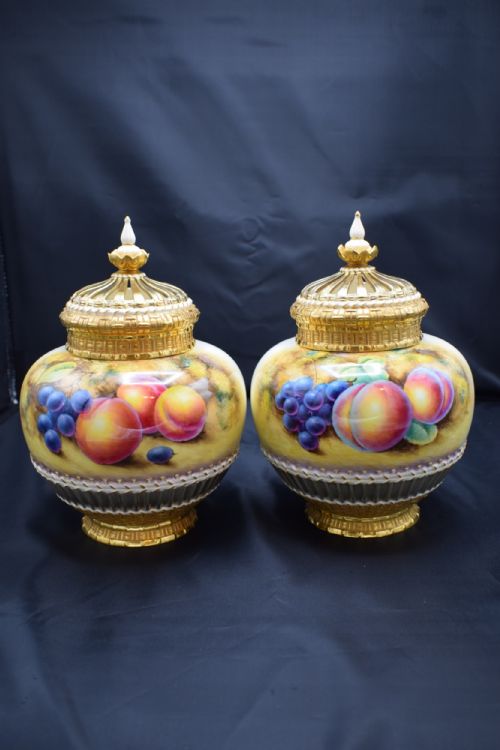


Antique Royal Worcester Pair
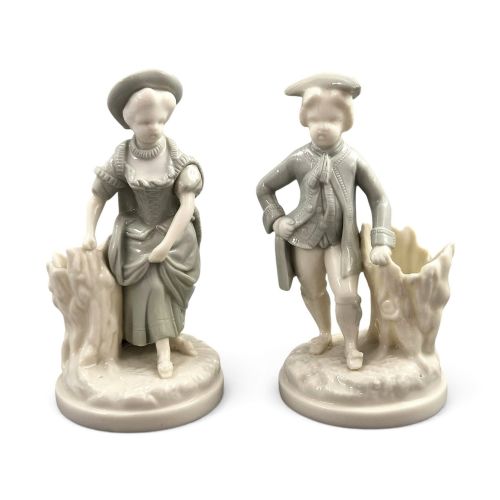
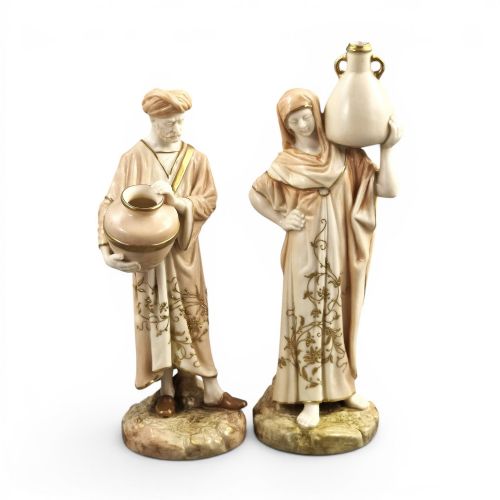
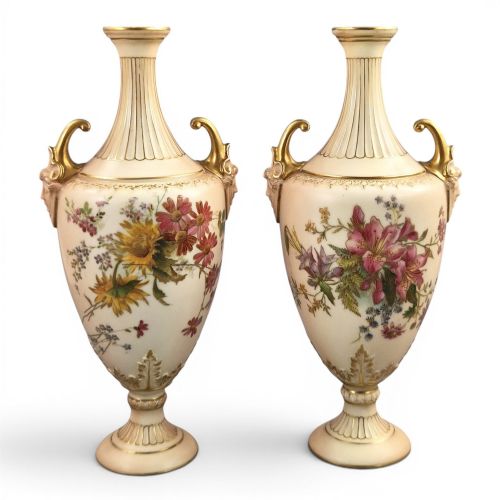
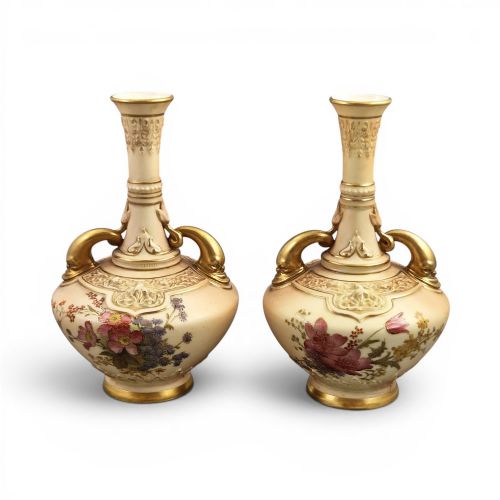
An antique royal worcester pair brings exceptional Victorian and Edwardian craftsmanship into a room through matching porcelain vases, figures and plates.
Antique Royal Worcester Pair
When searching for an antique royal worcester pair, collectors encounter matched sets spanning the nineteenth and twentieth centuries, predominantly featuring vases, figurines, and cabinet plates. The Edwardian blush ivory pieces and Victorian figural groups appear frequently alongside hand-painted botanical and animal subjects.
The selection ranges from cabinet-sized miniature vessels to large urns and candelabra, often produced in symmetrical designs intended for mantelpieces and side tables. Makers working during the late Victorian and Edwardian periods developed distinct regional motifs, including Orientalist figures and naturalistic floral studies.
Matched pairs demonstrate the factory's output across shifting aesthetic movements, from Aestheticism and Art Nouveau to mid-century decorative styles. These dual items preserve the original design intent of balanced interior display common to period homes.
Judging Quality
The distinction between standard factory output and top-tier pieces rests on the complexity of the hand painting and the prominence of the artist. Works signed by notable painters such as the Stintons, Charles Baldwyn, or James Hadley command greater attention for their artistic execution.
Quality also depends on the crispness of the porcelain body and the precision of the gilding and enamel work. Intricate modelling, such as pierced panels or figural handles, indicates higher manufacturing skill compared to standard printed or lightly decorated bodies.
The inventory records diverse decorative styles from Victorian Aesthetic Movement and Art Nouveau to Edwardian and mid-century modern design.
James Hadley·C Baldwyn·Harry Stinton·James Stinton·William Ricketts·Kerr and Binns·Flight Barr and Barr
The Antique Royal Worcester Pair Glossary
- Blush ivory
- A soft, creamy matte glaze developed by the factory in the late nineteenth century that resembles ivory and accepts pastel hand painting.
- Cabinet plate
- A decorative plate intended for display in a cabinet or on a wall rather than for dining use.
- Ewer
- A large jug with a wide spout and elaborate handle, frequently produced in matched pairs for decorative display.
- Pot pourri
- A vessel with a pierced cover designed to hold dried scented plant material, often made in matched sets with inner lids.
- Spill vase
- A tall, narrow cylindrical vessel created to hold slender wooden spills used for lighting fires.
Antique Royal Worcester Pair: Frequently Asked Questions
What defines a royal worcester pair?
A matched set of two porcelain or bone china objects produced by the Worcester factory, sharing identical forms, decorative schemes, and factory marks.
These pieces were designed specifically for symmetrical display on mantelpieces, sideboards, or occasional tables in period interiors.
How do I identify blush ivory porcelain?
Blush ivory pieces feature a distinctive, warm, creamy-matte background glaze that lacks the bright gloss of traditional white porcelain.
This matte surface was specifically formulated to complement delicate hand-painted floral motifs and subtle gilding during the late Victorian and Edwardian eras.
Are painted animal scenes common?
Hand-painted wildlife subjects, particularly highland cattle, sheep, and birds like swans and storks, form a recognisable category within the factory's output.
Specific studio artists specialised in these detailed natural history scenes, signing their work directly onto the porcelain surface.
How should I display delicate antique porcelain?
Matched pairs require stable, level surfaces away from direct sunlight and sudden temperature fluctuations to protect the enamel colours and gold leaf.
Enclosed cabinets provide physical security and protection from dust for fragile items like pierced plates and miniature vases.