






Antique Print Rack
An antique print rack holds your papers and plates with the gravity of a country house library.

Antique Print Rack
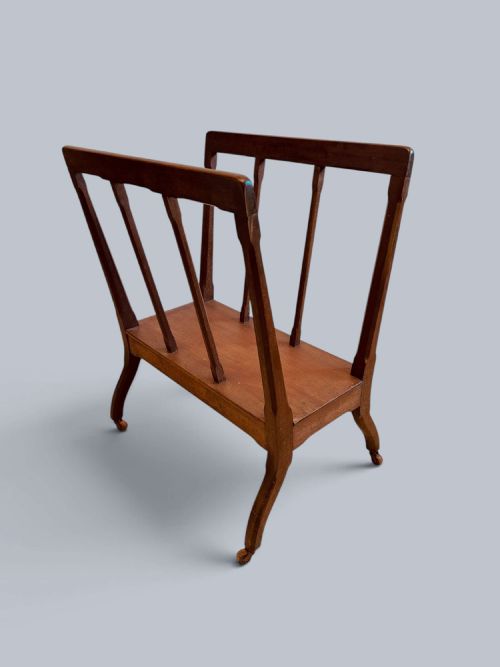
An antique print rack takes the form of a folio stand or library scroll stand designed to hold large sheets, maps, and engravings without rolling them. These pieces serve as practical furniture for artists, architects, and collectors who need to browse heavy portfolios with ease.
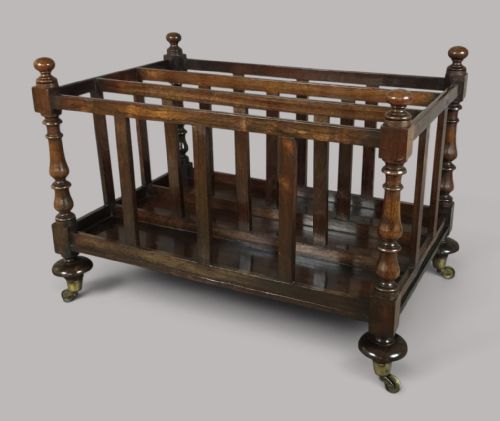
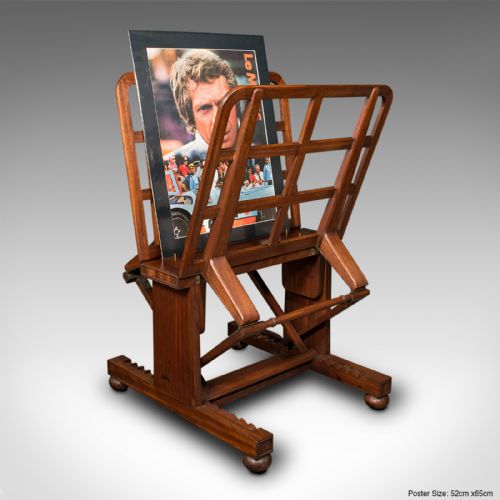
You are most likely to meet mahogany or oak examples dating from the Regency and Victorian periods, often featuring adjustable frames and sturdy panel sides. Some larger versions combine the functions of a folio stand and a canterbury, providing compartments for both loose sheets and bound volumes.
The objects span late Georgian, George IV, and Victorian eras, reflecting the domestic library habits of the nineteenth century. Whether constructed as a grand scale country house piece or a simpler artist's stand, each rack is built to display heavy paper collections.
How they were made
Cabinetmakers constructed these stands predominantly in timbers such as mahogany, oak, walnut, and rosewood, selecting woods with dense grain to support heavy loads of paper. Brass fittings and hinges frequently secure the folding mechanisms and adjustable struts.
Joinery techniques focus on stability under weight, utilising robust framing for the sloping sides that hold the portfolios. Some variants incorporate leather panels or troughs to protect the edges of stored prints and drawings.
Antique Print Rack Retail Price Guide 2026
Typical asking prices for print rack among the pieces listed under this phrase on Sellingantiques today, from the lower quarter to the upper quarter. They describe what is for sale here now, not the wider market.
The listings span the nineteenth century, featuring oak, mahogany, walnut, and rosewood forms designed as folio stands and library scroll stands.
What varies in quality
The distinction between standard library items and top tier pieces rests on the choice of timber and the sophistication of the adjustable mechanism. Finer examples display carefully selected mahogany or rosewood veneers and sophisticated brass ratchets that hold the stand at precise angles.
Proportion and scale also dictate quality, as grander country house models demonstrate more ambitious turning on the legs and deeper structural framing than utilitarian studio racks.
The Antique Print Rack Glossary
- Folio stand
- A hinged wooden rack designed to hold large flat sheets of paper, prints, or drawings upright or at a sloping angle. These pieces allow a collector to flip through works of art safely.
- Scroll stand
- A form of rack suited to holding rolled documents or scrolls, frequently constructed in oak during the nineteenth century. This term often overlaps with library stands designed for architectural plans.
- Canterbury
- A low stand featuring partitions originally intended for sheet music or folios, sometimes combined with a print rack in oversized variants. The form dates back to the late eighteenth century.
- Regency
- A British design period spanning the early nineteenth century, characterised by classical restraint and rich cabinet woods. Pieces from this era often exhibit bold architectural lines.
Antique Print Rack: Frequently Asked Questions
What is an antique print rack used for?
These stands hold large prints, drawings, maps, and portfolios in a vertical or sloped position for easy viewing. They prevent delicate paper items from bending or creasing while keeping large collections organised.
Historically, they sat in libraries and studios where gentlemen and artists reviewed plates and architectural plans. Today, they serve the same practical purpose for modern collectors displaying loose works on paper.
How do I date a folio stand?
Dating relies on timber choice, hardware, and stylistic markers such as those found in Regency or Victorian furniture. Mahogany and rosewood are typical of earlier nineteenth-century pieces, while oak frequently appears in later Victorian library models.
Adjustable brass ratchets and screw mechanisms also provide clues to the manufacturing decade. Comparing the turning on the legs to known stylistic periods helps narrow the origin.
Can I store modern art in an antique rack?
Yes, these racks accommodate modern prints, photographs, and large paintings provided the dimensions fit the trough. The adjustable frames allow you to modify the angle to support different folio sizes securely.
Ensure that your modern portfolios or backing boards are sturdy enough to stand without sagging between the wooden rails. The soft timber and brass components will protect your collection just as they did nineteenth-century plates.
Are all folio stands adjustable?
Not all stands feature adjustable mechanisms; many rely on fixed sloping sides joined by a central hinge or base trough. Adjustable versions often incorporate brass ratchets that alter the spread of the frame.
Fixed stands were typically built for heavier, uniform loads in institutional libraries, while adjustable variants suited artists who needed to alter the viewing angle. Both forms appear frequently across nineteenth-century examples.