




Wooden Portfolio Holder
A wooden portfolio holder keeps drawings, prints, and sheet music orderly while bringing rich mahogany, rosewood, and walnut into a room.

Wooden Portfolio Holder
A wooden portfolio holder serves as a dedicated stand or rack for storing large papers, artists' folios, and musical scores. These pieces function equally well as display stands for pictures and architectural drawings in a study or studio.
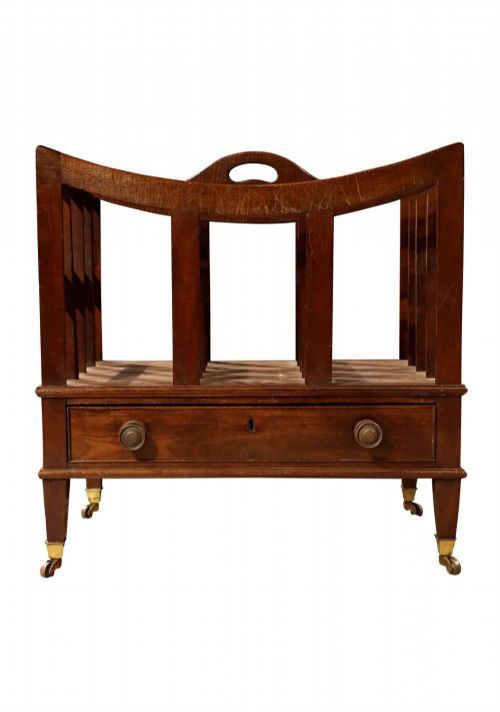
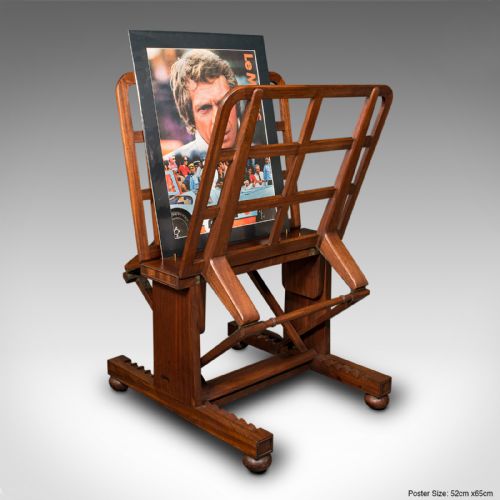
The versions met most often on this page include folio stands, music stands, magazine racks, and canterburys spanning the Regency, Victorian, and Edwardian eras. Examples range from simple nineteenth-century walnut designs to adjustable English artist picture racks.
Maker attributions and period styles such as Late Georgian and Black Forest carved wood appear frequently across the selection. Buyers encounter both utilitarian music cabinets with drawers and grander mahogany reading or folio stands.
How they were made
Cabinet makers utilised dense hardwoods such as mahogany, walnut, dark walnut, rosewood, and oak to build sturdy frames capable of supporting heavy portfolios and books. These woods were often polished to a deep lustre that highlights the natural grain.
Metal components such as brass fittings, hinges, and adjustable ratchets were incorporated into stands requiring movement or folding capabilities. Artisans also applied intricate hand carving, notably seen in Black Forest decorative woodwork.
Some nineteenth-century makers evidently believed no music stand was complete without a secret drawer for hiding errant violin strings.
What varies in quality
The sophistication of the timber selection and the crispness of any carved ornamentation set finer examples apart from simpler pieces. Richly figured rosewood and well-matched mahogany veneers indicate a higher tier of craftsmanship.
Mechanical complexity and stability define the upper end of the range, particularly in adjustable stands and architect picture racks. Smoothly operating brass adjustments and solid joinery reflect superior workshop standards.
Gillows of Lancaster
The Wooden Portfolio Holder Glossary
- Canterbury
- A low stand fitted with upright partitions for holding sheet music, folios, or magazines, often featuring a drawer below. This form dates back to the late eighteenth century.
- Folio stand
- A piece of furniture designed to hold large flat sheets of paper, prints, or drawings upright or at a sloping angle. Many historical examples feature adjustable frames for viewing artwork.
- Regency
- A British design period spanning the early nineteenth century, characterised by classical restraint, elegant proportions, and dark timbers like mahogany and rosewood. Pieces from this era often display refined brass detailing.
- Black Forest
- A style of ornate, naturalistic wood carving originating from the mountain region of central Europe during the nineteenth century. These items frequently incorporate realistic foliage and animal motifs.
Wooden Portfolio Holder: Frequently Asked Questions
What is a wooden portfolio holder used for?
These pieces provide stable storage and display for large flat items such as artists' drawings, prints, maps, and architectural plans. They keep paper collections organised while allowing individual pieces to be easily removed for viewing.
Many designs double as music stands or magazine racks, making them versatile furniture items for studies, libraries, and living spaces.
How do I date a nineteenth-century folio stand?
Dating relies on examining the timber species, construction methods, and hardware style. Regency pieces often showcase brass castors and classical proportions, while later Victorian examples may incorporate heavier carvings or different veneer treatments.
Cabinet makers' marks, drawer dovetailing, and the specific mechanism of adjustable racks also offer clues to the exact decade of manufacture.
Are these stands suitable for modern artwork?
Artist folio stands and picture racks function exceptionally well for holding contemporary prints, photographs, and canvases safely off the floor. The adjustable frames accommodate various portfolio sizes without damaging the contents.
Placing them in a room adds both practical storage and traditional character to an interior workspace or gallery wall.