





Antique Print Holder
An antique print holder organises large papers and drawings with timber frames and folding actions.
Antique Print Holder
When you search for an antique print holder, you encounter practical timber pieces designed to store plates, drawings, and folios upright. The selections on this page span the Regency, Late Georgian, and Victorian periods, showcasing traditional British cabinet-making.
The most common forms are folio stands and picture racks, often featuring adjustable frames and sturdy wooden legs. Larger examples include grand scale pieces suited for country houses, alongside compact library scroll stands and magazine racks.
Woods such as mahogany, oak, walnut, and rosewood dominate the inventory, sometimes paired with brass details. These items reflect the domestic and professional needs of nineteenth-century artists, architects, and collectors.
Timber and Joinery
Cabinet-makers constructed these stands using dense hardwoods like mahogany, oak, and walnut, frequently selecting figured veneers for visual depth. Structural stability relied on traditional joinery, sturdy turned supports, and folding mechanisms designed to bear heavy paper loads.
Detailing often included turned maple wood elements, fine stringing, and heavy brass hardware to secure the pivoting frames. Selected items incorporate twine holders or carved compartments, combining storage for raw materials with display utility.
Antique Print Holder Retail Price Guide 2026
Typical asking prices for print holder among the pieces listed under this phrase on Sellingantiques today, from the lower quarter to the upper quarter. They describe what is for sale here now, not the wider market.
Listings feature items from the nineteenth century, encompassing the Regency, Late Georgian, and Victorian periods in mahogany, oak, and rosewood.
Proportion and Mechanism
Quality rests upon the integrity of the folding mechanism and the rigidity of the timber frame under weight. Superior examples offer smooth adjustability and balanced proportions that prevent tipping when fully loaded with folios.
The choice of primary wood and secondary timber framing dictates the prestige of the piece, with richly grained rosewood and figured mahogany marking higher grades. Finely turned uprights and well-preserved original finishes distinguish workshop craftsmanship from utilitarian output.
The Antique Print Holder Glossary
- Folio stand
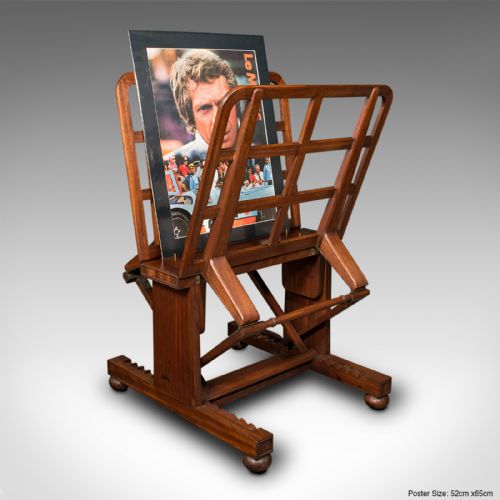
- A hinged wooden rack designed to hold large sheets of paper, prints, or drawings upright. These pieces typically feature two folding sides supported by a central base.
- Canterbury
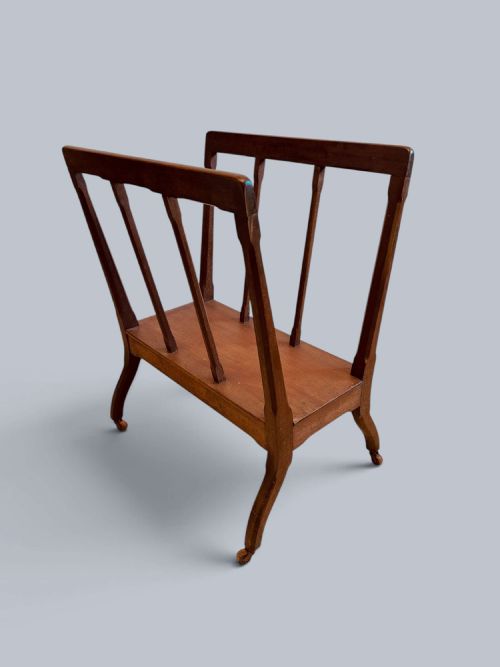
- A low stand featuring partitions, originally made to hold sheet music or folios. Some variations combine this storage method with folio rack designs.
- Scroll stand
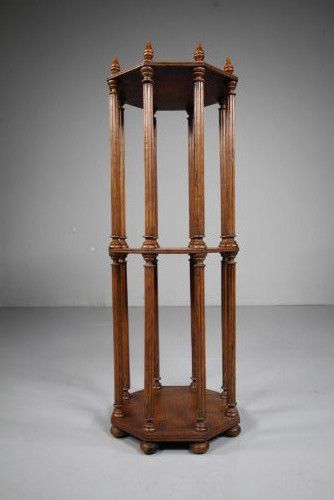
- A vertical timber holder intended for rolled documents, maps, or drawings. They provide cylindrical housing within a stable frame.
- Mauclineware
- Small wooden souvenirs and household items decorated with photographic transfers or specific turned construction. These pieces often utilise pale woods like maple and sycamore.
- String holder
- A small desk or tabletop accessory designed to dispense twine. They frequently feature turned wooden bodies with a central aperture.
Antique Print Holder: Frequently Asked Questions
How do you use a folio stand?
A folio stand is operated by opening the hinged wooden sides to create a V-shaped cradle for large books, prints, or unframed artwork. Adjustable mechanisms on select models allow the user to alter the angle of display.
When not holding active projects, the stands fold together or close flat to save floor space. They are best placed away from direct sunlight to protect stored paper from fading.
How do I date a print holder?
Dating these pieces involves examining the timber species, joinery techniques, and stylistic markers associated with specific nineteenth-century periods. Regency examples often display classical lines and rich mahogany, while later Victorian items might incorporate heavier oak or mixed wood constructions.
Hardware details, such as brass hinges and castors, also provide clues to the era of manufacture. Consulting period design traits helps distinguish early nineteenth-century work from mid-century productions.
What woods were used for print holders?
Cabinet-makers utilised dense British and imported hardwoods to ensure the stands could support heavy paper loads without warping. Mahogany, oak, walnut, and rosewood appear frequently across surviving examples.
Lighter woods like maple and sycamore were occasionally employed for smaller items such as string holders and specific decorative wares. The choice of timber often reflects the fashion and workshop standards of the period.