


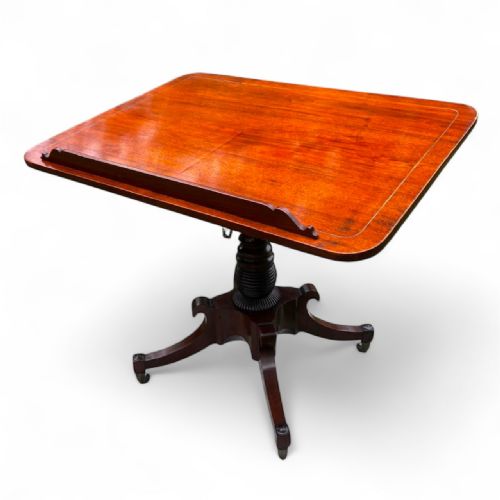





Regency Portfolio Stand
A regency portfolio stand holds large sheets and prints, offering a sturdy frame of mahogany or rosewood that elevates working papers to a display surface.
Regency Portfolio Stand
A regency portfolio stand serves as an adjustable rack designed to hold large drawings, watercolours, and architectural prints for display or selection. These timber frames belong to the nineteenth century, encompassing the Regency, Late Georgian, and George IV eras.
The primary form encountered on this page is the folio stand or picture rack, though related pieces such as canterburys, reading tables, and music stands also appear. English workshops built these items to handle heavy paper collections in studios and libraries.
Makers utilised rich timbers including mahogany, rosewood, oak, and brass accents to construct durable stands. Each version reflects the furniture design of the early decades of the eighteen hundreds.
How they were made
Cabinet makers selected dense timbers like mahogany and rosewood for their stability and grain pattern. These woods were turned, shaped, and joined to form the hinged side frames and trestle bases required to support heavy paper portfolios.
Brass fittings, hinges, and inlay work provided structural reinforcement and decorative contrast against the dark wood surfaces. Adjustable mechanisms allowed the frame angle to alter according to the user's preference.
What varies in quality
The sophistication of the timber selection and the precision of the brass hardware distinguish finer examples from simpler workshops. Figured grain and well-executed turning on the uprights indicate greater initial cost and skilled carpentry.
The integrity of the adjustment mechanism and the stability of the hinged frame dictate the utility of the piece. Stands retaining their original brass castors and uncompromised joints demonstrate superior survival through the centuries.
The Regency Portfolio Stand Glossary
- Folio stand
- A furniture piece with hinged sides designed to hold large sheets of paper, prints, or maps. These racks allowed artists and collectors to browse collections without damaging individual leaves.
- Canterbury
- A low stand featuring partitions for holding sheet music, folios, or books. They frequently include a small drawer and carrying handles.
- Regency
- A British design period spanning the early nineteenth century, characterised by classical restraint and rich mahogany or rosewood construction. Pieces often incorporate brass inlay and sabre legs.
- Rosewood
- A heavy, dark tropical timber with pronounced figuring, utilised for high-status nineteenth-century furniture. Its rich colour made it a favoured choice for prominent display pieces.
Regency Portfolio Stand: Frequently Asked Questions
What is a regency portfolio stand used for?
These stands hold large prints, drawings, and architectural plans in an upright or slightly angled position. They allow owners to display large sheets of paper without pinning them to walls.
Historically, artists, architects, and collectors kept them in studios and libraries to sort through heavy portfolios with ease.
How do I identify a regency piece?
Regency items date from the early nineteenth century and typically feature dark timbers like mahogany and rosewood. Look for classical proportions, clean lines, and restrained brass details.
They often share stylistic traits with Late Georgian and George IV furniture.
Are these stands adjustable?
Many period folio stands feature hinged frames or mechanical ratchets that alter the display angle. This adjustment helps accommodate different paper sizes and viewing preferences.
Original brass hinges and bars should move smoothly without excessive play in the joints.
What woods were used?
Cabinet makers primarily relied on mahogany and rosewood for their strength and appearance. Oak also appears in internal framing and robust utility pieces.
Brass was standard for castors, hinges, and inlaid decorative stringing.