


Adjustable Picture Stand
An adjustable picture stand holds canvases and artworks at the correct angle for display or creation, offering sturdy support through varied mechanisms.
Adjustable Picture Stand
When you search for an adjustable picture stand, you encounter a selection of studio easels, tabletop easels, and folio stands designed to display or hold artwork. The pieces span periods from the Regency era through the nineteenth century and into the 1930s, showing both English and French origins.
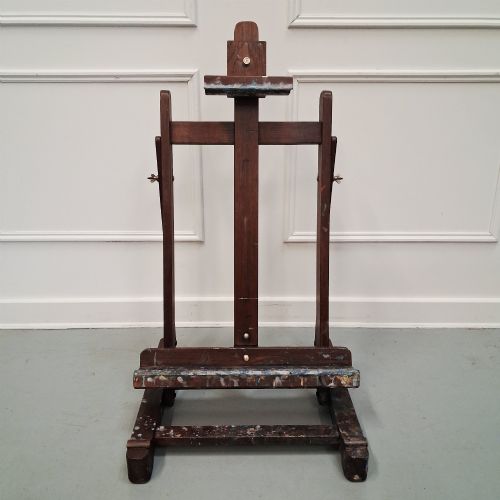
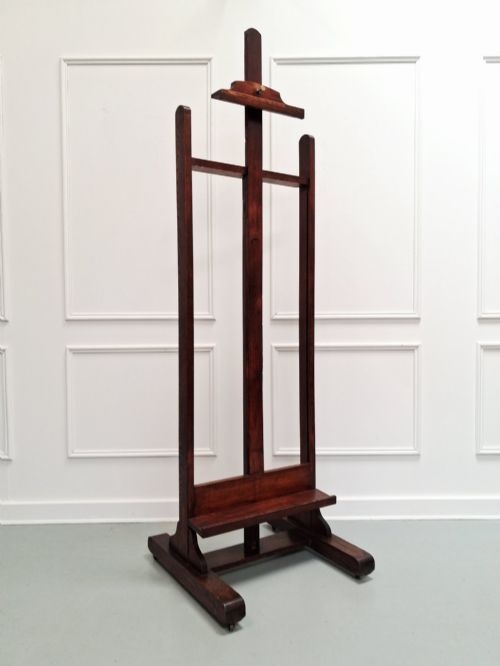
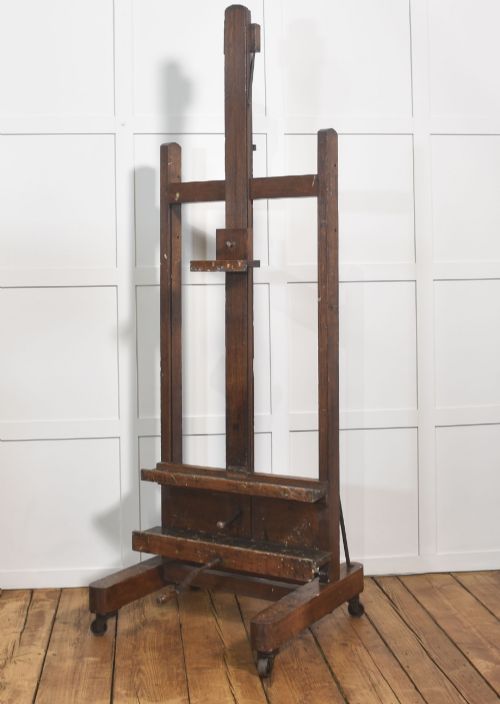
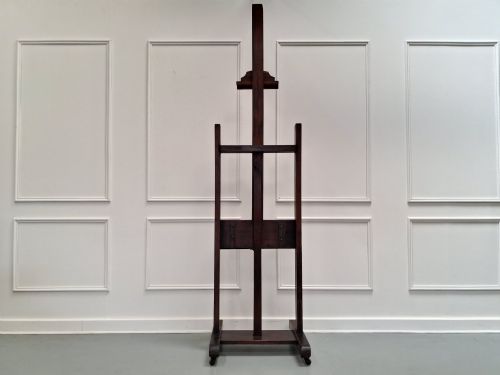
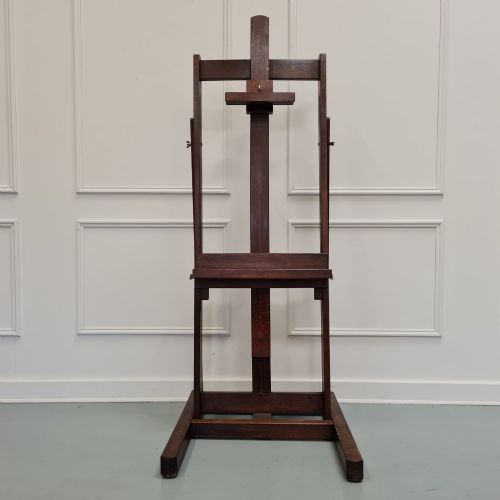
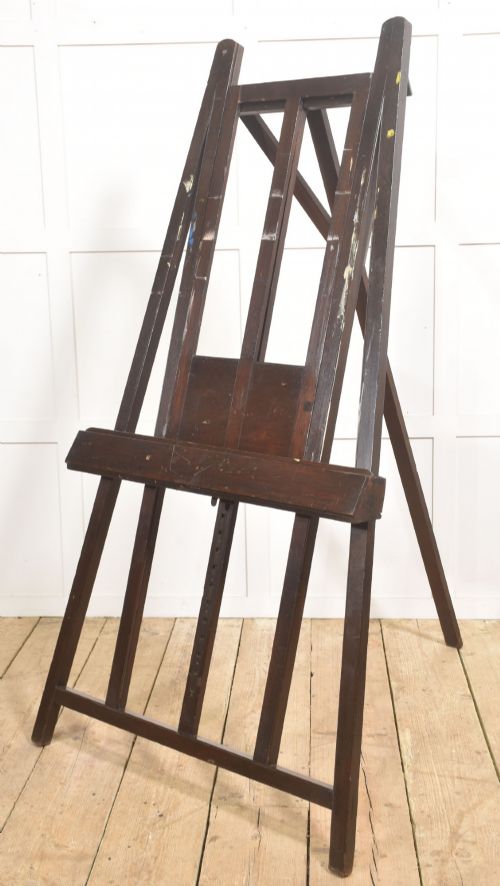
The version you are most likely to meet on this page is a large nineteenth-century studio easel in oak or mahogany. These practical furnishings range from simple tabletop designs to substantial double-sided gallery pieces and architectural picture racks.
Materials and construction methods
The pieces on this page utilise timbers such as oak, mahogany, pitch pine, and general wood, paired with metal, iron, brass, and cast iron fittings. Cabinet makers and joiners built these items to bear the weight of heavy canvases while allowing functional movement.
Adjustment mechanisms rely on robust wooden frames combined with metal and brass components to alter the height and tilt of the held picture. Structural stability remains paramount, utilising durable hardwoods to withstand frequent studio use.
French provincial and 1930s French styles appear alongside English Regency and Victorian studio pieces.
Distinctions in quality and execution
Windsor and Newton
The Adjustable Picture Stand Glossary
- Easels
- A freestanding upright support used for holding and fixing an artist's canvas or a finished picture in place for display. They often feature adjustable ledges and heights.
- Folio Stands
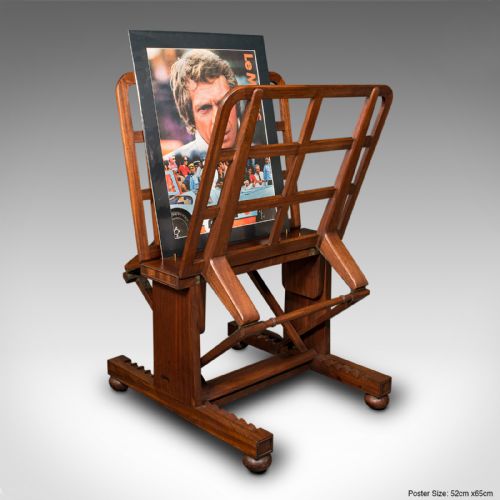
- A rack designed specifically for storing and viewing large sheets of paper, prints, drawings, or architectural plans. These items often feature hinged sides that adjust to open the rack.
- Gallery Easel
- A substantial display stand built to exhibit finished paintings in a gallery setting rather than for general studio work. They frequently allow viewing from multiple sides.
- Studio Easel
- A robust, heavy-duty working stand utilised by artists to support canvases during the painting process. These pieces prioritize mechanical adjustment and stability.
- Regency
- An English design period spanning the early nineteenth century characterised by classical restraint and elegant proportions. Pieces from this era often utilise high-grade mahogany.
Adjustable Picture Stand: Frequently Asked Questions
What is an adjustable picture stand used for?
An adjustable picture stand supports canvases, panels, and folios at varying heights and angles for painting or display. They serve artists in the studio and collectors wishing to exhibit framed works.
These pieces allow the user to alter the viewing angle to catch the light correctly or to accommodate different artwork dimensions.
How do studio easels differ from folio stands?
Studio easels hold vertical canvases upright for painting or formal exhibition using a central mast and adjustable shelf. Folio stands hold flat works horizontally or at a slanted open angle for browsing.
Folio stands suit the storage of loose prints and drawings, whereas studio easels support stretched frames.
Are these pieces from the nineteenth century?
Many listings date from the nineteenth century, including Regency examples from around 1820. Other pieces originate from the early twentieth century and the 1930s.
French provincial and studio pieces form a significant portion of the available inventory alongside English examples.