




Victorian Folio Stand
A Victorian folio stand organises large papers and prints with architectural dignity, offering a practical surface for an active study or library.

Victorian Folio Stand
A Victorian folio stand serves as a dedicated rack for holding large papers, prints, maps, and unbound books. When you search for a Victorian folio stand, you encounter varied library furniture designed to keep delicate sheets flat and accessible.
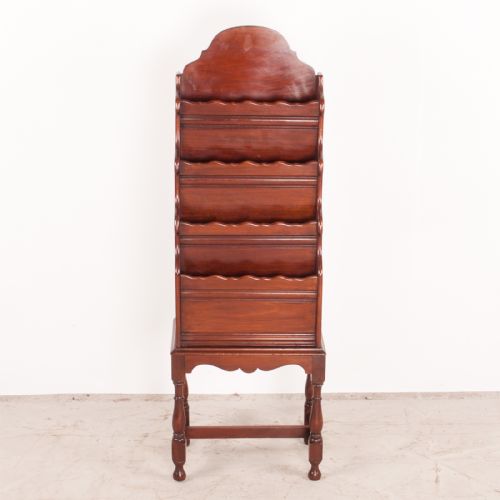
The selections span from the mid-nineteenth century through to the early twentieth century, incorporating related forms such as mahogany magazine racks, side cabinets, and writing tables. Pieces often appear in styles including Gothic Revival and Regency alongside classic Victorian forms.
Mahogany, rosewood, and walnut dominate the construction, frequently supported by pedestal bases or turned feet. Single and double-sided designs provide flexible solutions for domestic or institutional display.
How they were made
Cabinetmakers utilised dense timbers like mahogany, rosewood, and walnut, frequently selecting figured veneers to create rich surfaces. Brass mounts, hinges, and original castors appear regularly to facilitate movement across library floors.
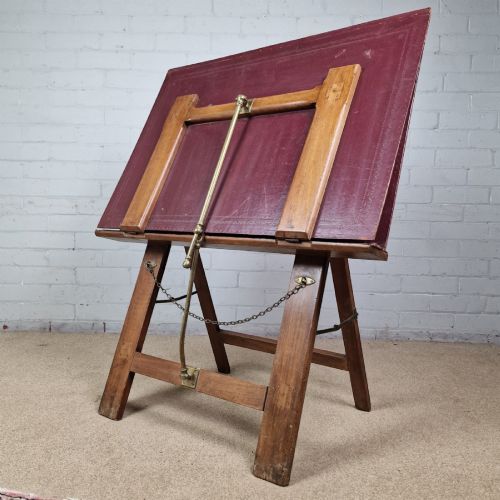
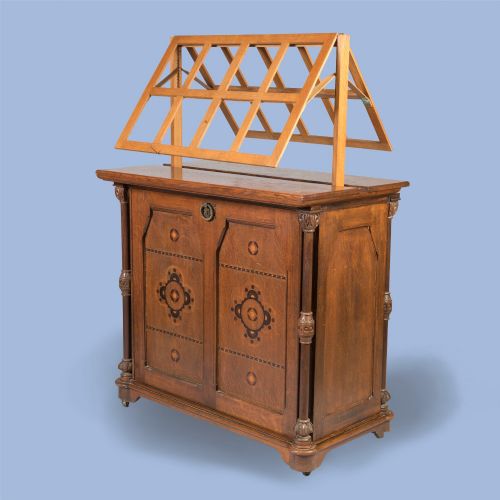
Leather elements provide durable lining or surfaces on folding plan tables and writing combinations. Wood inlay and careful carving distinguish more elaborate examples, such as Gothic Revival oak cabinets and Burmese teak newspaper racks.
Materials across these listings range from dense mahogany and rosewood to oak, walnut, and exotic teak.
What varies in quality
The standard of timber selection and the complexity of the joinery set finer examples apart from simpler utility pieces. Dense grain figures in walnut or mahogany and precise turning on legs indicate superior workshop execution.
Mechanical ingenuity marks the top of the range, particularly in folding actions and adjustable mechanisms that operate smoothly. Original hardware, such as brass castors and fittings, elevates the integrity of a surviving stand.
Benjamin Taylor & Sons
The Victorian Folio Stand Glossary
- Folio stand
- A piece of furniture designed specifically to hold large loose sheets of paper, prints, or maps. These typically feature folding or A-frame uprights.
- Canterbury
- A low stand featuring slatted partitions, originally used for holding sheet music or folios. This form frequently shares proportions with folio stands.
- Gothic Revival
- A nineteenth-century architectural and decorative style drawing on medieval motifs. Pieces in this style often employ heavy oak and pointed arch details.
- Pedestal base
- A central support column rising from a stable foot, commonly seen on nineteenth-century library furniture. This design allows weight to be distributed evenly.
Victorian Folio Stand: Frequently Asked Questions
What is a folio stand used for?
These stands provide upright or angled storage for large papers, maps, and unbound artistic prints without creasing the paper. They keep reference materials close at hand in a study.
Historically, libraries and drawing rooms utilised them to display current newspapers and architectural folios for guests and scholars.
How do I distinguish walnut from mahogany pieces?
Mahogany generally exhibits a reddish-brown tone with a straight, consistent grain pattern. Walnut displays a darker, more varied grain with distinctive swirling figures.
Cabinetmakers matched these woods to the prevailing taste of the decade, with walnut gaining strong favour during the mid-nineteenth century.
Can these stands fold flat?
Many nineteenth-century examples feature hinged frames designed to collapse or adjust the display angle. This mechanism allowed libraries to store the furniture compactly when not in active use.
Checking the brass hinges and folding joints reveals how the original workshop intended the mechanism to operate.
Where should I place a folio stand at home?
A study, library, or spacious hallway provides an appropriate setting where the vertical frame can function as both display and storage. Positioning them away from direct heat sources protects the timber and leather.
They serve effectively as resting places for large art books, current periodicals, or antique maps.