






Vintage Portfolio Stand
These vintage portfolio stand pieces offer sturdy architectural elegance to hold your prints and papers securely.
Vintage Portfolio Stand
A vintage portfolio stand serves as a dedicated support for large papers, prints, and artist materials within the home or studio. The versions encountered most frequently on this page span the nineteenth century and the Regency, Victorian, and Edwardian eras.
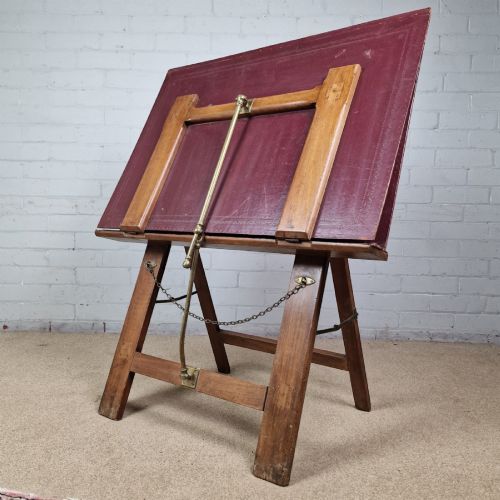
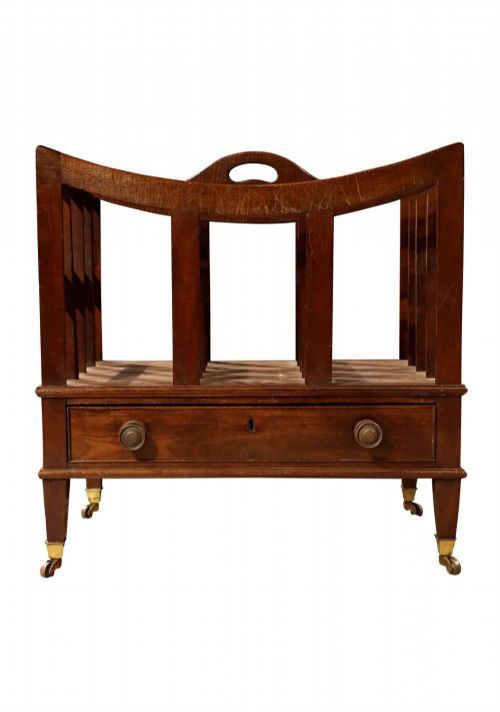
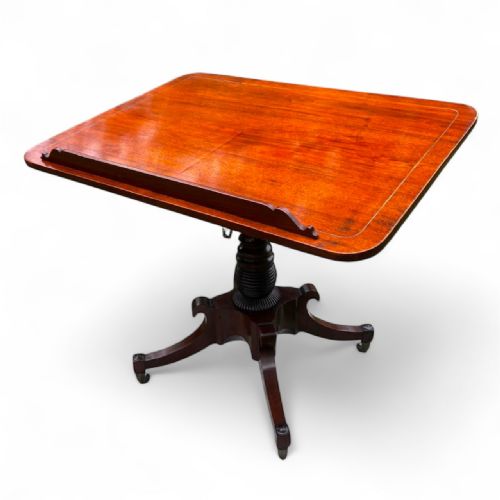
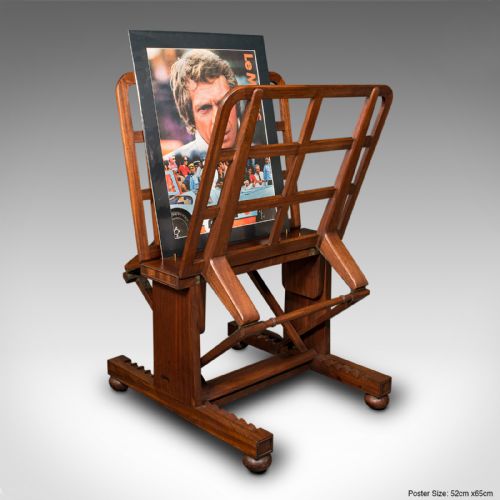
Makers shaped these utilitarian objects primarily as folio stands, picture racks, and canterburys alongside occasional tables and music stands. Mahogany and walnut dominate the structural forms, occasionally supplemented by oak and brass details.
Examples range from grand scale Regency designs attributed to Gillows to late nineteenth century mahogany pieces and compact Edwardian music cabinets. Each format provides a practical method for organising sheet music, drawings, and folios.
Materials and construction methods
Cabinet makers utilised dense hardwoods such as mahogany and walnut to build stable frames capable of supporting heavy books and art folios. These timbers received polished finishes that accentuated the natural grain of the wood.
Metal components including brass inlay, adjustable hinges, and castors appeared on select nineteenth century examples to improve mobility and visual contrast. Leather elements further defined the functional surfaces of specific pieces.
Joinery techniques varied from architectural framing in grand scale stands to compartment dividers in canterburys and cabinets with integrated drawers.
Master artists adjusted their stands throughout the day to catch the shifting studio light perfectly.
Assessing quality and craftsmanship
The distinction between standard items and exceptional pieces rests upon the ambition of the design and the refinement of the timber. Grand scale Regency examples with documented workshop attributions display superior carving and mechanical sophistication compared to standard production.
Gillow s
The Vintage Portfolio Stand Glossary
- Folio stand
- A freestanding rack designed specifically for holding large art portfolios, prints, and architectural drawings. These objects keep papers upright and accessible.
- Canterbury
- A low wooden stand featuring vertical partitions, originally created for sheet music and books. Many variations incorporate a small drawer beneath the compartments.
- Regency
- A British design period spanning the early nineteenth century defined by classical influences and clean architectural lines. Pieces from this era often feature rich mahogany timbers.
- Music stand
- A specialised piece of furniture built to hold scores and sheet music during performance or practice. They frequently share mechanical adjustability with artist racks.
- Brass inlay
- Decorative metalwork set flush into the wooden surface of a piece. This technique provides subtle contrast against dark hardwoods like mahogany.
Vintage Portfolio Stand: Frequently Asked Questions
How were portfolio stands used historically?
Historically, artists, architects, and collectors utilised these stands in studios and libraries to display and sort heavy paper portfolios without damaging them. Adjustable mechanisms allowed users to alter the viewing angle.
Canterburys and music stands fulfilled a similar domestic role for sheet music and periodicals in the parlour.
How do I identify a Regency piece?
Regency pieces typically date from the early nineteenth century and exhibit classical restraint combined with high quality mahogany construction. Look for balanced proportions and crisp geometric lines.
Some superior examples include distinctive brass inlay or adjustable frames associated with master workshops.
Where should I place a stand at home?
A portfolio stand suits a study, library, or art studio where large books and prints require accessible storage. It acts as a sculptural furniture piece while keeping flat paper collections organised.
Ensure the stand sits away from direct heat sources to protect the polished wood and leather surfaces.