
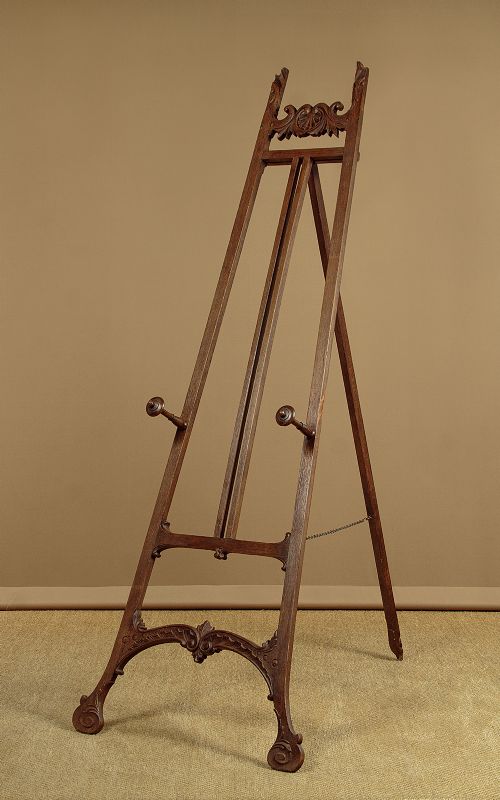


Oak Picture Stand
An oak picture stand holds your art with honest grain and steady support, bringing period utility directly to a tabletop or studio.
Oak Picture Stand
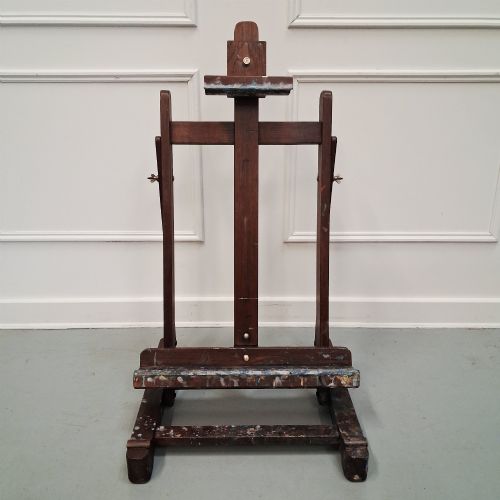
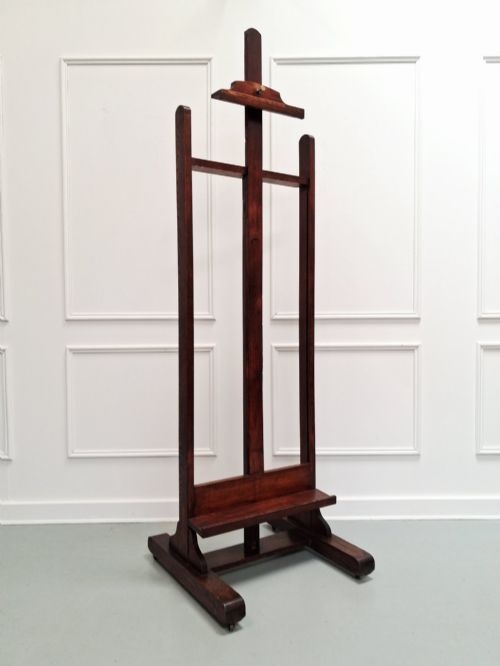
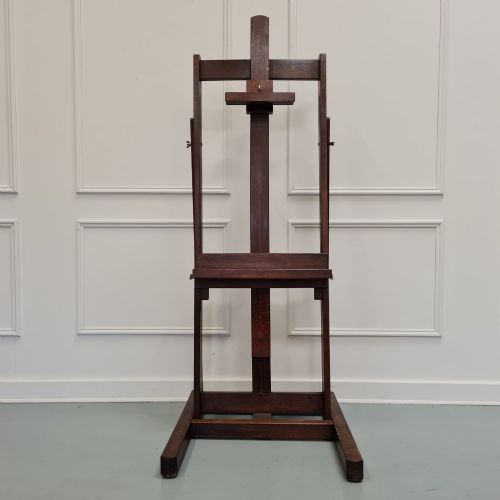
An oak picture stand serves as a sturdy support for displaying artwork, photographs, and folios across various historic periods. When exploring an oak picture stand, you encounter forms ranging from compact tabletop easels to large artist studio pieces and folio stands.
How they were made
Carpenters constructed these supports primarily in oak, occasionally incorporating pine, mahogany, brass, and cast iron for structural reinforcement and movement. Joinery methods varied from carved ornamentation on display pieces to functional adjustable mechanisms on studio models.
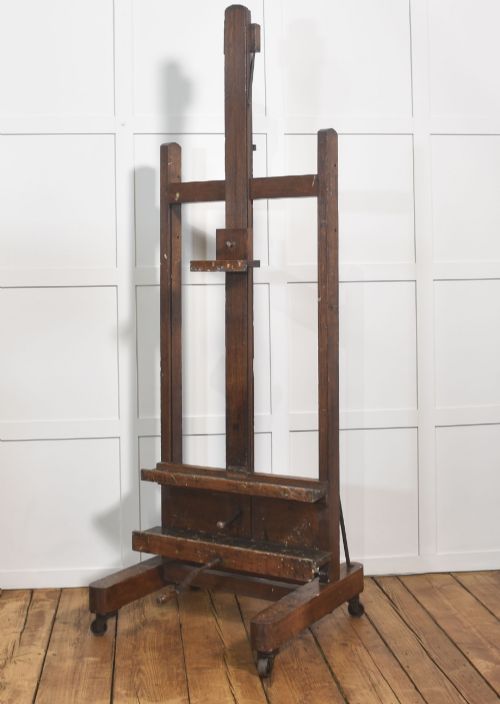
Makers utilised iron and metal fittings to allow full adjustability on larger artist easels, ensuring stability for heavy canvases and folios. Glass elements and silver mounts occasionally appeared on related photo frame variants.
Listings feature oak alongside brass, cast iron, and mahogany across nineteenth-century and nineteen-thirties French and English designs.
What varies in quality
The sophistication of the timber selection and the depth of the carving set exceptional examples apart from utilitarian workshops. Rich grain patterns and thoughtful proportions elevate a standard display piece into a more resolved decorative object.
Mechanical complexity and the survival of original metal or brass fittings dictate the standing of studio and adjustable variants. Robust engineering in the raising and tilting mechanisms ensures enduring utility alongside period character.
Windsor and Newton
The Oak Picture Stand Glossary
- Oak
- A durable hardwood characterised by pronounced grain patterns and strength, frequently utilised in heavy furniture and framing. It forms the primary structural material across these nineteenth and twentieth-century stands.
- Studio easel
- A large, adjustable wooden stand designed to hold canvases securely while an artist works. These pieces often feature winding mechanisms and castors for mobility.
- Folio stand
- A low rack designed for storing and displaying large flat works on paper, prints, or architectural plans. They typically open in an A-frame configuration.
- Regency
- An English design period spanning the early nineteenth century, known for classical restraint and refined proportions. Pieces from this era display sophisticated turning and joinery.
Oak Picture Stand: Frequently Asked Questions
What is an oak picture stand used for?
These stands provide physical support for displaying framed artwork, paintings, photographs, and large printed folios on tables or floors. They allow owners to exhibit pictures without hanging them directly on a wall.
Larger studio versions also served artists during the creation process, offering adjustable angles and heights to suit different working conditions and canvas sizes.
How do I date an oak picture stand?
Dating relies on observing stylistic markers, construction techniques, and the type of metal hardware fitted to the timber. Regency and nineteenth-century pieces often display hand-turned details and simpler mechanical joints.
Later examples from the nineteen-thirties reflect French provincial styles or more industrial studio adjustments, utilising cast iron and brass alongside standard oak construction.
Where should I place a studio easel at home?
A studio easel requires a stable floor space with sufficient clearance to accommodate its footprint and adjustable framing arms. Placing the stand near natural light enhances the visibility of the displayed artwork.
Ensure the stand rests away from direct heat sources to protect the historic oak timber from drying out or splitting over time.
What is the difference between an easel and a folio stand?
An easel holds a single picture upright at an angle for display or painting, using a central mast and adjustable ledges. They are vertical display tools.
A folio stand forms an A-frame rack designed specifically to hold multiple large flat papers, prints, or books open or shelved between wooden sides.