







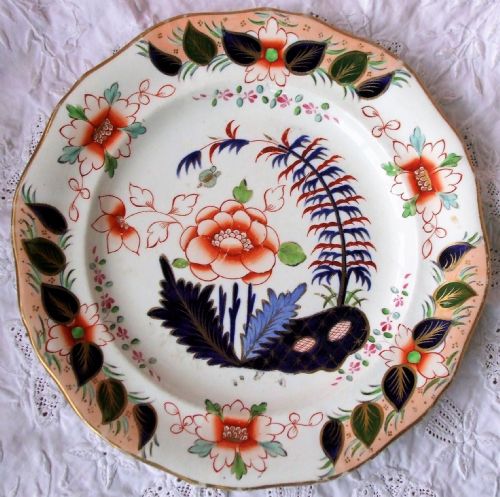
Antique Porcelain Wall Platter
An antique porcelain wall platter brings striking hand-painted colour and substantial scale to a room.
Antique Porcelain Wall Platter
An antique porcelain wall platter is a decorative ceramic piece intended for display, encompassing large chargers, scalloped dishes, and cabinet plates originating from European and Asian kilns. Buyers seeking an antique porcelain wall platter will find a strong representation of Japanese Imari wares alongside Chinese export pieces and European factory productions.
The selections span from the eighteenth century through the Victorian and Edwardian eras, with many pieces originating in the Meiji period. Forms range from deep circular chargers to square plates and lobed dishes designed with hanging or display in mind.
How they were made
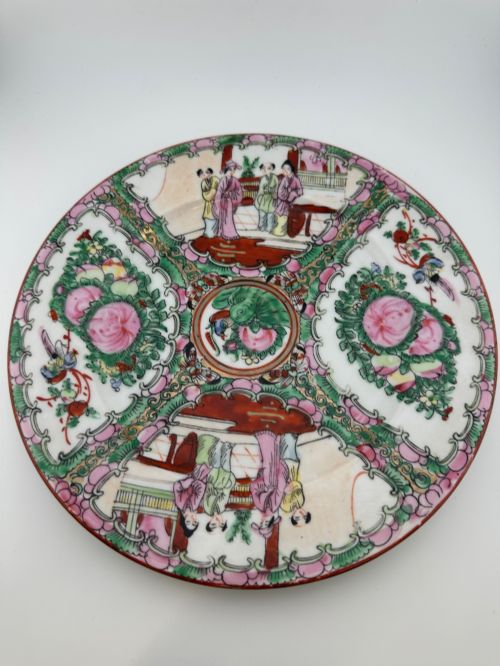
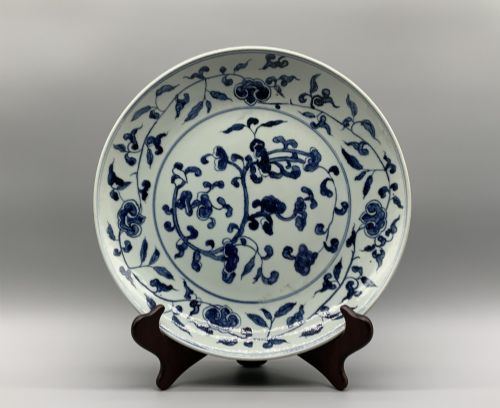
Potters shaped porcelain, earthenware, and ironstone before applying cobalt pigment, enamel, and glaze, often finishing details with gold leaf or gilt. Hand-painting techniques defined the decoration, utilising underglaze blue and polychrome enamels fired at high temperatures.
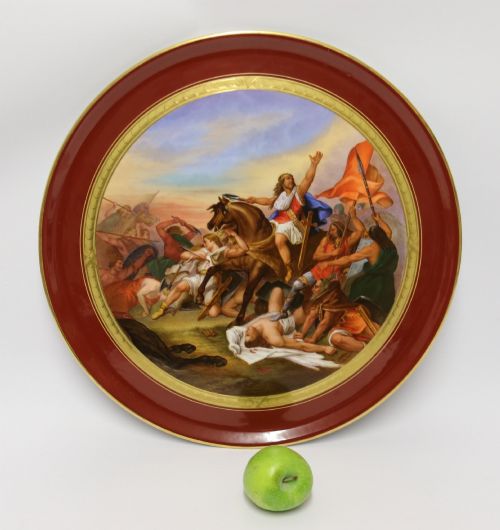
Certain Japanese pieces utilised cloisonne tree bark effects known as Totai Shippo, combining ceramic bodies with metal wire and enamel work. European factories employed similar hand-painted pictorial methods for historical or landscape scenes.
Current listings feature porcelain and earthenware materials spanning the eighteenth, nineteenth, and early twentieth centuries.
What varies in quality
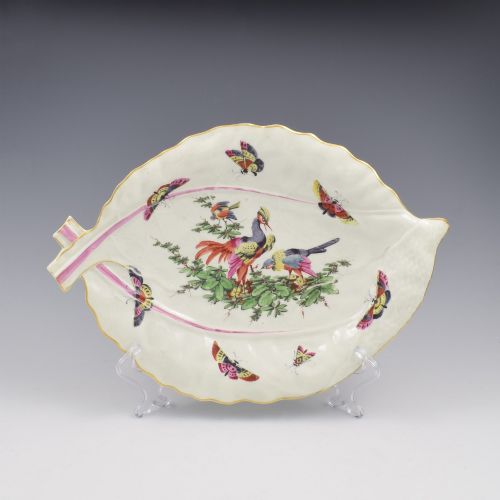
Quality rests in the crispness of the hand-painting, the complexity of the pigment layering, and the clarity of the glaze. Superior examples display precise brushwork in complex motifs such as figures, birds, and natural scenes rather than mechanical transfer printing.
The weight and resonance of the ceramic body, alongside the depth of the cobalt and enamel colours, separate standard production items from masterworks produced by notable kilns and workshops.
John Davenport of Longport·Royal Bonn·Mason·Coalport·Pucher Deroche Paris·Bluett and Sons London
The Antique Porcelain Wall Platter Glossary
- Charger
- A large decorative plate traditionally used for display on walls or sideboards. These items measure substantially more than standard dining plates.
- Imari
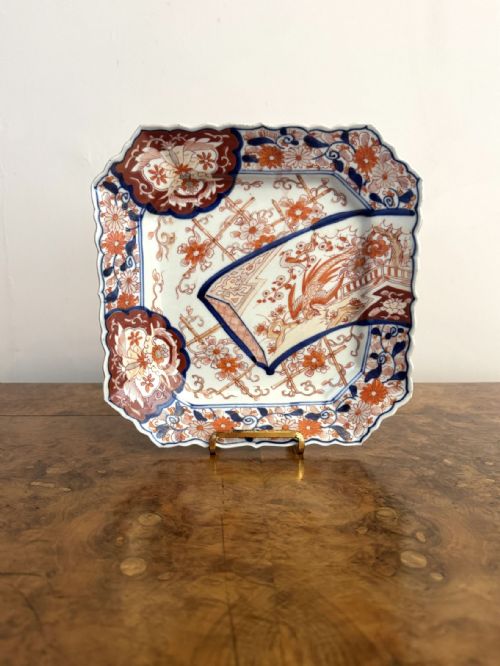
- A style of Japanese porcelain featuring a distinct palette of cobalt blue, iron red, and gilt. The tradition originated in Arita and heavily influenced European ceramic design.
- Moriage
- A Japanese ceramic technique using piped slip to create raised, three-dimensional decorative patterns. This method adds tactile texture to floral and avian subjects.
- Kraak style
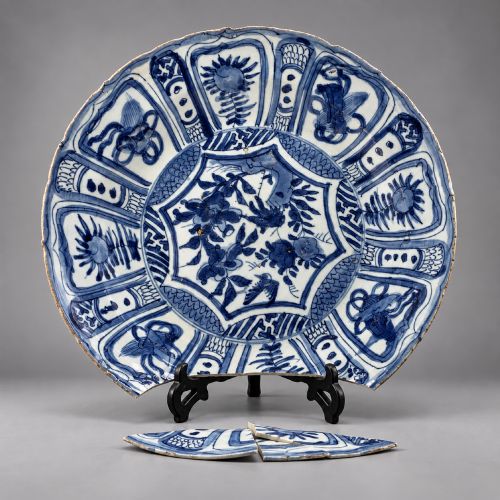
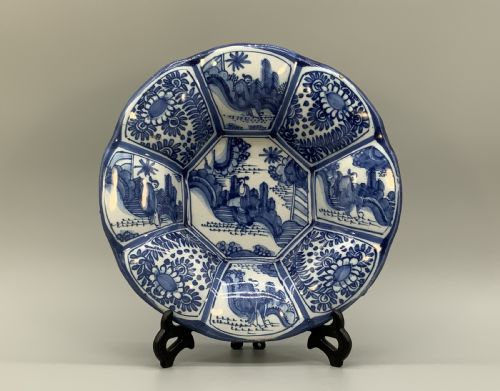
- A Chinese export porcelain aesthetic characterised by panelled borders and central landscape or botanical motifs. Dutch traders imported large quantities of these pieces during the seventeenth century.
- Totai Shippo
- A Japanese technique applying cloisonne enamel directly onto a porcelain body. Wirework compartments are filled with coloured enamel and fired to create a textured surface.
Antique Porcelain Wall Platter: Frequently Asked Questions
How were antique platters displayed?
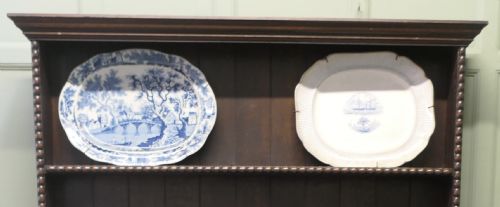
Historic interiors frequently utilised wall brackets, wire hangers, or specialised plate rails to mount large chargers for visual impact. Dining rooms and halls served as primary locations for showcasing these ornamental items.
Modern spaces accommodate them using secure wall fixings designed for heavy ceramics. Positioning them at eye level highlights the hand-painted details and gilt highlights.
What is the difference between a charger and a plate?
Chargers measure significantly larger than standard dining or cabinet plates, often exceeding thirty centimetres in diameter. Their substantial scale makes them focal points rather than functional tableware.
Plates generally served narrower decorative or cabinet purposes. Both forms share similar hand-painted production methods across European and Asian traditions.
How do I identify Imari porcelain?
Imari porcelain relies on a distinct palette dominated by underglaze cobalt blue and iron red, frequently accented with gold leaf. The decorative schemes typically combine floral arrangements, brocade patterns, and architectural elements.
Originating in Japan during the Edo period, this style was widely exported to Europe. Later nineteenth-century Japanese and European factories replicated these characteristic motifs.
Are these pieces waterproof or functional?
Most antique wall platters are intended strictly for decorative display rather than daily domestic use. The presence of gilt, delicate enamel, and historic glaze formulations means they suit visual appreciation best.
Cleaning requires gentle dusting with a dry cloth rather than immersion in water. Historic ceramic bodies can be porous or sensitive to modern detergents.