






Large Imari Display Plate
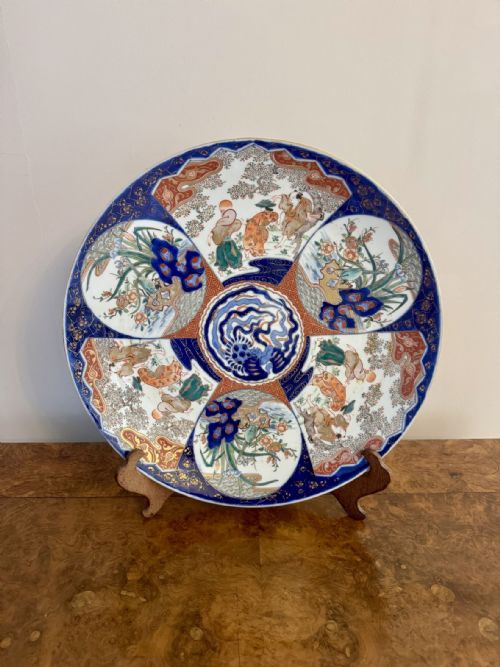
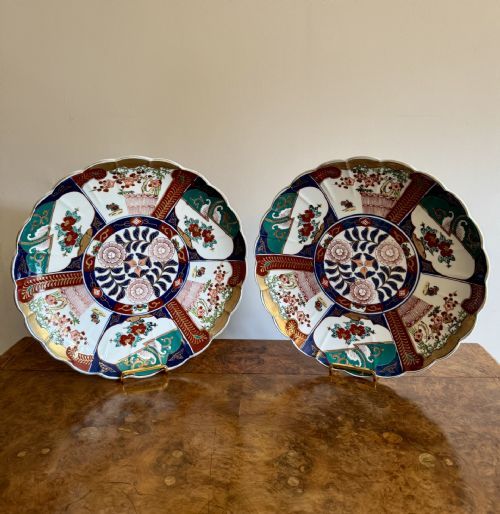
A large imari display plate brings bold colour and pattern to a room, combining blue and white underglaze with vibrant enamel tones.

Large Imari Display Plate
A large imari display plate is a substantial ceramic dish intended primarily for decorative presentation rather than dining use. The selection centres on wide chargers, platters and wall plates originating from Japan, alongside occasional European interpretations.
Most examples date from the late nineteenth century, spanning the Victorian and Edwardian eras, with older pieces extending back to the Edo period and seventeenth century. Forms vary from traditional round chargers to scalloped and square plates.
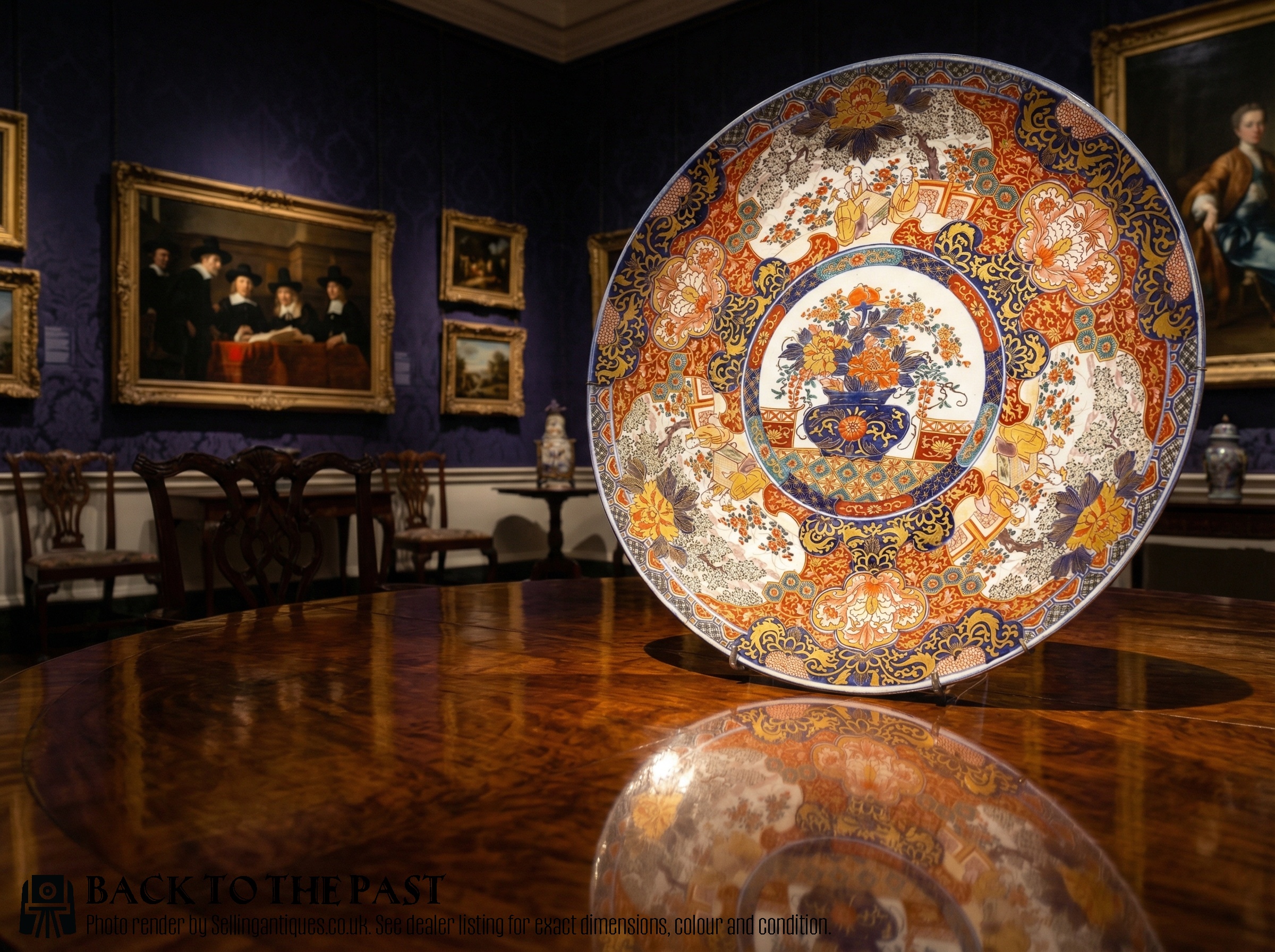
The designs typically incorporate detailed blue and white elements enriched with iron red and gilt highlights. Subjects range from scrolling foliate borders to pictorial scenes depicting motifs like the Seven Lucky Gods or koi carp.
How they were made
These ceramics are formed from porcelain or earthenware bodies capable of supporting wide diameters. Cobalt pigment provides the deep blue underglaze decoration, applied directly to the raw clay before initial firing.
Overglaze enamel and gold leaf or gilt are added in subsequent stages to introduce contrasting red, green and metallic details. A clear glaze seals the surface, giving the plates their characteristic reflective finish after high-temperature firing.
Several plates capture the Seven Lucky Gods enjoying themselves across the ceramic surface.
What varies in quality
The standard of painting determines much of the distinction between pieces, particularly in the precision of the blue and white underglaze work and the crispness of the hand-painted enamels. Finer examples display meticulous brushwork within scrolling foliate borders and detailed figurative subjects.
The richness and preservation of the overglaze red and gold leaf contribute significantly to the visual impact. Superior ceramics maintain vibrant enamel colours and intact gilding across the decorated surface.
The Large Imari Display Plate Glossary
- Charger
- A large ornamental plate designed for display on a wall, sideboard or table centre rather than for serving food.
- Imari
- A traditional Japanese style of ceramic decoration defined by a palette of cobalt blue, iron red, and gilt over a white porcelain body.
- Underglaze
- Pigment applied to the ceramic body before the glaze is applied, firing beneath the glossy surface for permanent protection.
- Overglaze Enamel
- Coloured glass decoration applied on top of the fired glaze and fixed at a lower temperature.
- Edo Period
- A historical Japanese era spanning from sixteen hundred and three to eighteen hundred and sixty-eight, noted for distinct artistic traditions.
- Meiji Period
- The era in Japanese history lasting from eighteen hundred and sixty-eight to nineteen hundred and twelve, represented by many pieces in this selection.
Large Imari Display Plate: Frequently Asked Questions
How were large imari plates displayed?
These large plates were commonly exhibited on walls using specialised wire hangers or stood upright on sideboards and shelves.
Their substantial diameters and colourful palettes made them focal points in nineteenth-century interiors.
Can I use these plates for food?
Most of these large chargers and display plates are intended for decorative presentation rather than practical dining use.
Surface enamels and older ceramic bodies are best preserved by keeping them away from daily culinary service and dishwashers.
What is the difference between imari and blue and white?
While traditional blue and white ceramics rely solely on cobalt pigment under the glaze, imari pieces incorporate additional iron red enamel and gold leaf.
This multi-layered palette creates a much richer and more colourful decorative surface.
How do I date an antique imari plate?
Dating relies on stylistic clues, ceramic bodies, and recorded periods such as the Meiji era or the late nineteenth century.
Maker marks and specific decorative motifs also help narrow down the decade of production.