
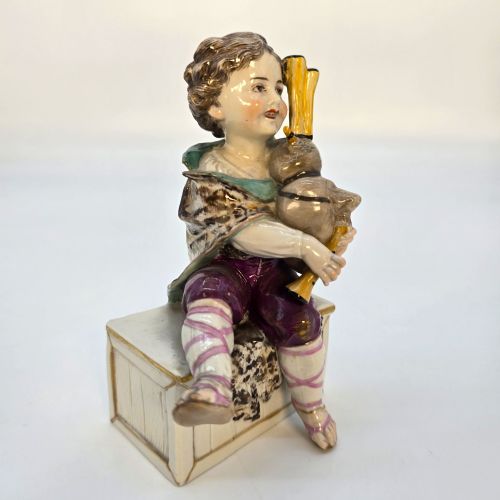


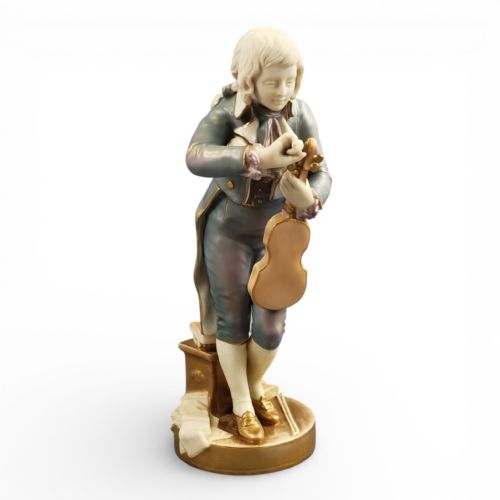


Antique Porcelain Musician Ornament
These antique porcelain musician ornament pieces capture figures playing instruments, offering detailed ceramic craftsmanship for display.
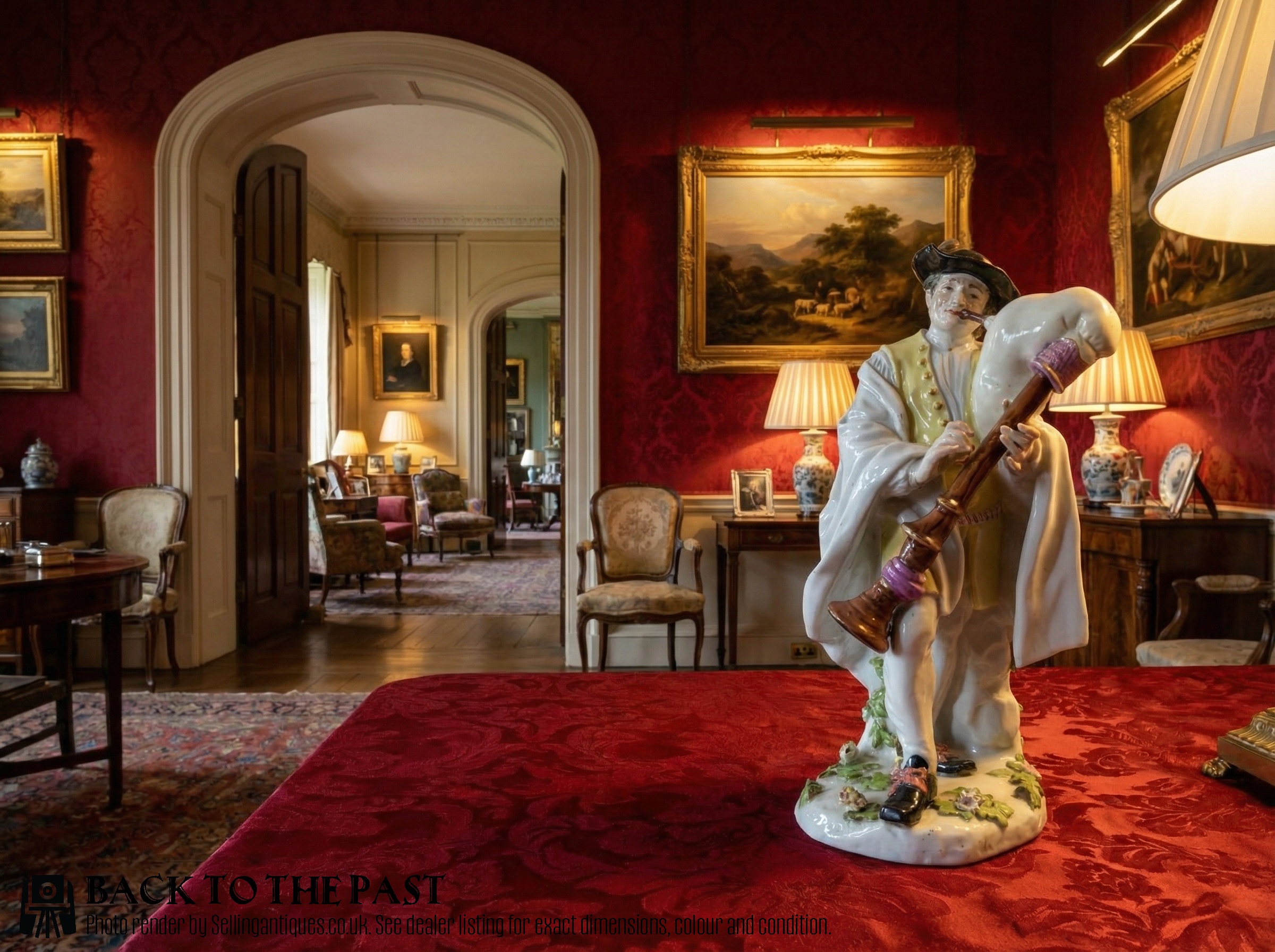
Antique Porcelain Musician Ornament
An antique porcelain musician ornament depicts human figures engaged in musical performance, capturing subjects such as bagpipers, hurdy-gurdy players, and singers. These decorative figures range from eighteenth-century English and continental works to nineteenth-century productions.
Buyers will encounter varied forms including single figurines, pairs, and grouped subjects. Styles span Rococo, Rococo Revival, Victorian Orientalism, and revival aesthetics.
How They Were Made
These pieces utilise hard-paste porcelain, soft-paste porcelain, earthenware, and bisque ceramic bodies shaped into detailed figures. Artisans applied glazes and enamels to colour the surfaces, sometimes incorporating gold leaf accents.
Periods represented span the Georgian, Regency, Victorian, and Edwardian eras, alongside specific dates from the eighteenth and nineteenth centuries.
What Varies in Quality
Quality rests in the crispness of the modelling and the precision of the enamel work. Finer examples display subtle facial expressions and carefully defined fingers holding instruments.
The richness of the gilding and the depth of the glaze differentiate standard production from superior artistic output. Earlier eighteenth-century works often show distinct potting characteristics compared to later nineteenth-century manufacturing.
Volkstedt Rudolstadt Factory·Meissen·Derby·Royal Worcester·Richard Eckert·James Hadley·Samson Paris·Bow
The Antique Porcelain Musician Ornament Glossary
- Bisque porcelain
- Unglazed ceramic body fired once to produce a matte, white surface with a marble-like texture. This finish highlights fine sculptural details.
- Enamel
- Vitreous coloured composition applied over the glaze and fired at a lower temperature to fix decorative details. It provides vibrant hues on porcelain surfaces.
- Soft-paste porcelain
- Early ceramic composition made from white clay and ground glass fired at lower temperatures. It possesses a slightly warmer tone than hard-paste porcelain.
- Hard-paste porcelain
- Dense ceramic material composed of kaolin and petuntse fired at high temperatures. This formula yields a durable, impermeable body.
- Gold leaf
- Extremely thin sheet metal applied to ceramic surfaces for decoration. It is often used to accent costume details and bases.
Antique Porcelain Musician Ornament: Frequently Asked Questions
Are these figures marked with factory stamps?
Many pieces carry underglaze blue or impressed marks on the base, indicating the factory of origin such as Meissen or Derby.
Some nineteenth-century and revival pieces feature painted numbers or retailer symbols rather than standard maker insignia.
What instruments do the figures hold?
Common musical instruments depicted include bagpipes, hurdy-gurdies, drums, and various stringed or wind instruments played by the characters.
These props help identify the specific cultural archetype or pastoral theme represented by the maker.
How do I distinguish eighteenth-century pieces from later reproductions?
Examine the weight, paste composition, and style of painting, as earlier examples often exhibit softer glaze pooling and hand-mixed enamels.
Factory marks and baseline wear patterns also provide vital clues for dating the ceramic body accurately.
Can I display these ornaments near sunlight?
Position porcelain figures away from direct, strong sunlight to prevent the hand-painted enamels from fading over extended periods.
Stable indoor humidity and secure shelving protect these delicate ceramic items from accidental knocks and environmental stress.