
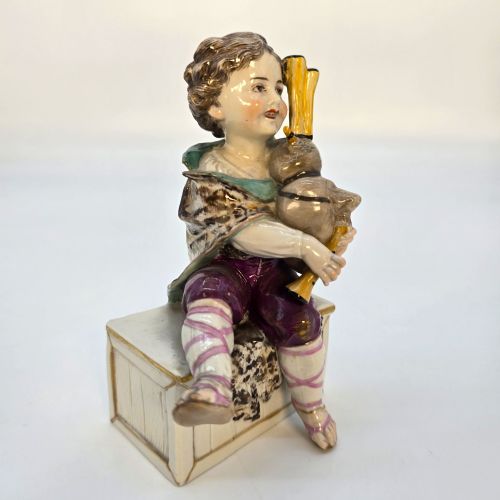


Antique Ceramic Musician Statuette
An antique ceramic musician statuette brings the charm of eighteenth and nineteenth century musical life directly to your shelf.
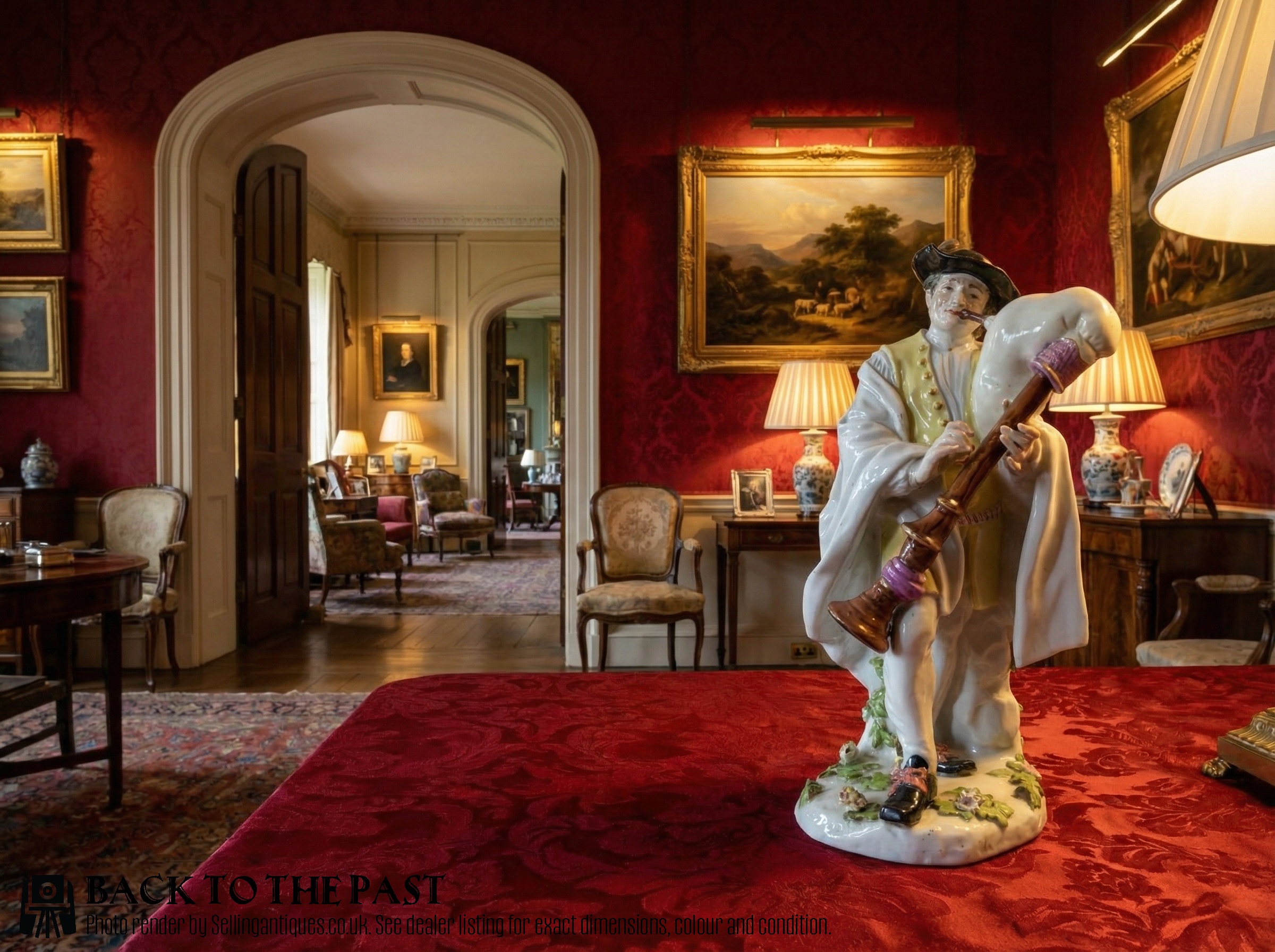
Antique Ceramic Musician Statuette
The origins of these pieces range across German, English, and French factories, reflecting the diverse tastes of collectors over several periods including the Georgian and Victorian eras. Makers such as Meissen, Derby, Bow, and Fürstenberg shaped European porcelain production with these detailed musical subjects.
Many of these figurines draw on earlier models, as seen in pieces produced by Samson in Paris after Derby designs or Volkstedt work from around eighteen eighty. Others, like the Royal Worcester lady with a drum, represent late nineteenth century British ceramic artistry in glazed and bisque finishes.
Materials and techniques
These statuettes utilise hard-paste and soft-paste porcelain, moulded and fired before receiving detailed hand-painting in enamel colours. Gilding with gold leaf often highlights the garments and bases of the figures, adding richness to the compositions.
Makers employed both high-gloss glaze and matte bisque porcelain to achieve contrasting textures between flesh, hair, and elaborate period clothing. The skilful application of these materials defines the depth and tactile quality of each figurine.
Listings here feature pieces in hard-paste porcelain, soft-paste porcelain, bisque porcelain, and enamel across the Victorian and Georgian periods.
Distinctions in quality
The finesse of the modelling and the crispness of the painted details separate finer pieces from simpler work. Finer statuettes display delicate facial expressions, intricate hand-modelled foliage, and precise rendering of musical instruments.
The quality of the porcelain body and the brilliance of the enamel palette also influence the standing of a piece. Superior examples maintain the integrity of their gilding and show careful attention to the reverse and base of the figurine.
Volkstedt Rudolstadt Factory·Meissen Porcelain·Derby Porcelain·Samson Paris·Fürstenberg Porcelain·Bow Porcelain·Royal Worcester
The Antique Ceramic Musician Statuette Glossary
- Bisque porcelain
- Unglazed porcelain fired to a matte, porous finish that resembles marble and highlights sculptural detail. It became popular for its smooth texture and ability to show fine modelling.
- Hard-paste porcelain
- A durable ceramic composition fired at very high temperatures, traditionally made from kaolin and petuntse. It provides a bright, hard base for intricate enamel painting.
- Soft-paste porcelain
- An early European porcelain body fired at lower temperatures, prized for its warm, slightly creamy translucence. It interacts distinctively with glazes and enamels.
- Rococo Revival
- A nineteenth century design style echoing the ornate, asymmetrical curves and naturalistic motifs of the mid-eighteenth century. Figures from this period often feature elaborate scrollwork bases.
Antique Ceramic Musician Statuette: Frequently Asked Questions
What is an antique ceramic musician statuette?
These figures are porcelain sculptures depicting people playing instruments, produced by European factories across the eighteenth and nineteenth centuries.
They capture historical musical pastimes through detailed modelling and painted decoration.
How were these musician figures used?
They served as decorative table ornaments and display pieces for wealthy homes during the Georgian and Victorian periods.
Owners placed them on mantelpieces and cabinets to signal cultural refinement and an appreciation for music.
How do I care for my porcelain statuette?
Keep the figure out of direct sunlight to protect the enamel colours and gold leaf from fading over time.
Dust gently with a soft, dry brush and avoid using water or chemical cleaners on unglazed bisque surfaces.
How can I tell the period of a figurine?
Examine the paste, glaze, and factory marks on the underside of the base to help identify the era of production.
Stylistic cues such as Rococo scrollwork or Victorian clothing styles also offer clues to the date of manufacture.