
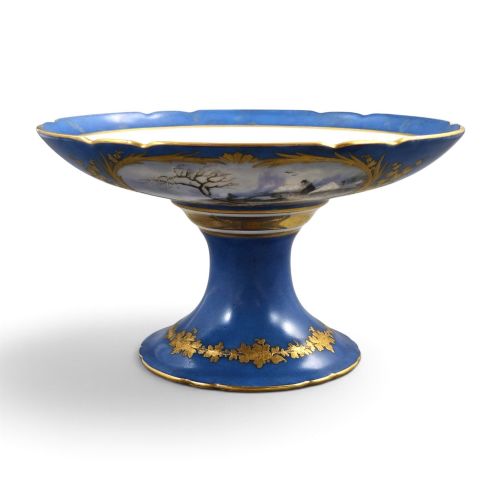


Antique Porcelain Fruit Stand
An antique porcelain fruit stand brings height and colour to a table, combining useful serving forms with intricate painted or moulded decoration.
Antique Porcelain Fruit Stand
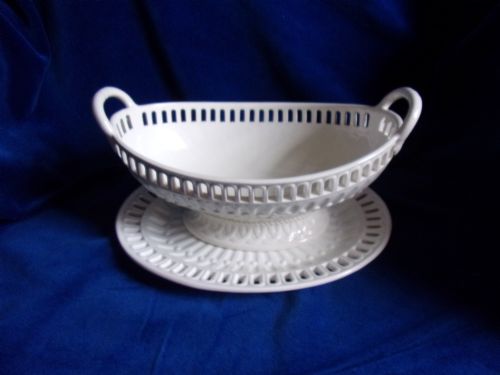
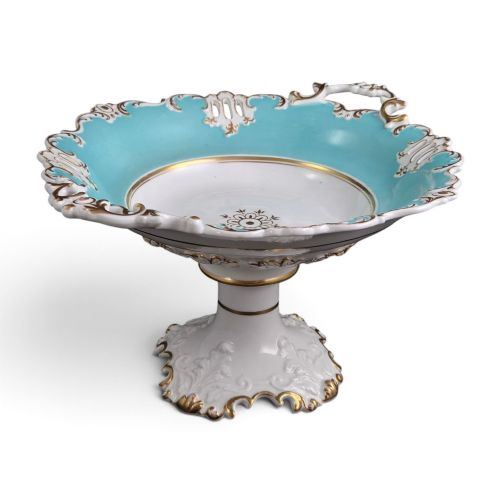
When you search for an antique porcelain fruit stand, you encounter raised serving vessels designed for desserts and centrepieces, most frequently appearing as comports, tazzas, chestnut baskets with stands, and pedestal bowls from the nineteenth century.
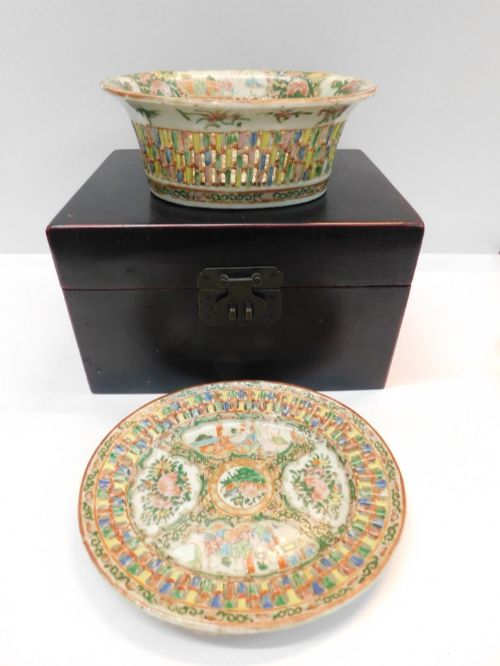
The selections span English factories like Coalport, Mason's, and Worcester alongside continental European works and Chinese export wares, offering various raised platforms intended to display fruit at formal dining occasions.
How they were made
Potters shaped these pieces from porcelain, bone china, ironstone, and pearlware, often applying white glazes that provided a smooth ground for hand-painting or transfer printing.
Finishing touches frequently involved applied three-dimensional floral elements, enamel colours, and the application of gold leaf, gilding, or gilt to rims and pedestals.
Materials documented across the inventory include bone china, pearlware, ironstone, and porcelain enhanced with gold leaf and enamel.
What varies in quality
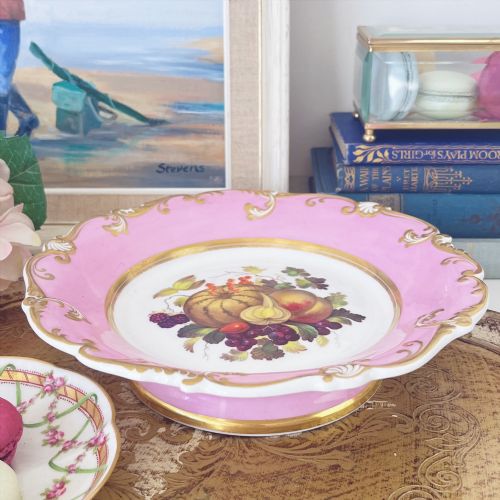
Quality separates in the crispness of moulded reticulation and the precision of hand-painted details, such as botanical fruit studies or intricate enamel patterns, versus standard transfer printing.
The sophistication of the form, whether a simple footed dish or a complex centrepiece featuring applied putti and roses, dictates the distinction between standard production and exceptional manufacture.
Coalport·H & R Daniel·Sèvres·Schierholz Plaue·Mason’s·Chamberlain Worcester·Royal Worcester·Minton·Worcester
The Antique Porcelain Fruit Stand Glossary
- Comport
- A raised dish or bowl used for serving fruit or dessert at the table. These pieces typically sit upon a central pedestal or foot.
- Tazza
- A shallow bowl or plate mounted on a stem and foot, functioning much like a comport for display. The form derives from Renaissance metalwork.
- Reticulation
- An openwork net or lattice pattern pierced through the porcelain body of a basket or stand. This technique required considerable skill during the firing process.
- Ironstone
- A heavy, durable type of earthenware patented in the nineteenth century to imitate true porcelain. It frequently carried vibrant japanned patterns.
- Famille Rose
- A palette of opaque enamel colours dominated by pink or rose, used extensively on Chinese export porcelain. The style gained immense popularity across European markets.
Antique Porcelain Fruit Stand: Frequently Asked Questions
What was a fruit stand used for?
These elevated vessels held fresh fruit, sweetmeats, or dessert courses at the conclusion of formal dining. They created height and visual interest down the centre of a long table.
Guests selected items from the raised bowls as part of the dessert service. The stands remained decorative focal points even when empty between courses.
How do I date an antique porcelain stand?
Examine the paste, glaze characteristics, and factory marks stamped or painted on the base. Stylistic clues like Regency or Rococo Revival moulding also help narrow the decade.
Comparing the hand-painted motifs and colour palettes to documented factory patterns provides further chronological certainty. Construction details like foot rings reveal manufacturing eras.
Can I use these stands for food today?
Most pieces remain structurally sound for serving dry fruits or festive treats. Caution is advised with items showing historical hairline cracks or worn enamel.
Many collectors prefer to display them empty or filled with artificial fruit to prevent accidental damage. Modern acidic foods can occasionally harm fragile nineteenth-century glazes.
What is the difference between a comport and a tazza?
The terms often overlap in antique descriptions, though a tazza traditionally refers to a flatter, plate-like vessel on a single foot. Comports can feature deeper bowls designed to contain loose fruit.
Both serve the same primary function of elevating food above the table surface. Makers used either term depending on regional preferences and contemporary fashion.