



Antique French Footed Bowl
An antique french footed bowl brings elevation and presence to a table, uniting Continental craftsmanship with decorative flair across porcelain, bronze, and crystal.
Antique French Footed Bowl
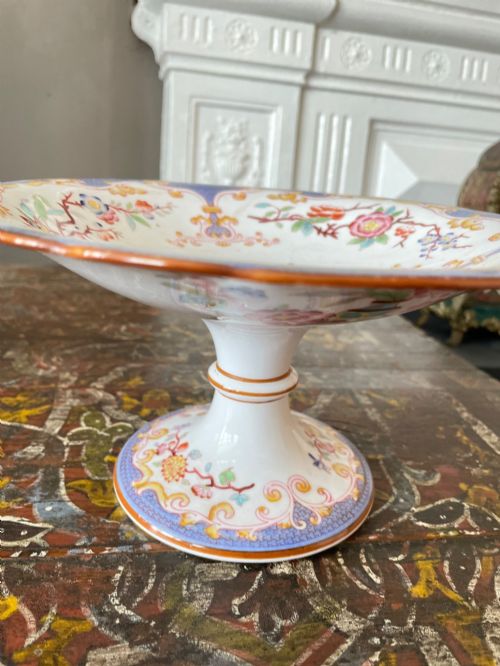
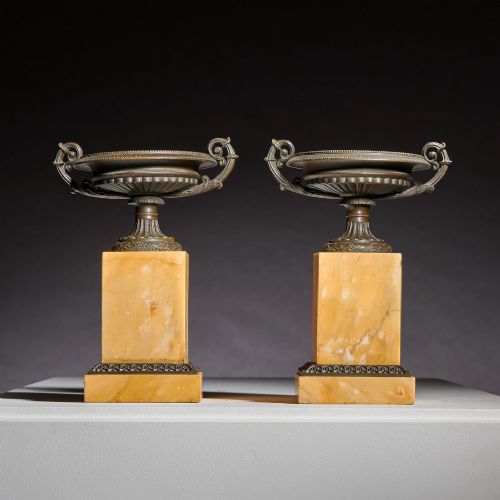
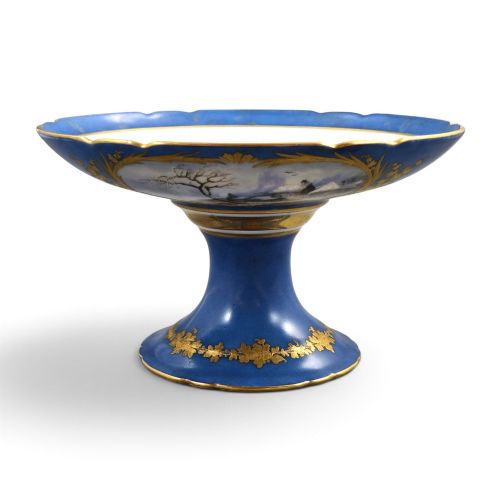
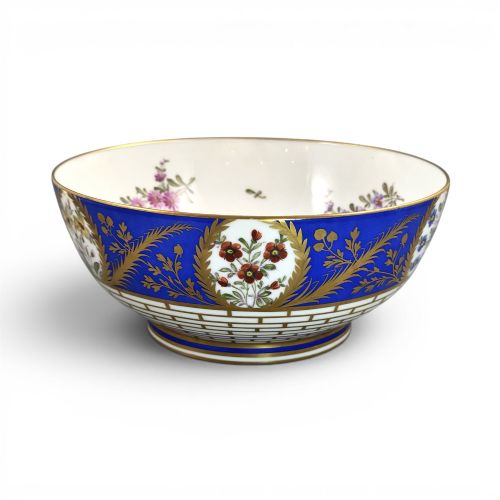
An antique french footed bowl takes several distinct forms on this page, appearing most frequently as compotes, tazzas, and pedestal centrepieces raised above the surface. These elevated vessels serve decorative and display purposes, drawing the eye upward through structured height and sculptural form.
The material vocabulary spans traditional hard-paste porcelain from Sèvres and Sarreguemines, alongside cast metals like gilt bronze and silvered bronze paired with Siena marble. Makers also utilised fine crystal and glass from works such as Baccarat, St Louis, and Lalique.
Stylistic influences range from Neoclassical and French Empire to Napoleon III and Art Deco, reflecting shifting tastes across the eighteenth, nineteenth, and early twentieth centuries. Pieces often incorporate floral enamel decoration, Japonisme motifs, or classical Revival details.
How they were made
Pottery and porcelain works shaped bodies by hand or mould before applying underglaze painting, polychrome enamels, and rich gilding that required precise kiln firing. Glasshouses relied on heavy crystal blowing, acid-etching, and enamelling techniques to build up dense floral or geometric surfaces.
Metal components involved lost-wax bronze casting or silver plating, often chased and parcel-gilt to contrast with carved Siena marble bases or porcelain bowls. These mixed-media assemblies required specialised mounting skills to join metal mounts securely to ceramic or glass bodies.
Antique French Footed Bowl Retail Price Guide 2026
Typical asking prices for french footed bowl among the pieces listed under this phrase on Sellingantiques today, from the lower quarter to the upper quarter. They describe what is for sale here now, not the wider market.
An unexpected pewter champagne bowl once served patrons in a bustling Paris restaurant before finding its way to the antique market.
What varies in quality
Quality rests in the crispness of the casting and the fidelity of the modelling, particularly where gilt bronze mounts meet stone or porcelain. Finer examples show meticulous hand-painting and depth in enamel work, whereas simpler pieces rely on standard transfer prints or repetitive factory decoration.
The weight and clarity of the crystal or the purity of the porcelain paste further separate standard production from exceptional studio output. Signed works and attributed pieces from established houses demonstrate superior balance and finish in every detail.
Samson Paris·St Louis glassworks·Rene Lalique·François Eugène Rousseau·Baccarat
The Antique French Footed Bowl Glossary
- Compote
- An elevated bowl used for serving fruit or sweets, typically featuring a stem and foot. This form stands tall on a pedestal base.
- Tazza
- A shallow saucer or bowl mounted on a stem and foot, derived from classical drinking vessels. It functions primarily as a decorative centrepiece.
- Jardinieres
- Large ornamental bowls or trough-like vessels designed to hold potted plants or floral arrangements. They frequently appear in bronze or ceramic.
- Japonisme
- The nineteenth-century fascination with Japanese art and aesthetics, visible in asymmetrical compositions and botanical motifs. European makers adopted these elements enthusiastically.
- Gilt bronze
- Bronze that has been coated with a thin layer of gold or gold leaf to produce a rich metallic sheen. This technique prevents oxidation while adding luxury.
Antique French Footed Bowl: Frequently Asked Questions
How were footed bowls used originally?
These vessels served as centrepieces on dining tables to hold fruit, sweetmeats, or decorative floral displays during formal meals. Their elevated design ensured they remained visible above other tableware.
Over time, many transitioned into pure display objects placed on sideboards or mantelpieces to showcase fine porcelain and bronze casting.
How do I identify nineteenth-century French styles?
Nineteenth-century pieces often blend historical revival movements, such as Neoclassical symmetry or Chelsea-Derby floral interpretations, with innovative glazing and mounting techniques. Examining the palette and ornamental motifs helps place a piece within specific decades.
Signatures, stamps, and attributed factory marks provide further confirmation of origin and period context.
Can I use these bowls for food?
Most antique bowls featuring delicate enamelling, gilding, or porous ceramic bodies are best reserved for dry presentation or decorative display. Exposure to moisture and frequent washing can damage historic glazes and metal mounts.
Glass and heavy crystal examples are generally more resilient, though hand-washing remains essential.
What is the difference between a compote and a tazza?
While both describe footed vessels, a compote typically has a deeper bowl intended for fruit or compote dishes. A tazza is characteristically shallower and flatter, resembling a wide saucer on a stem.
Both forms were utilised interchangeably for decorative display on grand dining tables.