



French Pedestal Dish
A French antique pedestal dish brings sculptural elegance to a room, offering a raised display for fruit, flowers, or small treasures.
French Pedestal Dish
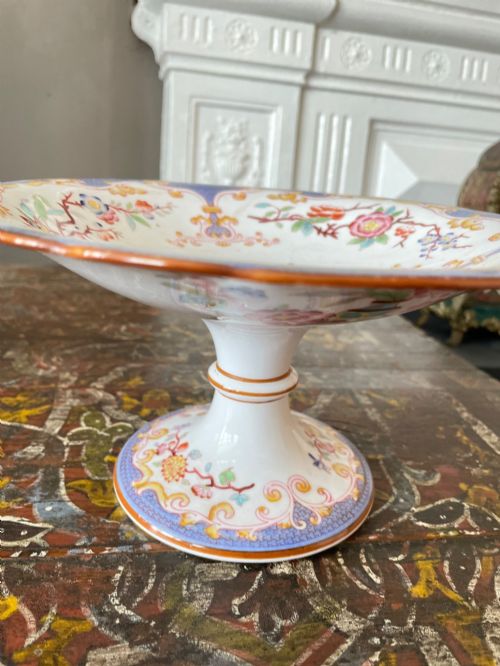
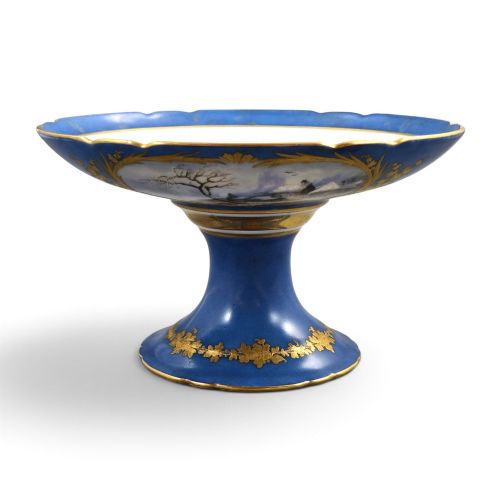
A french antique pedestal dish encompasses forms such as tazzas, compotes, centrepieces, and cake stands raised on a stem and base. The listings show pieces spanning the nineteenth century, including specific dates like 1835, 1870, 1880, and 1890, alongside periods like the Victorian and Regency eras.
Makers and origins reflected in the titles include Sarreguemines and Sèvres porcelain, as well as workshops producing French Empire, Neoclassical, Restauration, Rococo Revival, Second Empire, and Chateau styles. Forms range from single decorative bowls to matched pairs intended for formal table settings or mantel displays.
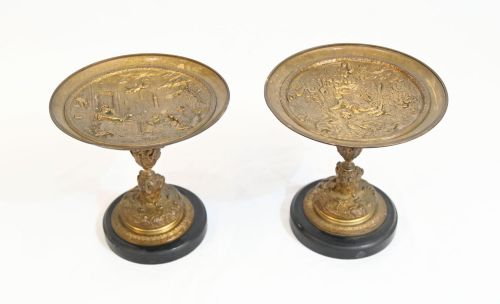
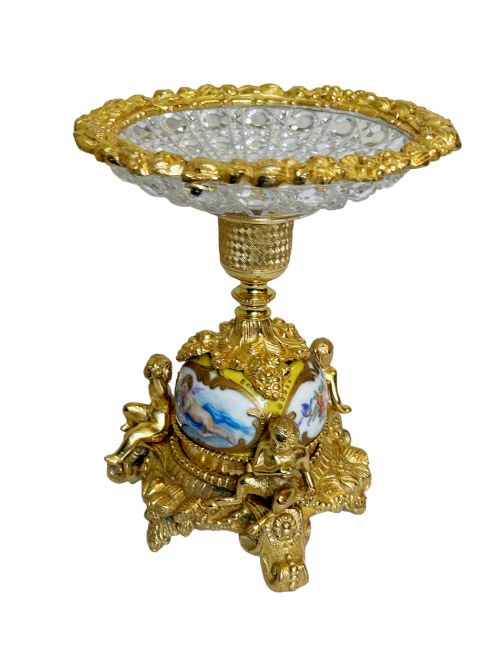
Materials vary widely across the inventory, combining metalwork with ceramics or stone. Buyers encounter everything from grand gilt bronze centrepieces with cherubs to intimate porcelain compotes featuring floral decor or painted topographical scenes.
Materials and construction
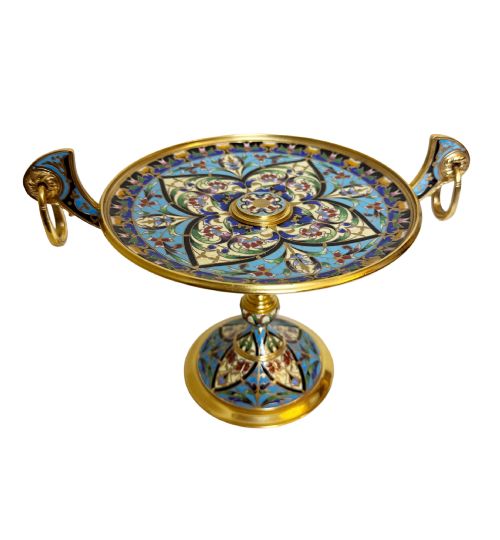
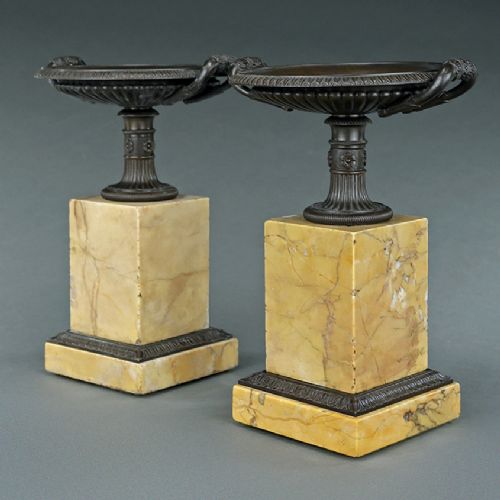
Metal components rely on bronze, gilt bronze, and ormolu, often cast in classical or figural motifs such as cherubs. These metal mounts support dishes fashioned from diverse materials including marble, cut crystal, Limoges enamel, champleve, malachite, blue john, and mother-of-pearl.
Ceramic elements utilise porcelain bodies, exemplified by Sèvres and Sarreguemines productions, decorated with glazes, coloured grounds, and hand-painted botanical or landscape motifs. Assemblages frequently combine these media mechanically, securing metal bases to stone or ceramic dishes with threaded rods or pins.
French Pedestal Dish Retail Price Guide 2026
Typical asking prices for french pedestal dish among the pieces listed under this phrase on Sellingantiques today, from the lower quarter to the upper quarter. They describe what is for sale here now, not the wider market.
Listings feature nineteenth-century French pieces in bronze, ormolu, porcelain, and marble, spanning forms from tazzas to centrepieces.
Assessing quality
Quality rests in the crispness of the bronze and ormolu chasing, where finely detailed cast work on elements like cherubs separates standard production from superior pieces. The choice and execution of secondary materials - such as genuine malachite, blue john, or hand-painted Limoges enamel - also dictate the tier of the object.
Harmony of proportion between the pedestal stem, the supporting base, and the upper dish governs the visual success of the piece. Integrated pairs matching in bronze casting and dish material command greater attention than isolated examples.
Sarreguemines·Sèvres
The French Pedestal Dish Glossary
- Tazza
- A shallow bowl or cup mounted on a stem and foot, commonly used for serving fruit or displaying sweets. It serves as a primary form within nineteenth-century French metalwork and ceramics.
- Ormolu
- Gilded bronze, where a gold-mercury amalgam is applied to a bronze base, creating a durable golden surface. It appears frequently on nineteenth-century French mounts and stands.
- Champleve
- An enamelling technique where troughs or cells are hollowed out of a metal surface and filled with vitreous enamel before firing. Pieces utilising this method display rich, patterned colour alongside exposed bronze lines.
- Compote
- A raised bowl used for desserts, fruit, or compotes, often synonymous with a tazza or cake stand in antique inventories. They appear in porcelain, glass, and metal forms.
French Pedestal Dish: Frequently Asked Questions
What is a French antique pedestal dish used for?
Historically, these elevated vessels served fruit, sweetmeats, or cakes during formal dining, or acted as decorative centrepieces on side tables. Today, they function primarily as decorative objects for display on mantelpieces, sideboards, or dining tables.
The raised format draws the eye upward, making them suitable for holding seasonal fruit, floral arrangements, or small collections of curiosities.
How do I date a French pedestal dish?
Dating relies on stylistic clues, manufacturing techniques, and factory marks where present. Nineteenth-century pieces often reflect distinct design movements like the Second Empire, Regency, or Rococo Revival.
Examining the casting quality of the bronze mounts, the composition of the ceramic body, and any associated signatures or stamps helps narrow the period of manufacture.
What materials are common in these dishes?
The inventory records a diverse mix of media, combining metalwork with decorative stones and ceramics. Ormolu, gilt bronze, and standard bronze form the structural bases and decorative mounts.
These metal frames frequently hold dishes made from porcelain, cut crystal, marble, Limoges enamel, malachite, or mother-of-pearl, showcasing the decorative arts of the nineteenth century.
How should I care for an antique pedestal dish?
Care depends entirely on the specific materials used in the piece, as metal, porcelain, and soft stones require different maintenance. Bronze and ormolu mounts need only gentle dusting with a soft, dry cloth to prevent the accumulation of grime.
Harsh chemical polishes must be avoided, particularly on gilded surfaces or delicate stones like malachite and blue john, which can be permanently damaged by abrasive cleaners.