




Antique Porcelain Flatbacks
These antique porcelain flatbacks bring Victorian parlours to life, offering a charming slice of nineteenth-century portraiture and domestic display.
Antique Porcelain Flatbacks
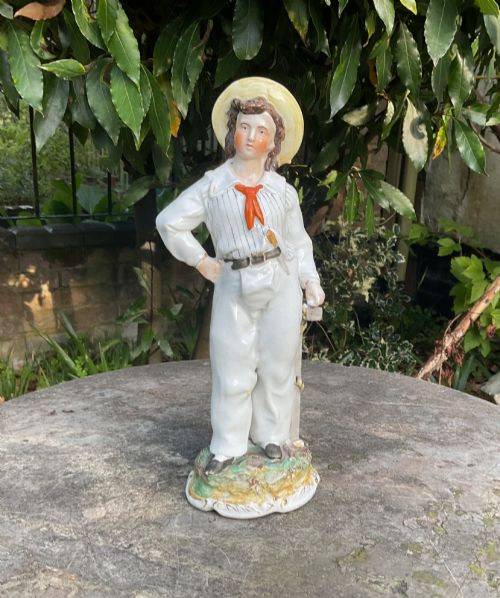
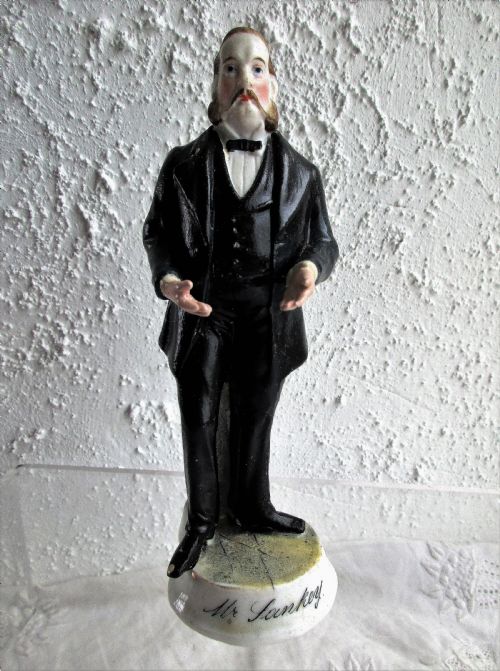
Antique porcelain flatbacks represent a distinct category of nineteenth-century ceramic figures designed to stand against a wall, leaving the reverse unadorned. Most examples encountered on this page belong to the Victorian era, spanning royal portrait groups, literary subjects, and pastoral scenes.
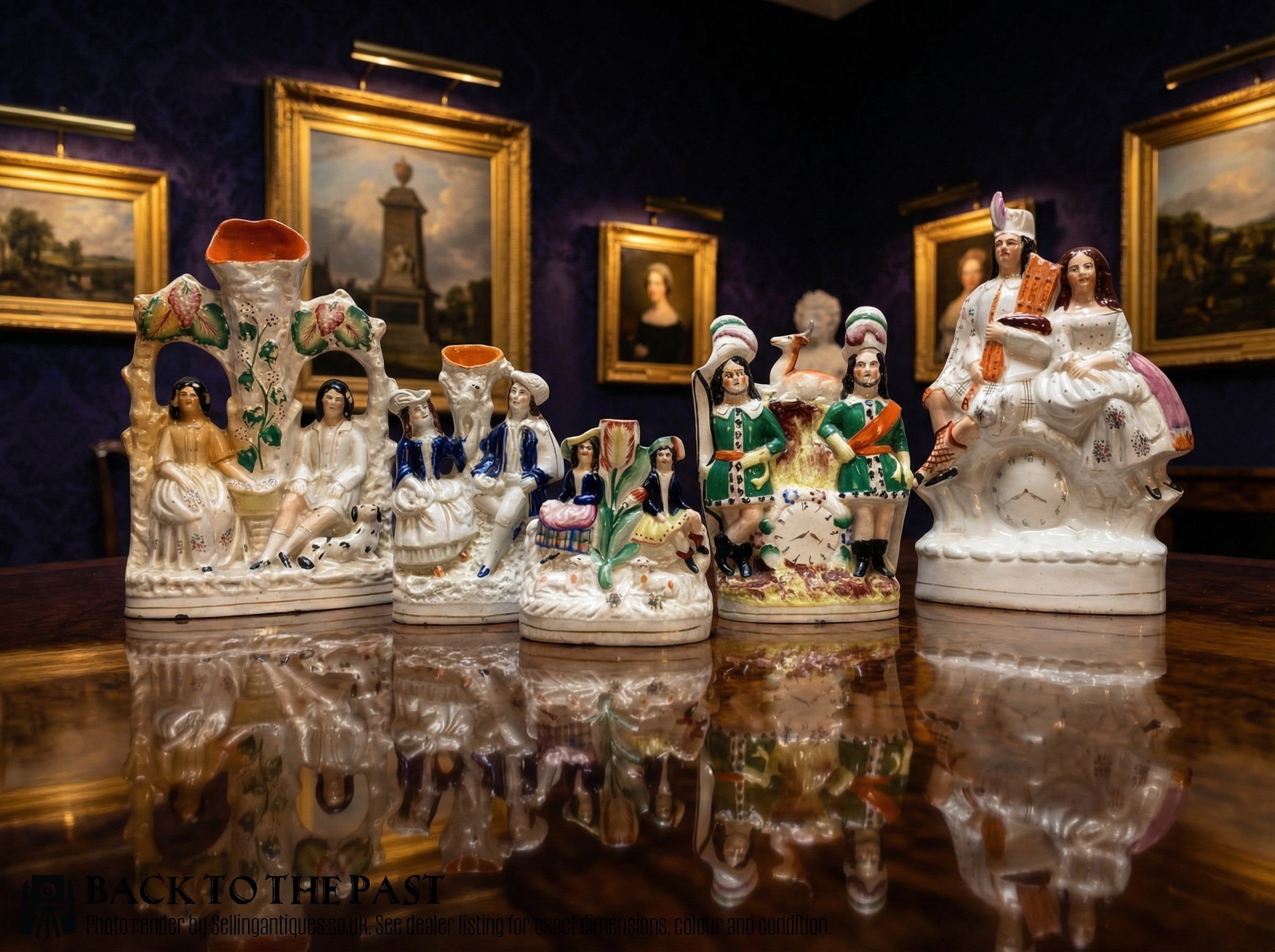
The subjects range widely from notable political figures such as Queen Victoria and Napoleon III to everyday characters like Scots harvesters, milkmaids, and huntsmen. Collectors also find spill vases and watch holders shaped as cottages, animals including deers and poodles, and theatrical groups.
These decorative ornaments typically date between eighteen-sixty and eighteen-eighty, capturing the popular tastes of Victorian households. Figures often appear in pairs or sets, portraying notable personalities, romanticized rural life, or exotic themes such as seated Turks.
How they were made
The flatback construction method allowed makers to cast figures efficiently in moulds with open backs, saving material and weight for mantelpiece display. Firing in traditional kilns set the enamel glaze and created the characteristic smooth finish seen across Victorian Staffordshire productions.
Antique Porcelain Flatbacks Retail Price Guide 2026
Typical asking prices for porcelain flatbacks among the pieces listed under this phrase on Sellingantiques today, from the lower quarter to the upper quarter. They describe what is for sale here now, not the wider market.
Victorian mantelpieces gained extraordinary company when potters decided miniature poodles and seated Turks deserved equal billing with Napoleon and Queen Victoria.
What varies in quality
The standard of modelling and facial expression distinguishes finer pieces from simpler output, as master modellers achieved much sharper likenesses in royal portraits. Crisp detailing in the moulding of hair, hands, and architectural elements such as cottages indicates superior workshop practice.
Application of the enamel glaze and hand-painting also marks out the better examples, where colours remain precise and vibrant without bleeding across boundaries. Generous and careful use of gilt highlights adds depth to the better figures, whereas hurried decoration results in flatter visual appeal.
The Antique Porcelain Flatbacks Glossary
- Flatback
- A ceramic figure modelled with a finished front and a flat, unpainted reverse intended to sit flush against a wall on a mantelpiece.
- Spill vase
- A hollow vertical cylindrical vessel incorporated into a figure group, designed to hold taper spills for lighting pipes or candles.
- Watch holder
- A decorative ceramic stand featuring a small hook or recess specifically designed to suspend a pocket watch safely.
- Earthenware
- A porous pottery body fired at lower temperatures, commonly used for nineteenth-century Staffordshire figures before glazing.
- Lead glaze
- A shiny coating containing lead compounds applied to ceramics to create a smooth, waterproof surface that enhances painted colours.
Antique Porcelain Flatbacks: Frequently Asked Questions
What is a flatback figure?
A flatback figure is a ceramic ornament shaped primarily on the front and sides, with a flat, unglazed or plain back. This construction allowed the piece to sit neatly against a cottage mantelpiece or wall.
Potters produced them in vast numbers during the Victorian period, depicting royalty, animals, and everyday characters for domestic display.
How were spill vases used?
Spill vases combined practical utility with decorative display by incorporating a small cylindrical holder alongside the main figure group. Households kept rolled paper tapers inside these tubes to transfer fire from the hearth to lamps and candles.
Many Victorian examples feature animals like deer or human figures standing beside the vase opening.
How do I date these figures?
Dating relies on historical subjects, clothing styles, and the specific manufacturing techniques recorded across nineteenth-century pottery traditions. Figures depicting specific events, such as royal weddings or political alliances, provide a reliable chronological baseline.
Stylistic shifts between eighteen-sixty and eighteen-eighty also help narrow the period of production for standard decorative ornaments.
Where were these figures displayed?
Victorian households typically placed these ceramic ornaments on mantelpieces, chiffoniers, and high shelves where the flat reverse rested securely against the wall. Pairs of figures often flanked clocks or decorative items to create symmetrical arrangements in the parlour.
Their bright enamel colours and gilt details brightened dimly lit nineteenth-century rooms.