





Staffordshire Pottery Couple
Staffordshire pottery couple figures are charming ceramic ornaments capturing Victorian domestic and theatrical life, bringing character and colour to any mantelpiece.
Staffordshire Pottery Couple
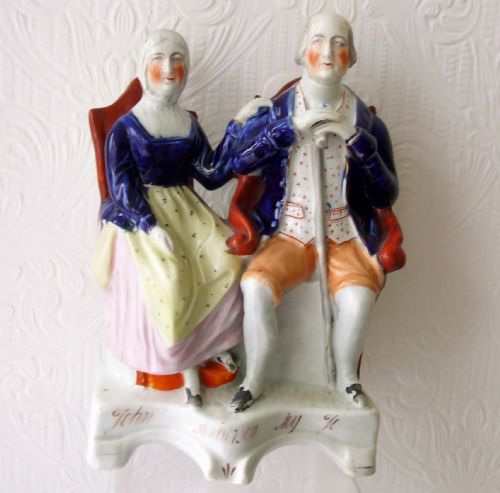
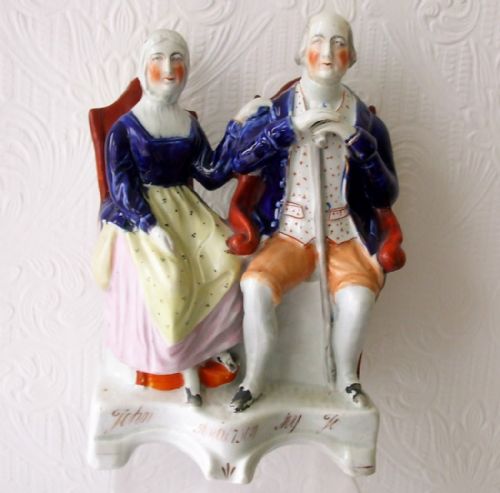
When you search for staffordshire pottery couple, you are looking at earthenware figures and spill vases made during the nineteenth century. These ornamental ceramics depict various pairs, ranging from Scottish lairds and harvesters to theatrical characters and country figures.
The version you are most likely to meet on this page is the Victorian flatback figure, designed to stand against a wall rather than in the round. They capture popular subjects of the period, including literary references like John Anderson, My Jo, and royal portraits.
How they were made
Potters shaped these earthenware pieces using moulds, creating hollow flatback bodies that saved weight and materials. Once formed, the figures were fired and finished with lead glaze.
Staffordshire Pottery Couple Retail Price Guide 2026
Typical asking prices for staffordshire pottery couple among the pieces listed under this phrase on Sellingantiques today, from the lower quarter to the upper quarter. They describe what is for sale here now, not the wider market.
Listings feature nineteenth-century dates ranging from eighteen fifty to nineteen hundred, with Victorian styles dominating the selection.
What varies in quality
Quality rests in the crispness of the moulding and the care taken with the enamel painting. Finer examples display precise facial expressions and carefully applied brushwork rather than hasty decoration.
Size and ambition also separate ordinary figures from the top of the range. Large flatback groups and detailed spill vases required greater skill in the kiln.
The Staffordshire Pottery Couple Glossary
- Flatback
- A figure moulded with a finished front and a flat, unadorned reverse side. This design allowed the ceramic to sit neatly against a cottage mantelpiece.
- Spill vase
- A hollow cylindrical container attached to a figure, intended to hold wooden spills for lighting pipes or fires. They combine domestic utility with decorative sculpture.
- Earthenware
- Porous ceramic pottery fired at a lower temperature than stoneware or porcelain. It serves as the standard body for these nineteenth-century figures.
- Lead glaze
- A shiny coating applied to pottery before a final firing to create a glossy surface. It protects the enamel paint underneath and gives the ceramic its characteristic shine.
- Enamel paint
- Coloured decoration applied over the glaze and fired at a low heat. It provides the bright reds, blues, and yellows seen on Victorian figures.
Staffordshire Pottery Couple: Frequently Asked Questions
What are Staffordshire pottery couples?
These are nineteenth-century ceramic figures depicting pairs of people, ranging from country folk to literary characters. Potters made them as ornamental pieces for Victorian mantelpieces.
They capture popular culture and domestic ideals of the era through bright enamel paints and moulded earthenware forms.
How were flatback figures used?
Makers designed flatbacks with plain, unpainted rears so they could rest flat against walls on shelves or mantelpieces. Some double as spill vases to hold tapers for lighting fires.
They served entirely as decorative ornaments rather than functional tableware in Victorian homes.
How do I date a Staffordshire figure?
Most pieces on this page date from the nineteenth century, specifically the Victorian era between eighteen fifty and nineteen hundred. Collectors look at the style of the clothing and the application of the lead glaze.
Flatback construction and specific subject matter help narrow down the manufacturing decade.
What subjects do these figures show?
The subjects include country couples, Scottish harvesters, lairds, and theatrical characters like Ben Backstay. Some pieces also portray literary figures and royal pairs.
These themes reflect what Victorian buyers found amusing or fashionable in their homes.