



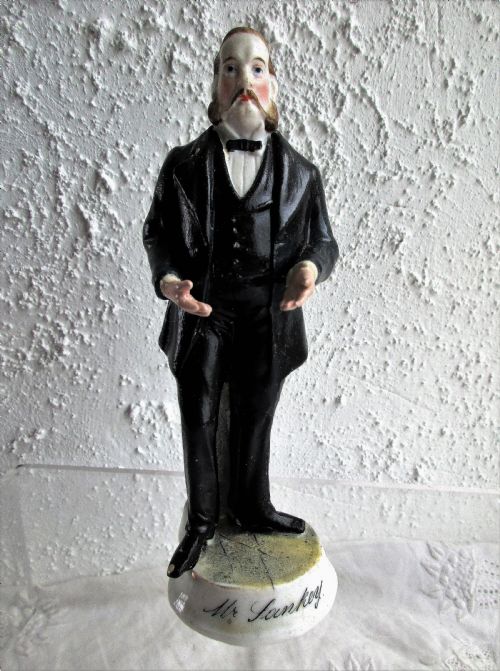
19th Century Earthenware Ornament
These nineteenth century earthenware ornament selections bring domestic Victorian figures and animals straight to the mantelpiece.
19th Century Earthenware Ornament
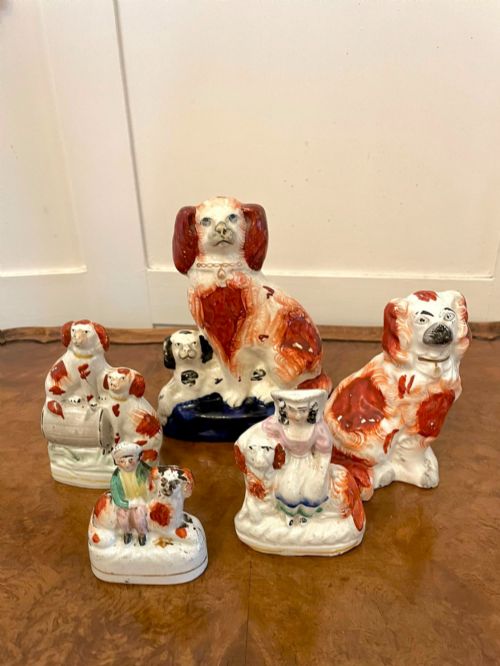
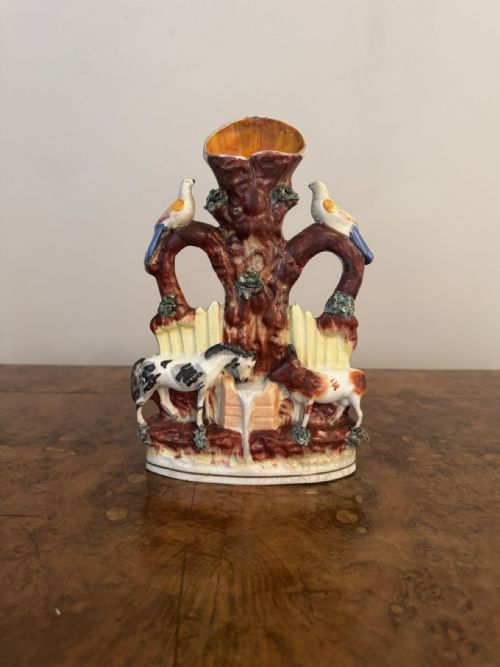
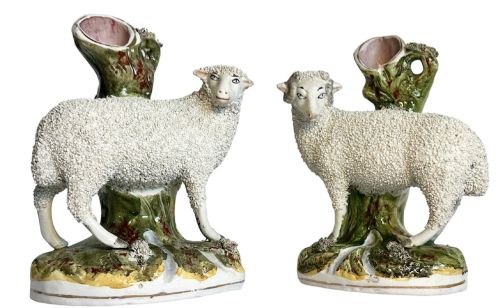
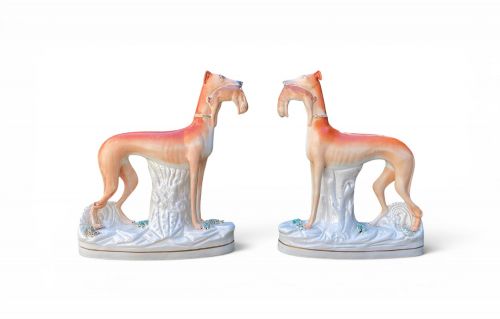
A 19th century earthenware ornament encompasses moulded pottery figures, animals, and spill vases designed for nineteenth-century domestic display. Collectors pursuing this category typically meet Victorian Staffordshire productions, including flatbacks, spaniels, poodles, greyhounds, and portrait pieces.
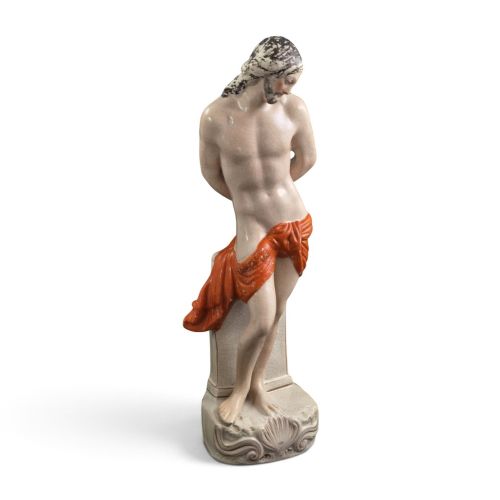
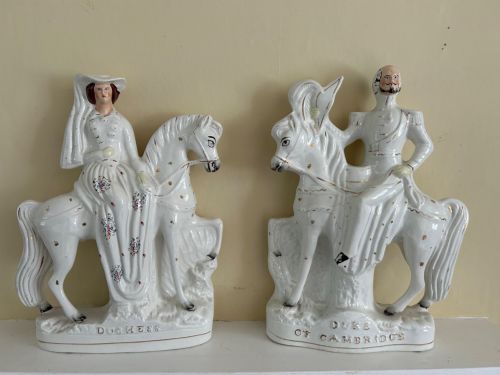
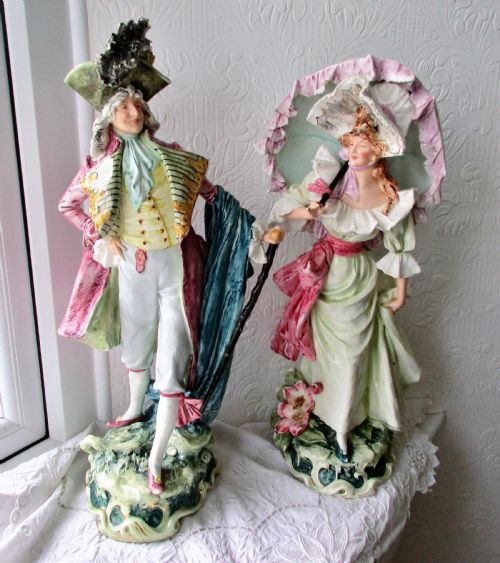
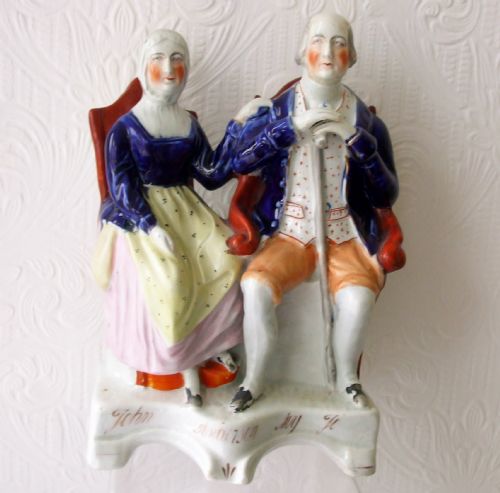
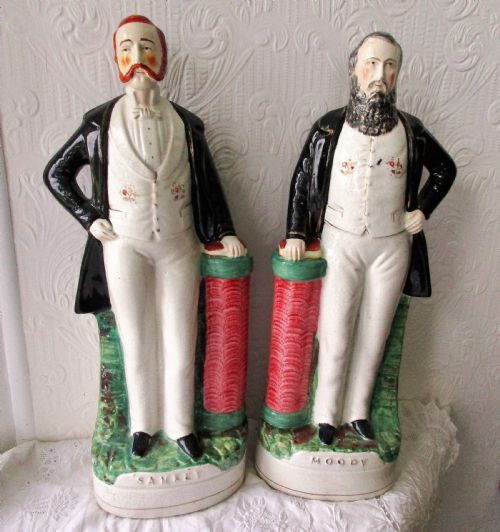
The range includes historical figures, literary characters, and rustic cottages alongside blue and white Dutch Delft cattle and French faience. Figures vary from individual portrait subjects to symmetrical pairs intended for mantle placement.
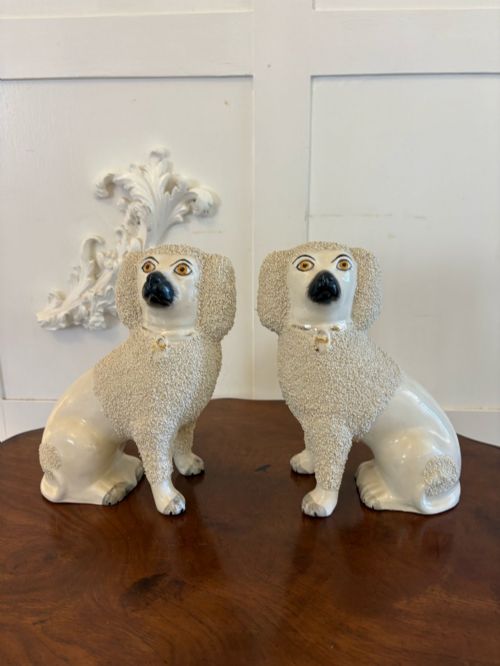
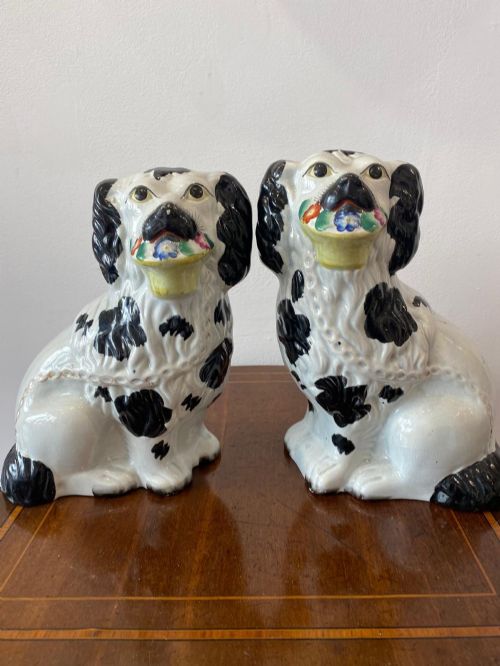
Moulded ceramic animals dominate the selection, particularly seated spaniels, lions, and poodles finished with painted enamel details or metallic gilt touches.
Materials and Construction
Potters shaped these pieces from local clay bodies, firing the earthenware before applying lead glaze, enamel paint, or tin glaze. Many objects received vibrant cobalt blue pigments or metallic gilt highlights over the finished ceramic surface.
Canine subjects range from solemn black and white spaniels to jaunty poodles complete with stylised clay curls.
Judging Quality and Execution
Quality rests upon the crispness of the original moulding and the precision of the hand-painted enamel decoration. Superior examples display carefully delineated facial expressions and clean application of gilt and colour rather than hurried brushwork.
The weight and consistency of the ceramic body also distinguish finer pieces, alongside the preservation of the original lead glaze. Matched pairs with uniform firing characteristics and complete historical pigments command greater attention from collectors.
Thomas Parr
The 19th Century Earthenware Ornament Glossary
- Flatback
- A pottery figure designed with a finished front and a plain, unadorned flat reverse intended to sit against a wall or mantelpiece.
- Spill Vase
- A hollow ceramic vessel incorporating a small upright cylinder meant to hold wooden spills for lighting fires or pipes.
- Lead Glaze
- A glossy coating containing lead oxide applied to earthenware to waterproof the porous clay body and impart a vitreous shine.
- Pearlware
- A refined fine-grained earthenware developed in the eighteenth century featuring a subtle bluish-white glaze that pooled in recesses.
- Enamel Paint
- Vitreous colours fired onto the glazed ceramic surface at lower temperatures to provide bright red, blue, and black details.
19th Century Earthenware Ornament: Frequently Asked Questions
What are 19th century earthenware ornaments?
These pieces are moulded ceramic figures, animals, and architectural models produced across the nineteenth century for interior decoration.
Potters created them primarily in regional kilns, finishing each item with glazes and hand-applied enamel colours.
How were 19th century earthenware ornaments displayed?
Victorian households placed these ceramic figures along mantelpieces, sideboard tops, and occasionally within domestic cabinets.
Matched pairs often flanked clocks or centrepieces to create symmetrical arrangements in nineteenth-century parlours.
How do you date 19th century earthenware ornaments?
Dating relies on stylistic clues, costume details, glazing techniques, and historical events recorded in the subject matter.
Marked pieces or specific portrait subjects tied to mid-century conflicts provide firmer chronological anchors for the pottery.
What subjects appear on these ornaments?
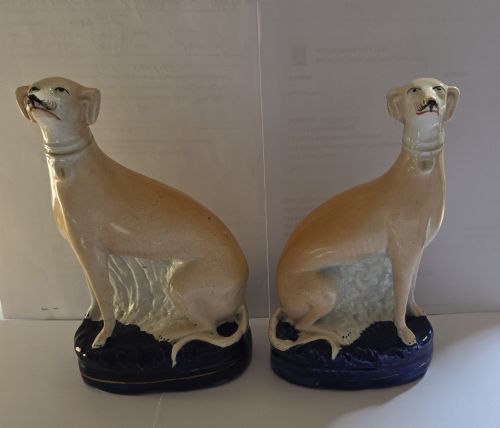
Common subjects include domestic animals like spaniels, lions, and greyhounds, alongside literary characters, historical figures, and rural cottages.
Polemic portrait subjects and military commanders from the Crimean War era also feature frequently.