


Antique Pewter Tray
An antique pewter tray brings tactile weight and sculptural curves to a table, spanning simple Georgian serving plates to elaborate Art Nouveau card dishes.
Antique Pewter Tray
When you search for an antique pewter tray, you encounter a wide array of domestic and decorative metalware designed for serving, display, and desk use. The selection ranges from plain Georgian chargers and wavy-edge plates to ornate Art Nouveau card trays and serving dishes.
The pieces on this page lean heavily towards the late nineteenth and early twentieth centuries, reflecting the revival of metal crafts during the Arts and Crafts movement. You will frequently find smaller card trays, crumb trays, and pen trays alongside larger serving platters and table centrepieces.
Origins vary across English, German, and French makers, incorporating alternative metal compositions such as Britannia metal and silvered pewter. Accents of cut glass, mirrored glass, and marble occasionally accompany the metalwork to form table plateaux and stands.
How they were made
Many pieces utilise traditional casting and hammering techniques, where craftsmen shaped the alloy by hand to build up textured surfaces like beaten finishes and multiple reeded rims. These methods produced durable domestic objects that held their structural integrity over centuries.
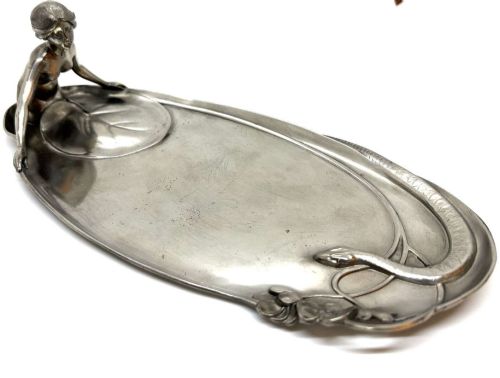
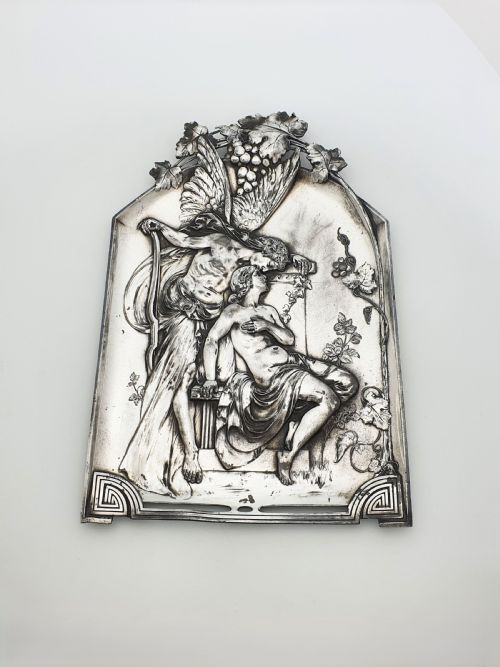
Makers also employed Britannia metal and silver plating over pewter cores, particularly during the Art Nouveau period, allowing for complex figural casts depicting maidens, serpents, and floral motifs. Subsequent polishing and silvering gave these decorative dishes a bright, reflective sheen akin to solid silver.
Several trays feature intertwined serpents and maiden figures keeping watch over your visiting calling cards.
What varies in quality
Quality in these trays depends on the crispness of the casting and the depth of the hand-hammered detailing executed by the artisan or workshop. Superior examples exhibit well-defined figural elements and balanced proportions that elevate a functional item into a sculptural centrepiece.
The integrity of the alloy and the preservation of original surfaces also determine value, as excessive cleaning or pitting diminishes the tactile appeal of the metal. Pieces bearing identifiable maker marks or designer attributions command greater interest from collectors.
WMF·Orivit·Liberty & Co·Zimmermann·Archibold Knox
The Antique Pewter Tray Glossary
- Britannia metal
- A tin-based alloy containing antimony and copper, often utilised as a base metal for silver-plated tableware and trays due to its silvery appearance and ease of casting.
- Charger
- A large ornamental or serving plate, typically measuring twenty inches or more across, used historically for grand dining or as a base beneath other dishes.
- Tazza
- A shallow bowl or dish mounted on a stem and foot, frequently employed as a centrepiece or decorative stand for fruit and bonbons.
- Table plateau
- A mirrored glass tray placed in the centre of a dining table to reflect candlelight and display decorative ornaments or glassware.
- Tudric
- The trade name used by Liberty & Co. for their range of pewter ware, often associated with the designs of Archibald Knox during the early twentieth century.
Antique Pewter Tray: Frequently Asked Questions
How do I clean an antique pewter tray?
Dust the surface gently with a soft cloth to remove everyday particles. Avoid harsh chemical polishes that strip away the historical patina built up over decades.
If washing is necessary, use mild soap and warm water, then dry thoroughly with a lint-free towel to prevent water spots.
What is the difference between pewter and Britannia metal?
Traditional pewter is a tin alloy traditionally combined with lead or copper, yielding a darker, heavier finish. Britannia metal is a specific, harder tin-antimony-copper alloy that takes a brighter silver-like polish.
Makers frequently utilised Britannia metal for plated items requiring sharper cast details during the late nineteenth century.
How can I tell an Art Nouveau tray from a Georgian one?
Georgian trays and chargers favour clean, symmetrical lines, plain rims, and multiple reedings dictated by functional utility. They display a heavier, straightforward construction intended for formal dining.
Art Nouveau pieces embrace asymmetrical floral motifs, whiplash curves, and figural maiden elements produced through industrial and hand-hammered revivals.
Were these trays meant for daily use?
Many items, such as crumb trays, card trays, and serving platters, served active domestic roles in wealthy households. Serving trays and dishes handled food, wine bottles, and calling cards on a regular basis.
Over time, handling and polishing altered the surfaces, leaving minor scratches and softening the original tool marks.