

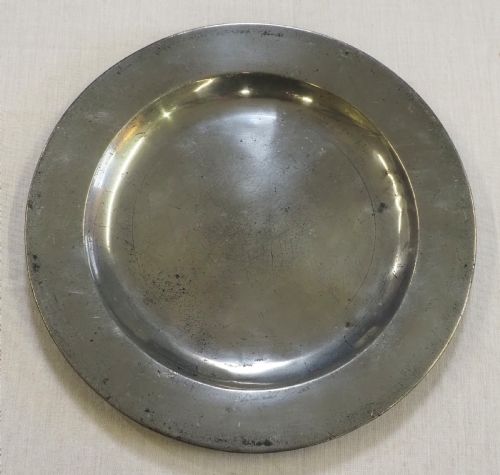
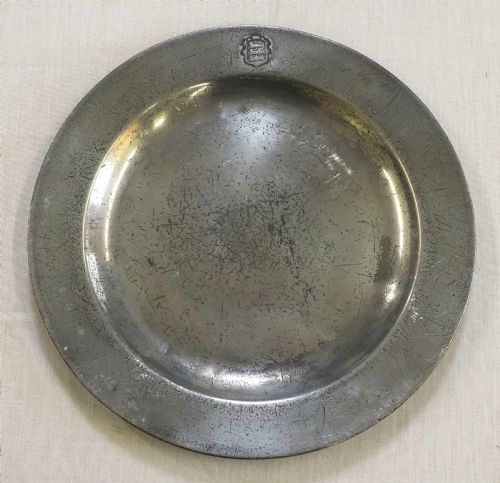
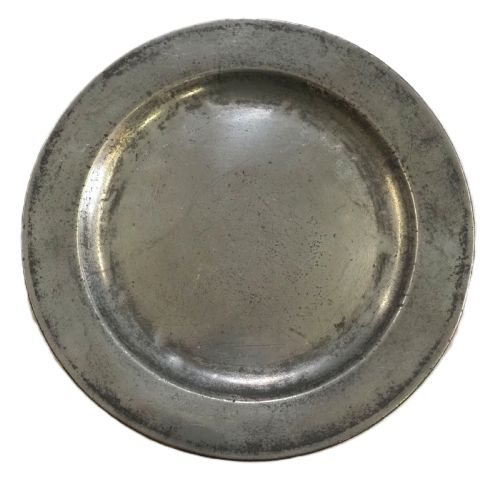


Georgian Pewter Charger
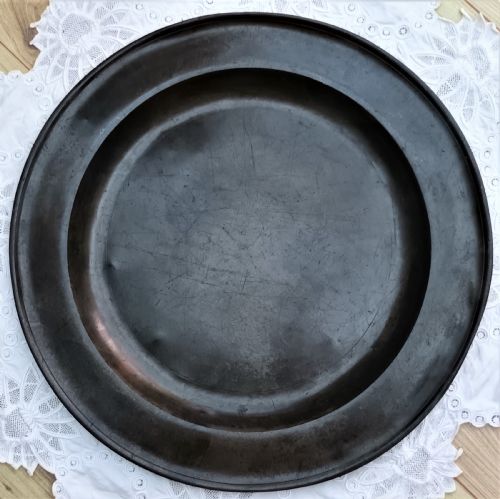
A georgian pewter charger brings substantial metalwork into a room, offering the heavy plate presence of eighteenth-century dining.
Georgian Pewter Charger
A georgian pewter charger is a large circular serving dish or display plate produced during the eighteenth century and the early nineteenth century. These wide pieces served substantial joints at table before smaller individual dinner plates became standard.
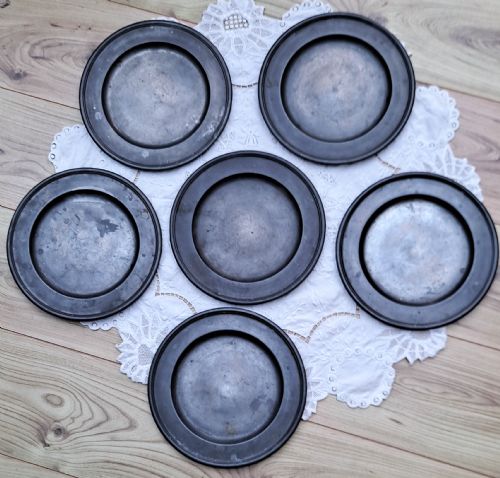
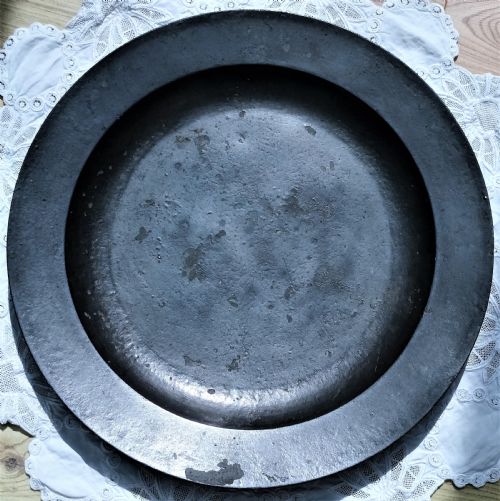
The selection here encompasses plain rim plates, multiple reeded chargers, and wavy edge plates alongside related forms like toilet basins. Most examples originate from English workshops, though European items also appear.
Buyers encounter items spanning the 1700s through to the nineteenth century, reflecting the working periods of notable London and provincial pewterers.
Materials and construction
These items consist primarily of pewter, a durable alloy of tin combined with lead or copper to give sufficient rigidity for large vessels. Makers cast the metal in moulds before turning it on a lathe to finish the surface and achieve the correct thickness.
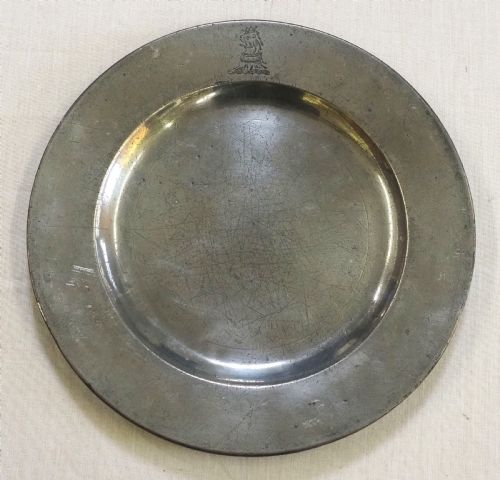
Details such as hallmarks, touchmarks, and ownership crests are often stamped directly into the rim or base. Rims vary from simple flat borders to multiple reeded profiles or shaped wavy edges.
Georgian Pewter Charger Retail Price Guide 2026
Typical asking prices for georgian pewter charger among the pieces listed under this phrase on Sellingantiques today, from the lower quarter to the upper quarter. They describe what is for sale here now, not the wider market.
Markers of distinction
Quality rests significantly upon the clarity of touchmarks and maker stamps, which identify the specific foundry and craftsman. Heavier gauge metal that resists bending also distinguishes superior examples.
The presence of crisp armorial crests or detailed engraving adds notable character to a piece. Preservation of the original surface texture, without excessive smoothing from modern cleaning, determines desirability.
John Duncomb·William Wright·Samuel Smith·T & H Compton·James Spackman·Richard King of London·Wood & Michell·Humphrey Evans II of Exeter·Thomas Alderson·John Barlow·S Duncomb·Yates, Birch & Spooner
The Georgian Pewter Charger Glossary
- Charger
- A very large plate, usually exceeding fifteen inches in diameter, used for serving food or as a base plate at a formal table. These form the focal point of many early collections.
- Touchmark
- An official stamp pressed into the pewter by the maker or workshop to denote quality and origin. These marks are vital for identifying individual craftsmen.
- Reeded
- A rim decorated with parallel raised bands or rings running around the circumference. This moulding adds rigidity and visual structure to the metal.
- Plain rim
- A simple flat or slightly sloping border lacking decorative mouldings or fluting. This style allows the soft lustre of the metal to remain the primary focus.
Georgian Pewter Charger: Frequently Asked Questions
What is a pewter charger?
A pewter charger is a large heavy dish used during the eighteenth century for serving meat or displaying wealth on a sideboard.
These pieces were central to domestic dining before ceramic platters largely replaced them in everyday use.
How do I date a charger?
Dating relies on maker touchmarks, rim styles, and historical working periods recorded in trade touchplate archives.
Plain rims and multiple reeded edges often point to specific decades within the seventeen and eighteenth centuries.
Were these used for eating?
Large chargers functioned primarily as central serving platters for communal joints of meat rather than individual dinner plates.
Smaller plates accompanied them for individual guests at the table.
How do I display them?
Chargers look best mounted on plate rails or stood upright on deep shelves to showcase the soft grey metal surface.
Their substantial weight requires secure fixings if hung on a wall.