

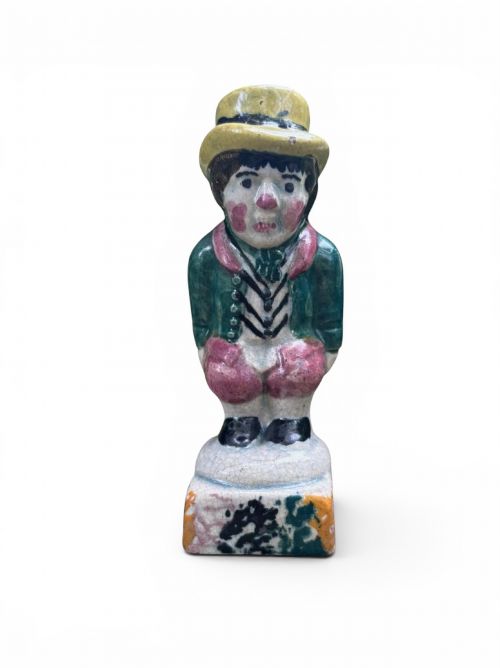
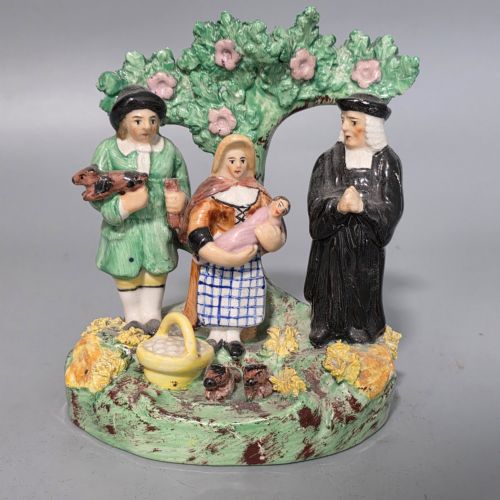


Antique Pearlware Figurine
These antique pearlware figurine examples bring nineteenth-century English folk art into a room with rich ceramic glaze and enamel pigment.
Antique Pearlware Figurine
You are most likely to meet nineteenth-century earthenware and pearlware pieces, including Walton types and prattware items like cow creamers and pepper pots. These ceramic figures capture domestic and pastoral subjects typical of early English ceramic production.
How they were made
Potters shaped these earthenware pieces and coated them with a distinctive pearlware glaze that pooled slightly blue in the recesses. Artisans then applied enamel pigment by hand to highlight details on the figures, lions, sheep, and cottages.
Makers utilised ceramic body techniques typical of the 1800 period, firing the clay before adding surface colour and transparent glaze. This process produced the characteristic finish seen across Staffordshire and Mexborough workshops.
Antique Pearlware Figurine Retail Price Guide 2026
Typical asking prices for pearlware figurine among the pieces listed under this phrase on Sellingantiques today, from the lower quarter to the upper quarter. They describe what is for sale here now, not the wider market.
Listings in this category span the Georgian, Regency, and Victorian periods, utilising earthenware, pearlware glaze, and enamel pigment.
What varies in quality
The finish of the pearlware glaze also distinguishes standard output from superior models, with smoother surfaces and even pooling indicating better kiln work. Maker attribution, such as pieces associated with Walton or Enoch Wood, often reflects a higher standard of modelling.
Enoch Wood factory·Lakin and Poole
The Antique Pearlware Figurine Glossary
- Pearlware
- A refined earthenware developed in the late eighteenth century with a slightly bluish glaze that sits over a whitish body. It was designed to mimic Chinese porcelain.
- Enamel pigment
- Coloured glass-based paint applied over the glaze and fired at a lower temperature to fix the decoration. These pigments provide the bright greens, blues, and yellows on the figures.
- Spill vase
- A hollow ceramic figure incorporating a small cylinder designed to hold wooden spills for lighting fires or candles. They combine decorative subjects with practical hearthside utility.
- Cow creamer
- A vessel shaped as a cow, filled through an aperture on the back and poured from the mouth. These whimsical items served dairy cream at tea tables.
Antique Pearlware Figurine: Frequently Asked Questions
How do I date a figure?
Dating relies on stylistic clues, the type of ceramic body, and the characteristics of the glaze and enamel colours. Pieces from around eighteen hundred often display sharper moulding and specific palette choices compared to later Victorian items.
Comparing known factory traits, such as those associated with Walton or Enoch Wood, helps narrow the production window.
What is a spill vase?
A spill vase is a hollow ceramic figure that includes an attached cylindrical holder. These holders stored thin wooden spills used to transfer flames from the hearth to candles or pipes.
They allowed households to combine domestic decoration with a practical everyday fireside accessory.
How should I display them?
Display these figures away from direct sunlight and dramatic temperature fluctuations to protect the fragile enamel pigments. Placing them on stable shelves or in cabinet displays ensures the glazed earthenware remains secure.
Allowing sufficient space around each piece highlights the modelling and hand-painted details.