


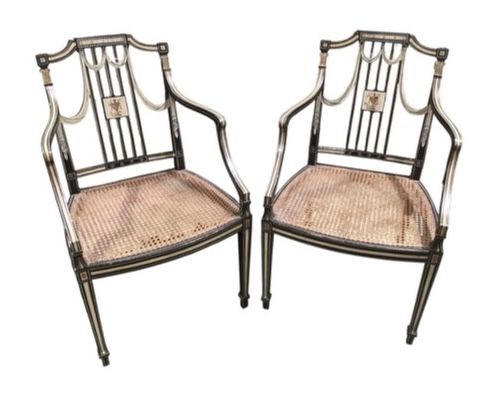


Antique Painted Carver Armchairs
Antique painted carver armchairs bring colour and character to a room, offering sturdy elbow support and hand-applied decoration across Georgian, Regency and Edwardian styles.
Antique Painted Carver Armchairs
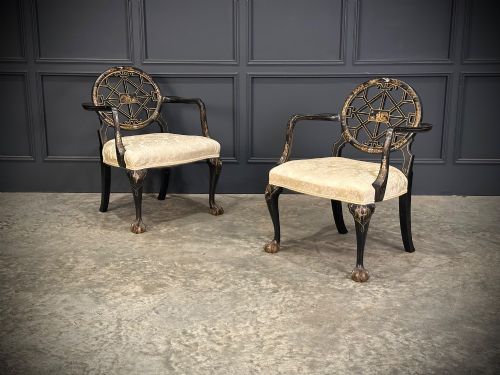
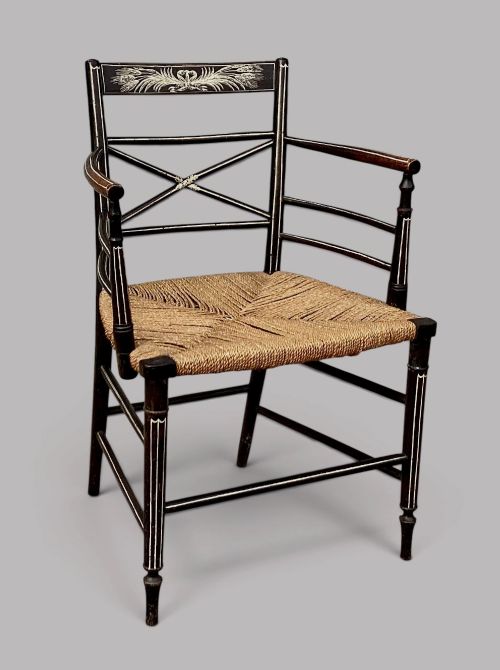
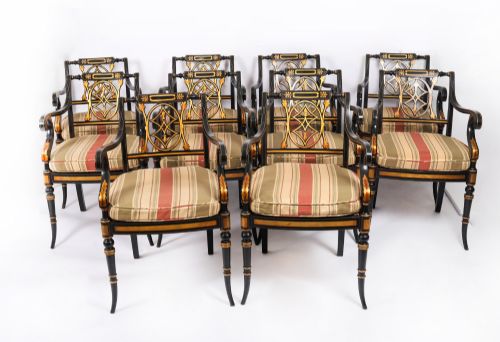
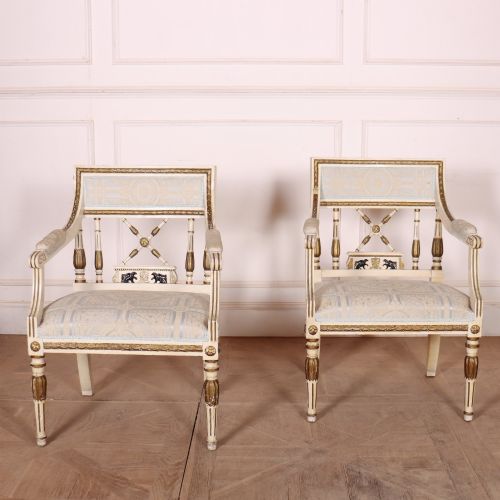
When searching for antique painted carver armchairs, buyers encounter seating designed for the elbow, often styled as open armchairs, elbow chairs, desk chairs or bergères. These pieces span from the mid-eighteenth century through the Regency period and into the Edwardian era, showing influences from George III designs to French Empire and Swedish styles.
Makers and workshops utilised beech, ash, mahogany and walnut as foundational timbers before applying pigment, gilt, or lacquer. The regional variations stretch from English country workshops to continental French and Swedish interpretations.
How they were made
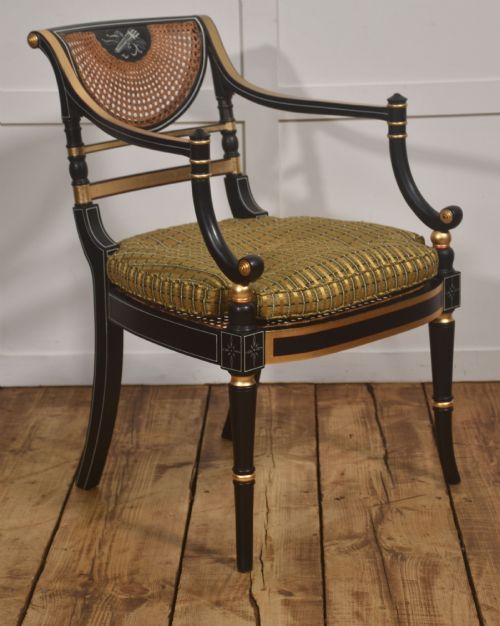
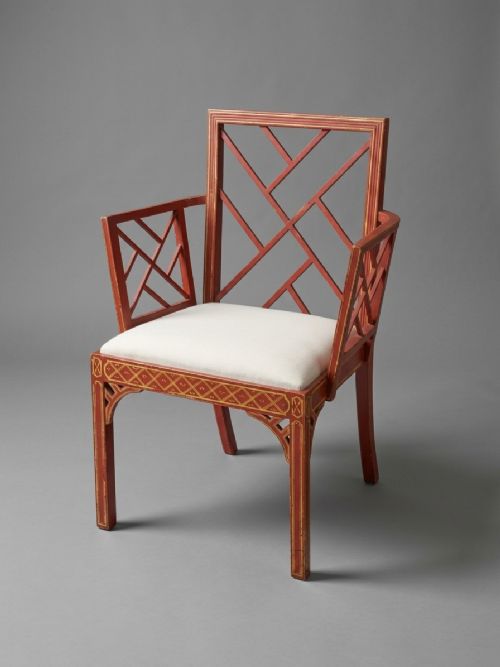
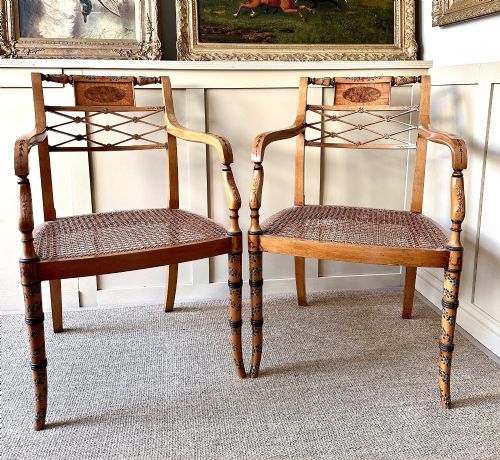
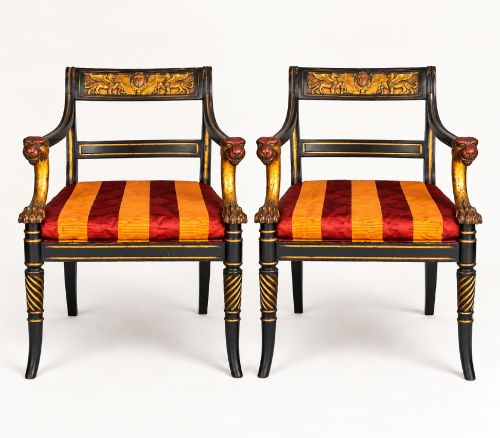
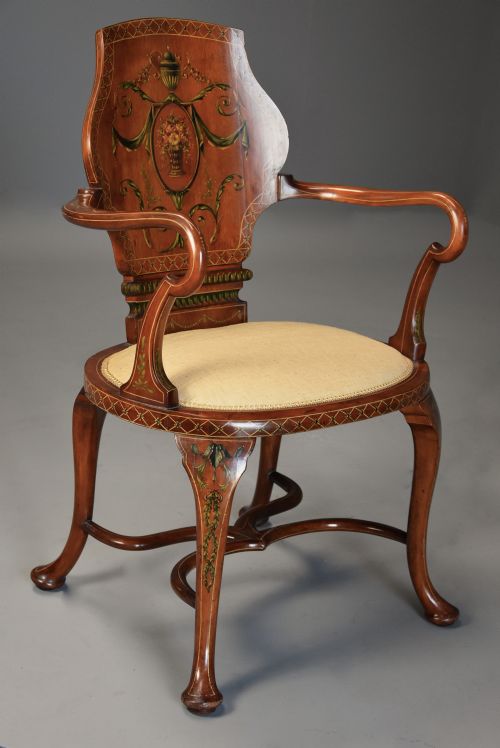
Craftsmen built these frames using traditional joinery in timbers such as beech, ash, walnut and mahogany, preparing the wooden surfaces to receive decorative finishes. Paint, ebonising, lacquer and parcel-gilding were then applied by hand, often incorporating floral scenes, armorial details or classical motifs directly onto the wood or over a gesso ground.
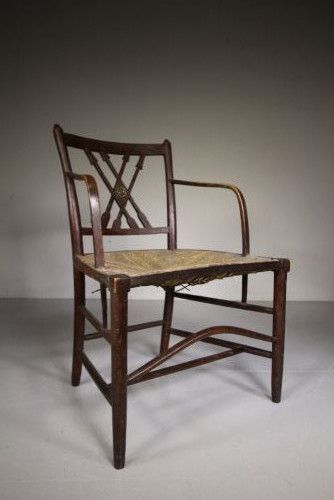
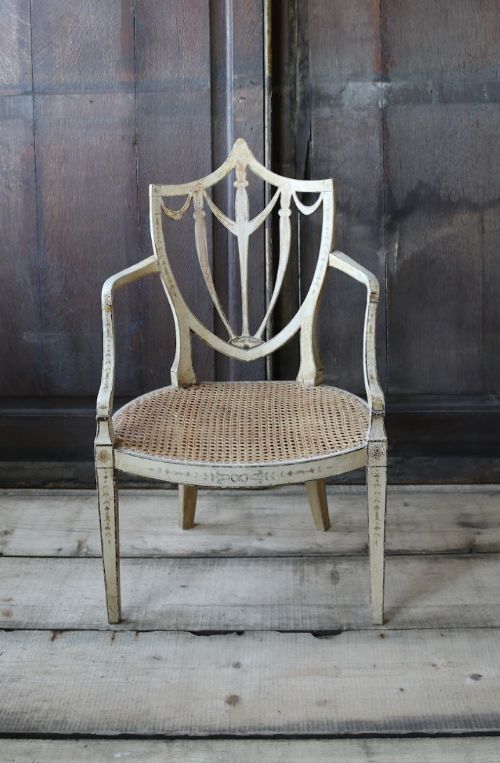
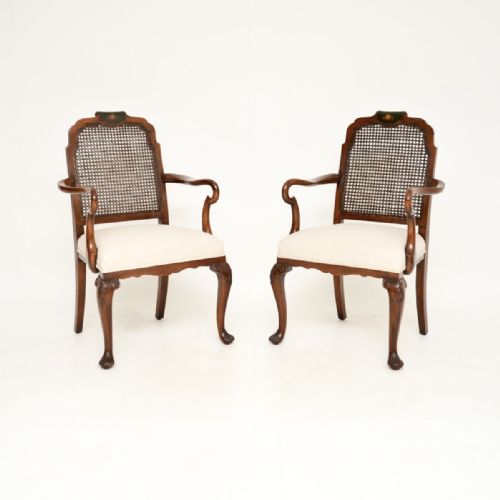
Seating portions were constructed with cane, rush, solid wood or upholstered pads covered in fabric, depending on the period and the specific regional style of the chair. Artisans finished the surfaces with protective layers that have aged over the centuries, resulting in the characteristic distressed or patinated appearance seen today.
Antique Painted Carver Armchairs Retail Price Guide 2026
Typical asking prices for painted carver armchairs among the pieces listed under this phrase on Sellingantiques today, from the lower quarter to the upper quarter. They describe what is for sale here now, not the wider market.
Several chairs feature musical decorations painted directly onto the wood, hitting the right note for eighteenth-century melody lovers.
What varies in quality
The standard of an antique painted carver armchair rests primarily on the crispness of the original carved details beneath the paint and the survival of the early decorative surface itself. Pieces that retain their genuine eighteenth-century or Regency polychrome schemes without heavy later repainting command greater interest from collectors.
Structural integrity of the arm joints and the stability of the timber frame distinguish finer workshops from more utilitarian regional outputs. The refinement of painted motifs, whether delicate floral panels or elaborate parcel-gilt highlights, dictates the upper tier of the range.
Gillows
The Antique Painted Carver Armchairs Glossary
- Carver
- An armchair, usually taller and wider than the dining chairs it accompanied, designed with arms for the head of the table.
- Bergère
- An enclosed upholstered armchair with exposed wooden frames and cane or padded sides, popular in French and Regency designs.
- Parcel Gilt
- A technique where portions of a wooden or painted furniture piece are highlighted with thin layers of gold leaf.
- Japanned
- A heavy European imitation of East Asian lacquerwork, typically built up with dark varnishes and painted decorations.
- Shield-back
- A chair back shaped like a heraldic shield, popularised by eighteenth-century designers like George Hepplewhite and Sheraton.
Antique Painted Carver Armchairs: Frequently Asked Questions
What is a carver armchair?
A carver armchair is a larger chair featuring armrests, traditionally placed at the head of a dining table or used as a desk and occasional seat.
These pieces provide additional support and were often constructed with more decorative details than standard side chairs.
How do I care for painted wood?
Keep painted antique chairs away from direct sunlight and steady heat sources to prevent the wood from drying and the paint from cracking.
Dust gently with a dry, soft cloth and avoid chemical polishes that can damage historic decorative surfaces.
Are these chairs comfortable for daily use?
Many of these armchairs feature upholstered pads, cane work, or shaped wooden seats designed to offer comfortable elbow support during use.
Their suitability for daily sitting depends on the structural stability of the individual frame and the firmness of the original seating medium.
How can I tell the period?
Dating relies on identifying stylistic markers such as the geometry of the splat back, leg shapes, and the specific application of paint or gilding.
Georgian pieces display classical proportions and mahogany or ash framing, while Regency and Edwardian examples introduce bolder neoclassical or revival details.