

Edwardian Cane Seat Armchairs
Edwardian cane seat armchairs combine open wooden frames with woven plant seating, offering light proportions and traditional seating comfort.
Edwardian Cane Seat Armchairs
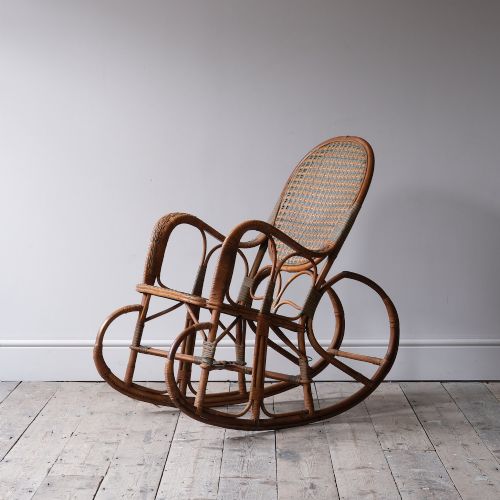
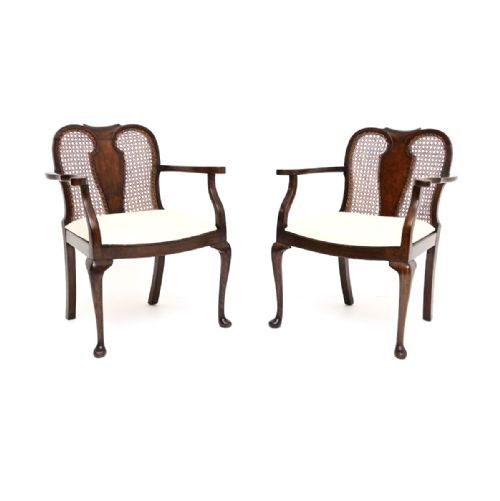
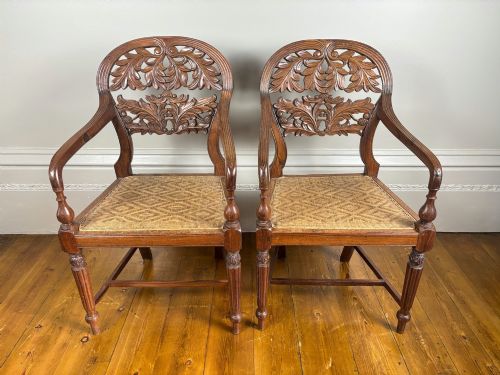
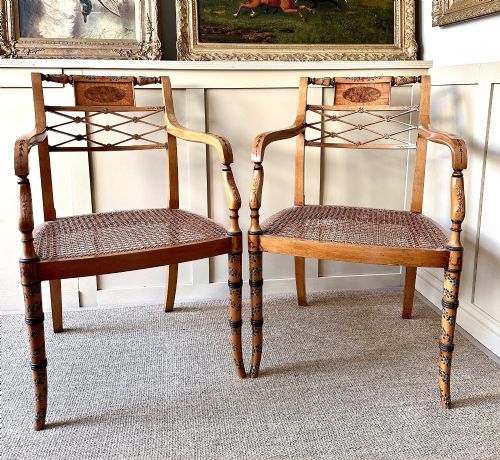
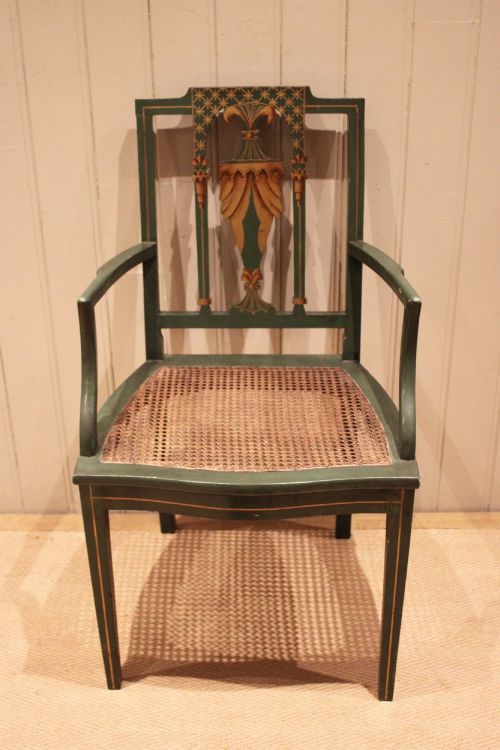
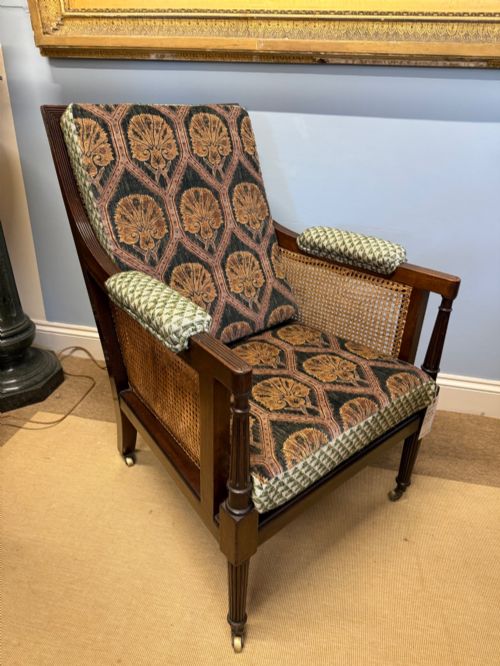
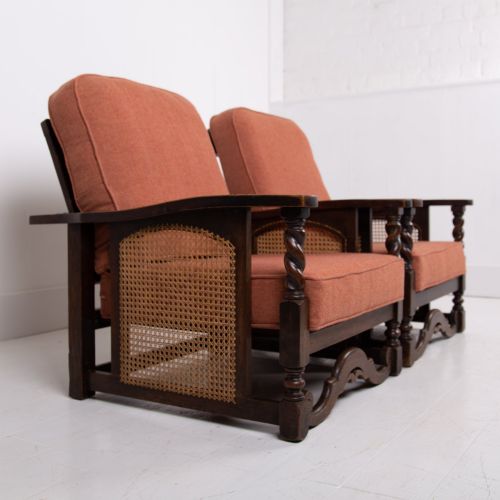
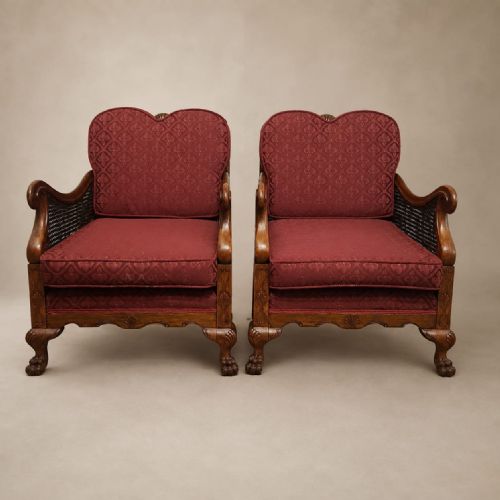
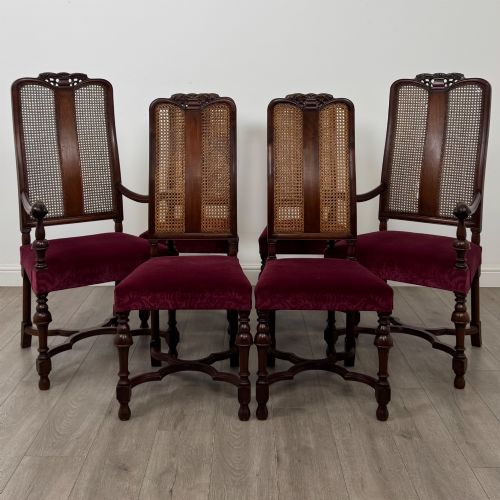
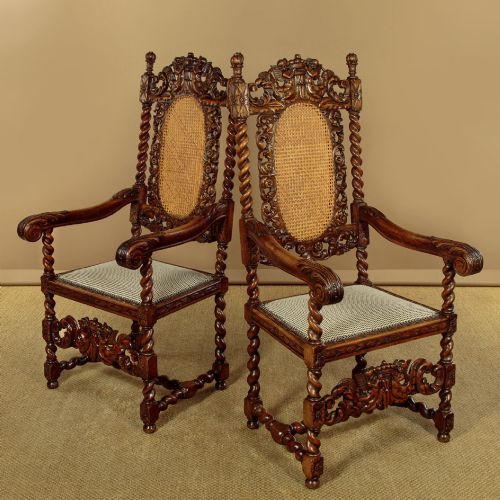
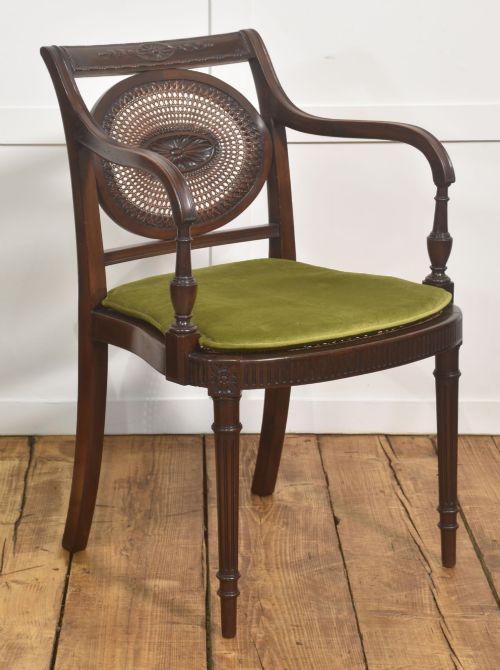
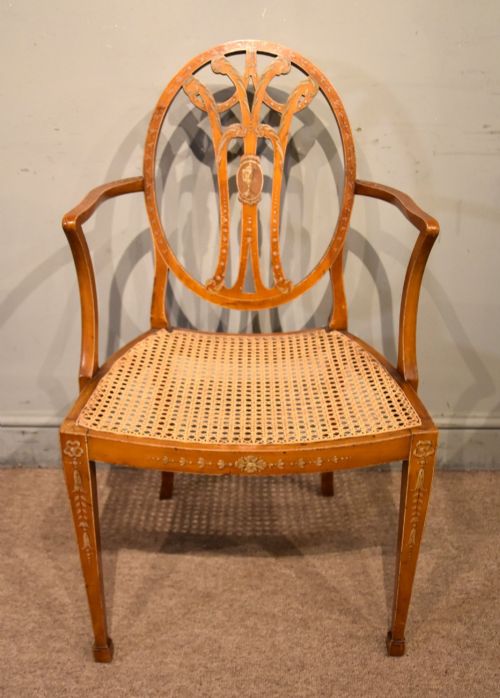
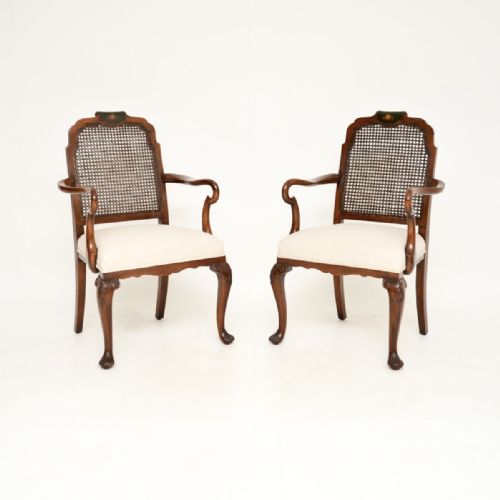
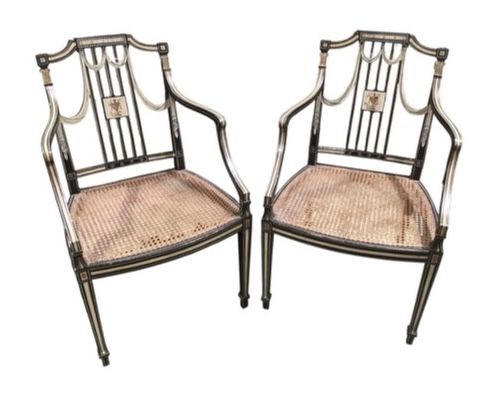
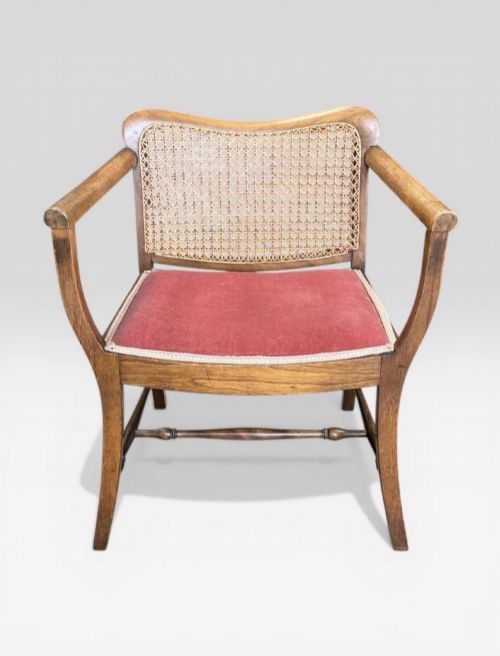
When you search for edwardian cane seat armchairs, you meet seating items originating primarily around the early twentieth century alongside adjacent periods like the nineteenth century. These items appear in forms such as library armchairs, easy chairs, rocking chairs, and elbow chairs constructed from woods like mahogany, oak, walnut, and satinwood. Many examples reflect revival styles including Sheraton, Jacobean, and Regency, incorporating woven cane panels to backs and seats.
The selection ranges from pairs of painted elbow chairs to larger library bergere armchairs fitted with loose cushions. Frames show carved details, lacquer finishes, or simpler turned supports depending on the workshop and revival influence. While many date to the Edwardian decade and surrounding years, older influences emerge through seventeenth century and Victorian styles recreated during this period.
Construction and Materials
Cabinetmakers built the foundational frames using hardwoods including mahogany, walnut, oak, and satinwood, occasionally applying paint, lacquer, or decorative details. Structural joints relied on traditional woodworking techniques to support the load of the user while maintaining slender proportions in the arms and legs.
Caning involved weaving natural plant strands through drilled holes in the wooden frame to create supportive, porous panels for backs and seats. Many pieces incorporate supplementary upholstery elements such as fabric or velvet cushions placed over the cane base for added comfort.
Edwardian Cane Seat Armchairs Retail Price Guide 2026
Typical asking prices for edwardian cane seat armchairs among the pieces listed under this phrase on Sellingantiques today, from the lower quarter to the upper quarter. They describe what is for sale here now, not the wider market.
Object forms span standard armchairs, rocking chairs, library bergere seats, and musician's chairs.
Judging Quality
Quality reveals itself in the choice of timber and the precision of the frame carving, where dense hardwoods and crisp mouldings distinguish finer workshop output. The regularity and tightness of the cane weaving also indicate the skill involved in manufacturing the piece.
Proportion and decorative cohesion play a role, as balanced revival styles and well-finished lacquered or painted surfaces demonstrate careful design choices. The integrity of the wooden joints and the condition of the woven panels dictate how successfully the seating withstands daily use.
James Shoolbred·Dryad of Leicester
The Edwardian Cane Seat Armchairs Glossary
- Bergere
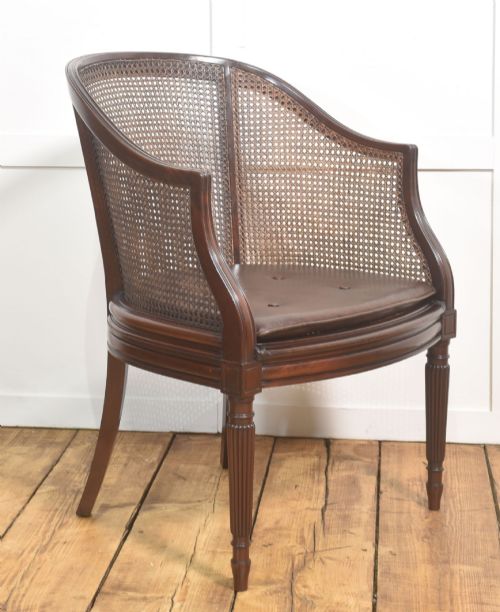
- An enclosed upholstered armchair with cane work panels to the back and sides, usually fitted with a loose seat cushion.
- Cane
- Woven material made from peeled rattan or similar plant stems, utilised to form breathable seats and chair backs.
- Sheraton Revival
- A late nineteenth and early twentieth century style drawing on the lighter neoclassical designs of the eighteenth-century designer Thomas Sheraton.
- Elbow chair
- An armchair featuring open sides, often used at a desk or as part of a matching dining suite.
- Lacquered
- Finished with a hard, protective resin or varnish coating, sometimes incorporating decorative painted details in Asian-inspired designs.
Edwardian Cane Seat Armchairs: Frequently Asked Questions
What is a bergere armchair?
A bergere armchair is a fully or partially enclosed seat featuring woven cane panels set into a wooden frame. These chairs typically include a loose upholstered cushion for the seat.
Originating in earlier French design, the form appeared frequently in Edwardian and late nineteenth-century British seating. They offer a lighter visual appearance than heavy upholstered armchairs while maintaining structural support.
How do I care for cane seats?
Cane requires moderate humidity to prevent the natural plant fibres from becoming brittle and snapping. Avoid placing these chairs near direct heat sources or dry radiators.
Occasional dusting with a soft brush keeps the weave clean. If the cane sags slightly, wiping the underside with a damp sponge can help the fibres tighten as they dry.
Are these chairs comfortable without cushions?
The woven cane provides a flexible, springy surface that distributes weight evenly across the seat and back. Many surviving examples feature custom fabric or velvet cushions for added padding.
Depending on the specific model, such as a library chair or a low bedroom chair, cushions enhance the upright seating posture intended by the maker.
How do I distinguish Edwardian chairs from Victorian ones?
Edwardian chairs generally display lighter proportions, brighter wood finishes, and an interest in neoclassical revival styles like Sheraton. Victorian pieces often lean towards heavier frames, darker timber, and more elaborate carving.
However, stylistic crossovers occur frequently because cabinetmakers continued producing traditional forms across overlapping decades. Examining the secondary woods, joinery style, and finish helps clarify the period.