






Sheraton Revival Carver Chairs
Sheraton revival carver chairs bring neoclassical elegance to a room, offering graceful lines and inlaid detail rooted in late Victorian and Edwardian design.
Sheraton Revival Carver Chairs
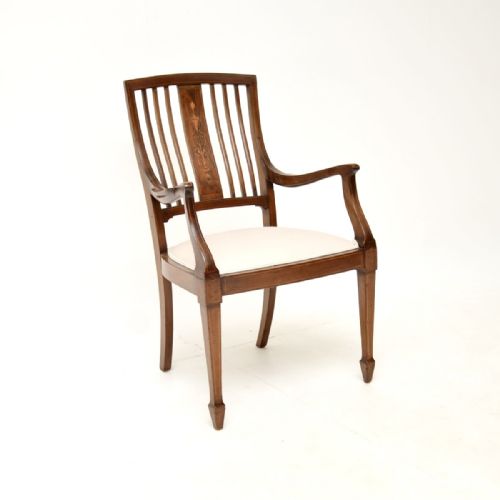
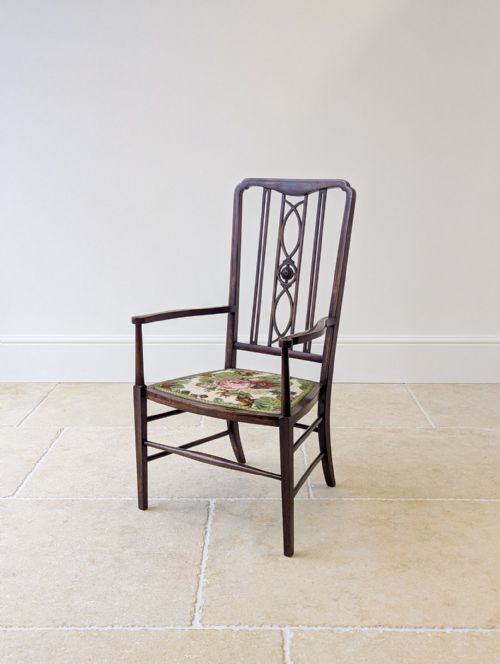
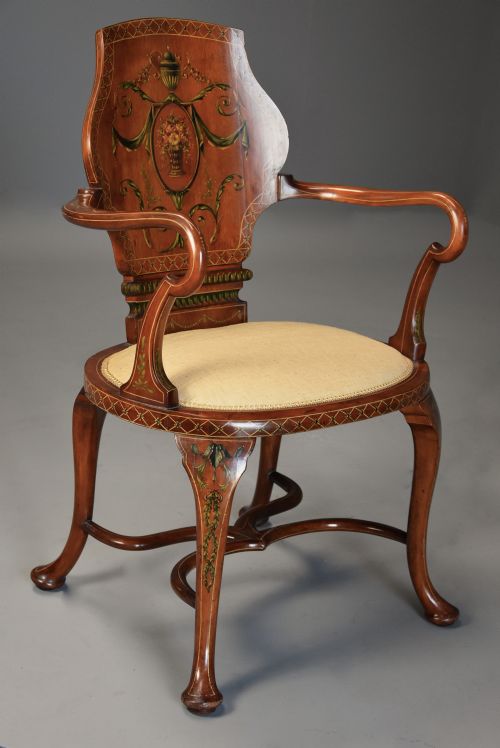
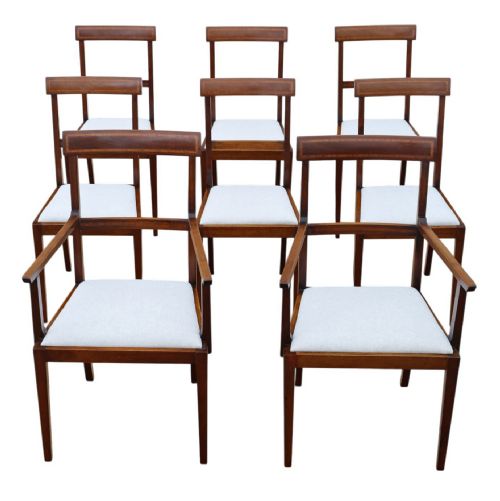
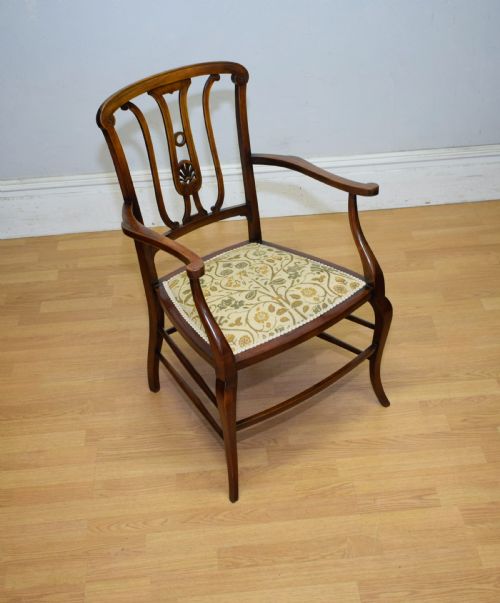
Sheraton revival carver chairs represent a deliberate nod to eighteenth-century neoclassical furniture, emerging mainly during the Edwardian period and late Victorian era. These armchairs, elbow chairs, and desk chairs combine slender proportions with decorative elements that echo earlier Georgian aesthetics.
The versions most commonly met on this page date from around eighteen-eighty to nineteen-twenty, spanning the Victorian and Edwardian decades. They appear in forms ranging from salon armchairs to library armchairs and dedicated desk chairs.
Makers of these pieces drew heavily on historical pattern books, translating classical motifs into comfortable seating for period homes. Their enduring appeal lies in this synthesis of light construction and refined ornamentation.
Materials and Construction
Mahogany and satinwood serve as the primary timbers for these chairs, often selected for their fine grain and warm tones. Cabinetmakers utilised these woods both as solid frames and as smooth surfaces for decorative details.
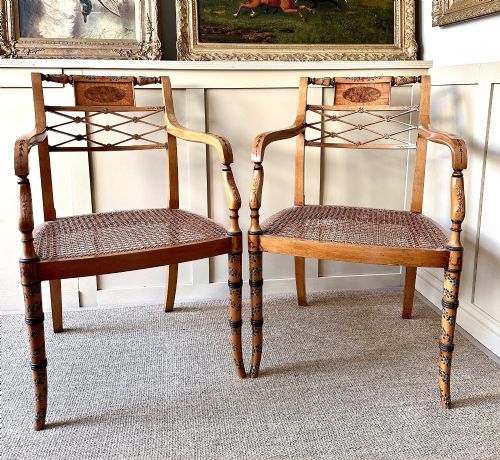
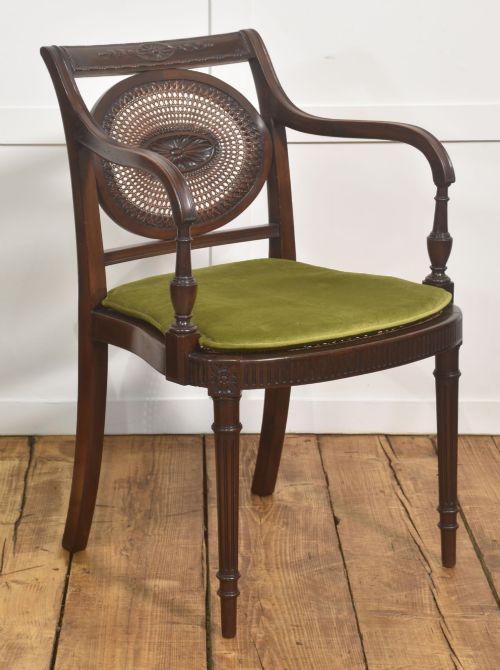
Satinwood inlay and painted decoration provide the characteristic visual contrast on the timber surfaces. Artisans incorporated cane panels into backrests and applied various fabrics and velvet for upholstery.
Joinery techniques focus on lightness and strength, supporting open arm designs and slender vertical supports without sacrificing stability.
Sheraton Revival Carver Chairs Retail Price Guide 2026
Typical asking prices for sheraton revival carver chairs among the pieces listed under this phrase on Sellingantiques today, from the lower quarter to the upper quarter. They describe what is for sale here now, not the wider market.
A surprising number of these chairs spent their early mornings tucked neatly beneath mahogany desks before being drafted into afternoon tea service.
Assessing Quality and Execution
The finesse of the painted decoration and the precision of the satinwood inlay separate standard examples from finer pieces. Hand-painted motifs require careful brushwork and nuanced shading to achieve lasting visual depth.
The selection of timber grain and the integrity of the frame construction determine the overall durability and feel of the chair. Subtle variations in the carving of arm supports and the tightness of cane weaving also indicate the level of craftsmanship involved.
The Sheraton Revival Carver Chairs Glossary
- Carver chair
- A term used for an armchair, typically designed to match a set of dining chairs but featuring arms. These pieces often served at the head of a table or as occasional seating in a parlour.
- Satinwood inlay
- The practice of inserting contrasting pieces of pale satinwood into recesses within a darker primary timber. This technique creates delicate geometric or floral patterns across the surface.
- Cane panel
- A woven lattice of rattan material used to form light, breathable backs or seats in seating furniture. It adds textural contrast to polished wooden frames.
- Elbow chair
- An alternative designation for an armchair with shorter or lower arms designed to fit beneath a table or desk. They provide compact support without dominating a room layout.
Sheraton Revival Carver Chairs: Frequently Asked Questions
How do I date these chairs?
Dating relies on examining timber characteristics, construction methods, and stylistic cues present in the woodwork. Pieces from the Edwardian era often display brighter inlay work and lighter frames compared to earlier Victorian iterations.
Matching the specific motifs with period design trends helps narrow down the decade of manufacture.
Are these chairs comfortable for daily use?
Most examples provide upright support suited to sitting at a desk, dressing table, or dining setting. Their open arm designs and upholstered pads prioritize posture and refined elegance over deep lounging.
Placing them in low-traffic areas or pairing them with appropriate seat cushions ensures they remain functional for everyday living.
How should I care for inlaid wood?
Protecting inlaid timber involves keeping the furniture away from direct sunlight and sudden temperature shifts. Regular dusting with a soft, dry cloth preserves the finish without harming delicate painted details or veneer.
Applying specialised wax occasionally helps maintain the moisture balance of the mahogany and satinwood.