

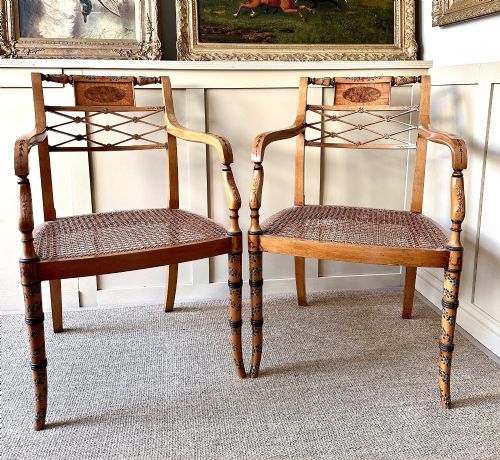
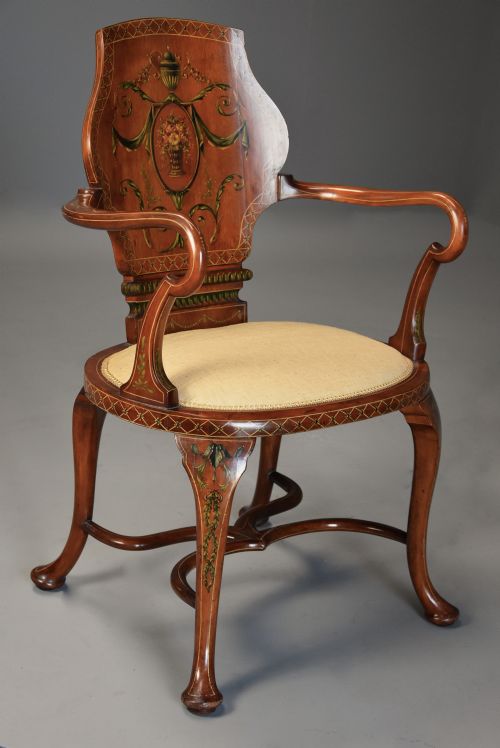
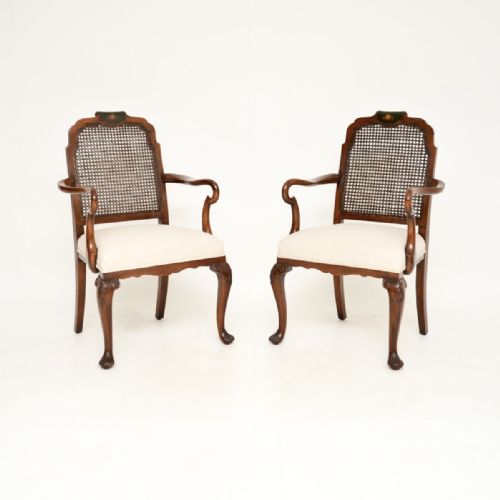
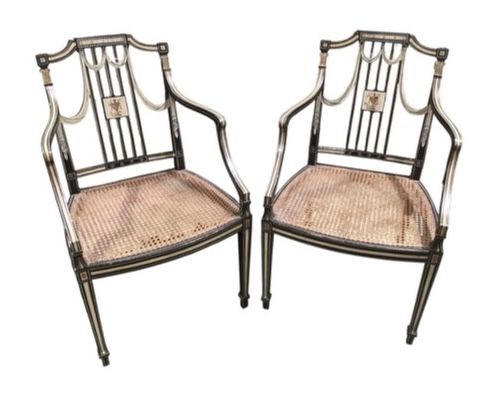


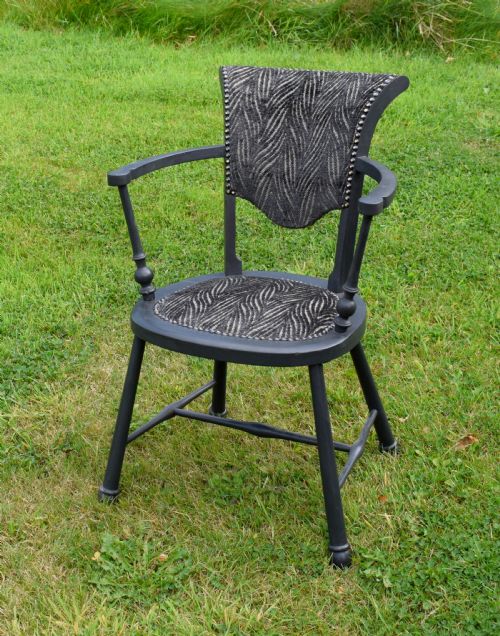


Edwardian Painted Carver Chairs
Edwardian painted carver chairs offer elegant seating combining delicate painted decoration with period craftsmanship, bringing refined charm to any interior.
Edwardian Painted Carver Chairs
When you search for edwardian painted carver chairs, you encounter seating designed with arms, often created during the Edwardian period or associated revival eras. These pieces typically manifest as elbow chairs, armchairs, or desk chairs incorporating decorative painted surfaces.
You are most likely to meet examples featuring satinwood, walnut, or mahogany, drawing on Sheraton, Regency, French Louis XVI, and Queen Anne revivals. The forms range from pairs of elbow chairs to individual armchairs with painted splat backs.
The selection includes pieces spanning from the late Victorian era through the early twentieth century. Makers of the time drew heavily on Georgian and classical motifs, applying fine paintwork to woodwork and pairing the frames with cane or fabric upholstery.
How they were made
Carpenters and cabinetmakers utilised timbers such as walnut, mahogany, and satinwood to construct sturdy chair frames. Selected pieces incorporated cane work for seats or back panels alongside traditional joinery techniques.
Artisans applied paint directly to the wooden surfaces, often hand-painting delicate decorative motifs onto splats and rails. Upholstery materials including fabric completed the seating, fastened to frames designed for both drawing rooms and desks.
Edwardian Painted Carver Chairs Retail Price Guide 2026
Typical asking prices for edwardian painted carver chairs among the pieces listed under this phrase on Sellingantiques today, from the lower quarter to the upper quarter. They describe what is for sale here now, not the wider market.
The listings on this site encompass periods spanning from late Victorian through the early twentieth century, utilising paint, fabric, cane, walnut, and satinwood.
What varies in quality
The refinement of the painted decoration separates standard examples from exceptional pieces. Finely executed hand-painted motifs on satinwood or walnut display superior artistic control compared to simpler surface treatments.
The choice of primary timber and the integrity of the frame construction define the overall standard. Pieces combining desirable woods like satinwood or mahogany with intact cane work and original upholstered elements represent the higher tier of production.
The Edwardian Painted Carver Chairs Glossary
- Carver chair
- A term for an armchair, typically placed at the head of a dining table or utilised as a desk chair. These pieces feature integrated armrests for added comfort.
- Satinwood
- A lustrous hardwood native to Ceylon and India, prized for its golden yellow sheen and smooth grain. Cabinetmakers utilised it extensively for high-status painted furniture.
- Splat back
- The vertical central strip of wood running from the seat up to the top rail of a chair. In these pieces, the splat frequently serves as the canvas for painted decoration.
- Cane
- Woven rattan material used to form light, flexible panels for chair seats and backs. This technique adds texture and breathability to the wooden frame.
Edwardian Painted Carver Chairs: Frequently Asked Questions
Where were these chairs used?
These armchairs served primarily in formal sitting rooms, libraries, and studies as occasional seating or desk chairs. Their decorative qualities suited spaces designed for entertaining and receiving guests.
Dining rooms also accommodated carver chairs at the head and foot of the table, pairing with smaller side chairs from matching suites.
How do I care for painted wood?
Keep painted furniture away from direct sunlight and excessive heat sources to prevent the wood from drying out and the paint from fading. Dust the surfaces gently with a soft, dry cloth.
Avoid applying harsh chemical polishes or modern cleaning sprays directly onto the painted decoration, as these substances can damage the historic finish.
What defines the Edwardian style?
Edwardian design leans heavily on eighteenth-century revivals, particularly Sheraton, Hepplewhite, and Regency aesthetics. Lighter proportions and elegant painted finishes replaced the heavier, darker tones typical of earlier Victorian output.
Makers favoured satinwood, mahogany, and walnut, incorporating graceful curves and classical motifs into domestic furniture.
Can I use them daily?
These antique chairs function well for everyday use provided they receive gentle treatment appropriate for their age. Checking the stability of the joints and frame ensures safe regular seating.
For pieces with delicate cane work or fragile painted surfaces, restricting use to lighter tasks helps preserve their condition over time.