
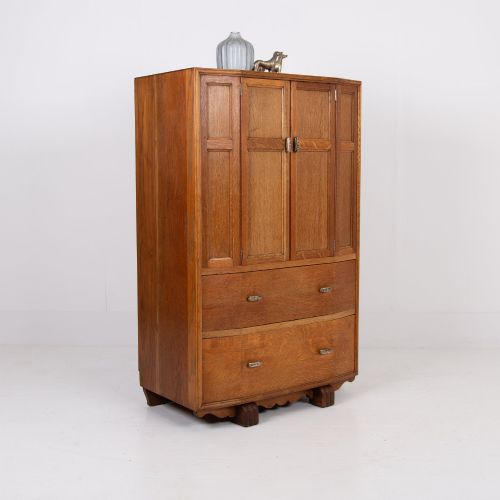
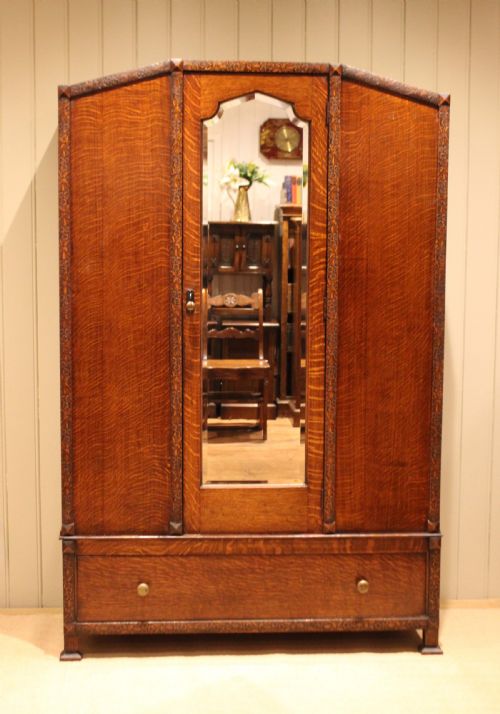


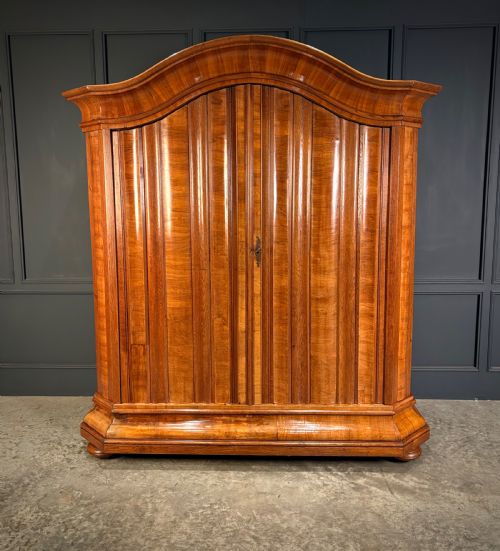

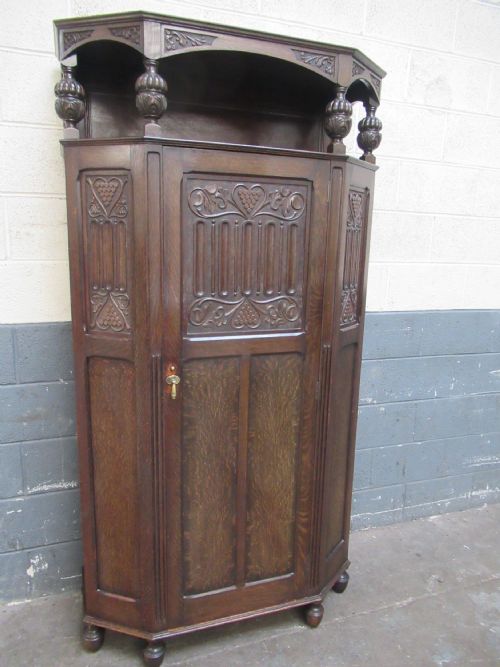

Antique Oak Wardrobe Cabinet
When you search for an antique oak wardrobe cabinet, you are looking at substantial storage furniture built from timber that only gains depth over centuries.
Antique Oak Wardrobe Cabinet
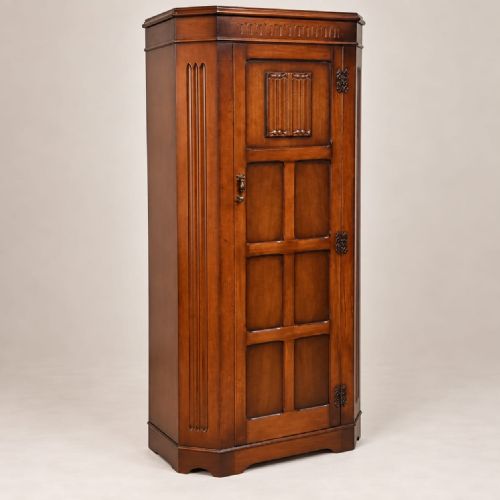
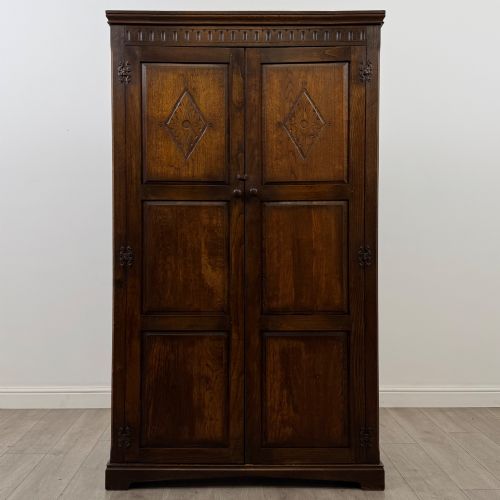
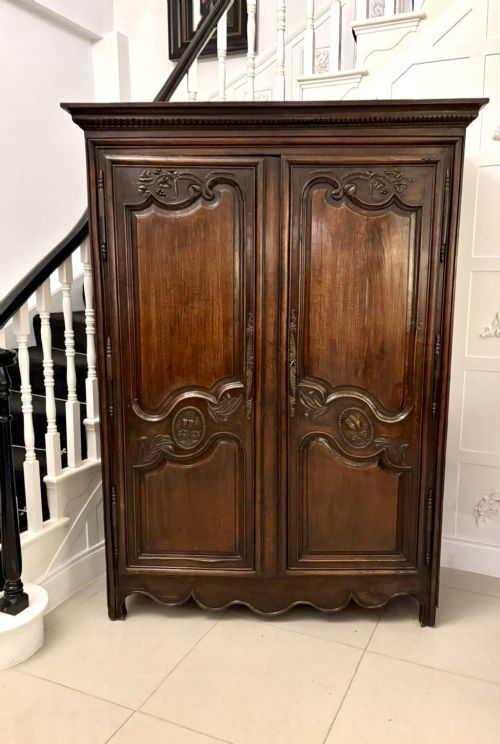
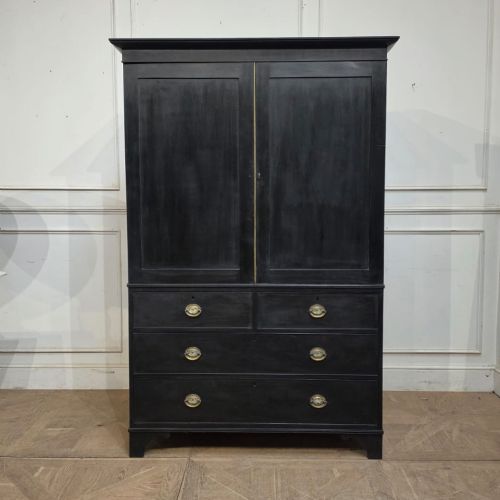
An antique oak wardrobe cabinet spans forms from tall French armoires and Dutch linen presses to English hall wardrobes and Georgian housekeeper cupboards. These pieces serve to store garments, linens, and domestic goods within substantial timber frames that anchor a room.
The versions met most frequently on this page belong to the eighteenth and nineteenth centuries, alongside early twentieth-century interpretations. They appear as corner cabinets, tallboys, and fitted press cupboards reflecting regional British and continental workshops.
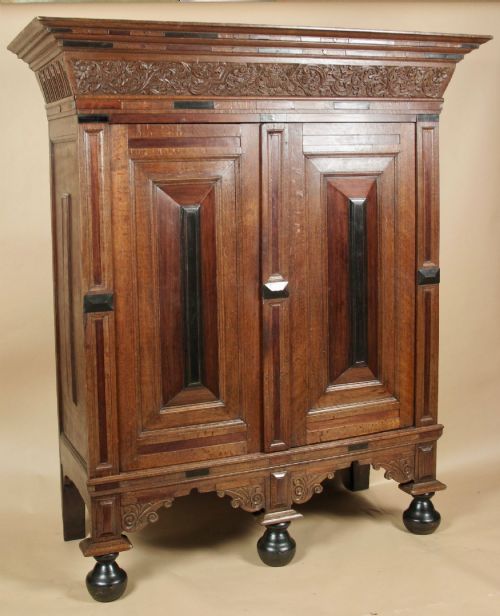
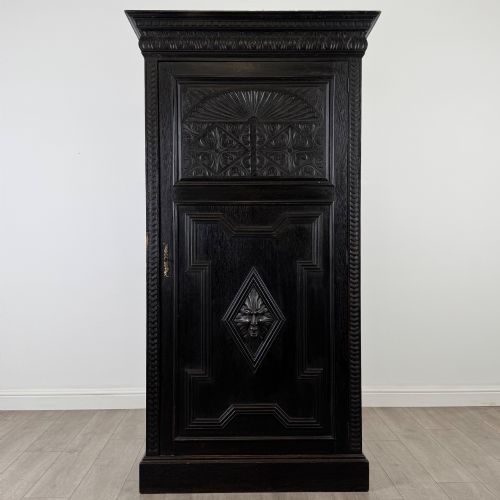
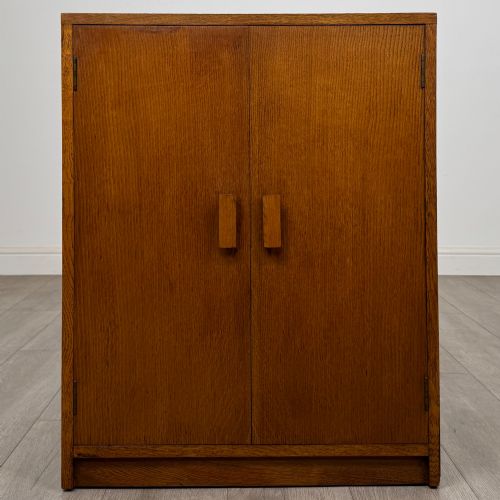
Regional variations dictate the silhouette, moving from the panelled austerity of seventeenth-century Dutch pieces to the carved flourishes of French provincial armoires and the rectilinear utility of Edwardian designs.
How they were made
Makers built these pieces primarily from solid oak, supplemented by secondary timbers such as walnut, pine, and exotic accents like ebony and rosewood on continental examples. Joinery relied on heavy framing, mortise and tenon joints, and pegged panels that allowed the dense timber to move naturally with seasonal humidity.
Surface decoration involved hand carving, linenfold panelling, and cross-banding, finished with patinated wax or oil rather than modern sealants. Iron and brass hardware - including strap hinges, drop handles, and working locks - formed an integral part of the structural assembly rather than mere decoration.
Original harness cupboards preserve the faint aroma of leather and horse grooming from centuries past.
What varies in quality
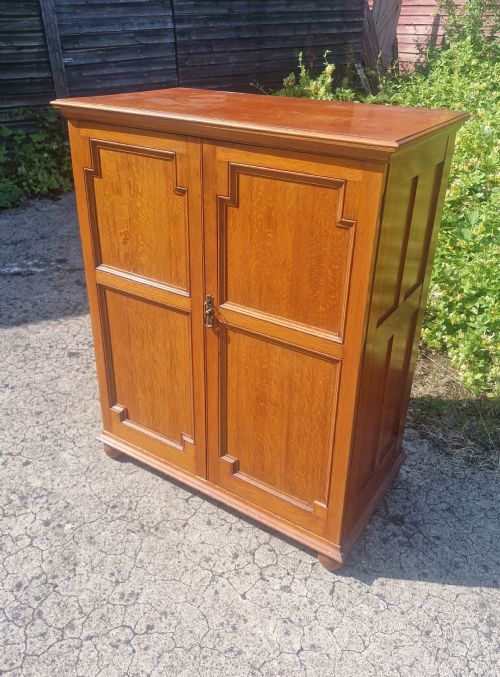
The calibre of an antique oak wardrobe cabinet rests on the selection of the timber and the integrity of the original construction. Quarter-sawn oak displaying prominent medullary rays demonstrates superior initial material choice compared to plain-sawn boards.
Proportion and restraint in the carving separate master craftsmanship from provincial mass-production. Pieces that retain their original brassware, working locks, and interior shelving without modern alterations command greater respect from collectors.
Whytock and Reid·Waring and Gillow
The Antique Oak Wardrobe Cabinet Glossary
- Linen Press
- A two-stage cupboard designed originally for storing folded sheets and textiles, typically featuring sliding trays behind upper doors and drawers below. This form evolved from seventeenth-century storage chests into grand Georgian and Victorian architectural pieces.
- Armoire
- A large upright cupboard or wardrobe of continental European origin, often characterised by deep proportions and heavy panelled doors. French and Dutch examples frequently display regional carving styles and distinct cornice mouldings.
- Livery Cupboard
- An early form of ventilated cabinet used for storing provisions or garments, associated with domestic service in large households. These pieces often feature turned spindles or pierced panels to allow air circulation.
- Kussenkast
- A Dutch cabinet style defined by prominent cushion-moulded panels on the doors, frequently accented with contrasting timbers like ebony or rosewood. They represent high-status seventeenth-century carpentry from the Netherlands.
- Quarter-sawn
- A method of cutting logs radially through the growth rings to produce boards with enhanced stability and decorative figuring. This technique exposes the distinctive grain pattern known as silver grain or medullary rays in oak.
Antique Oak Wardrobe Cabinet: Frequently Asked Questions
How do I fit a tall wardrobe in a modern room?
Many antique oak wardrobe cabinets were constructed in modular sections or feature removable cornices to assist with transport and ceiling clearance. Assessing the internal depth ensures standard modern coat hangers clear the back panels.
Positioning the piece away from direct heat sources prevents the dense oak timbers from drying out and splitting over time. Freestanding levelling helps heavy doors hang true on their original iron hinges.
Are these cabinets suitable for modern clothes storage?
Interiors vary from open hanging spaces to banks of linen slides and shallow drawers intended for folded garments. Adapting a piece often involves inserting a discreet brass hanging rail without damaging historical woodwork.
Deep cupboards originally designed for linen presses accommodate modern storage boxes and bulkier items with ease. Keeping the timber nourished with traditional beeswax maintains a healthy internal environment for fabrics.
How do I distinguish 18th-century oak from later revival pieces?
Eighteenth-century examples display hand-cut joinery, pegged joints, and irregular adze marks on internal surfaces where tools shaped the raw timber. The patination develops a deep, translucent amber tone that modern chemical staining cannot replicate.
Revival pieces from the Edwardian era often utilise machine-sawn backing boards and uniform nineteenth-century hardware. Examining the timber shrinkage around drawer runners confirms the age and movement of the structure.
What maintenance does antique oak require?
Routine care involves dusting with a soft dry cloth and applying a quality beeswax balm sparingly once or twice a year. Avoiding synthetic silicones preserves the breathable historical finish of the timber.
Maintaining stable room humidity prevents the timber from expanding or contracting too rapidly. Checking hinges and door alignment periodically ensures the weight of heavy oak doors does not strain the frame.