


Antique Oak Double Cupboard
An antique oak double cupboard gives you solid timber storage with centuries of utility behind its doors.
Antique Oak Double Cupboard
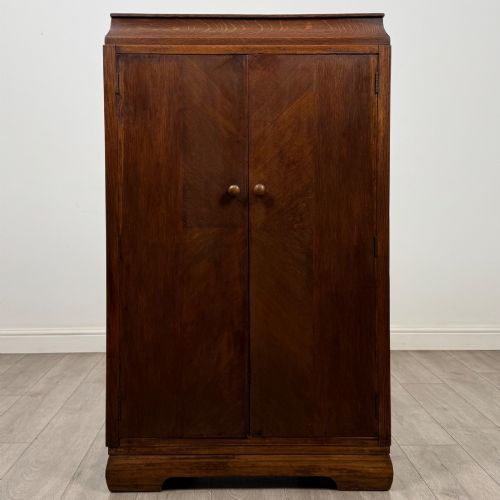
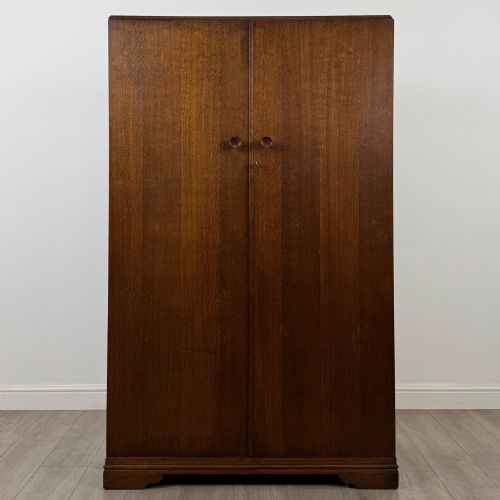
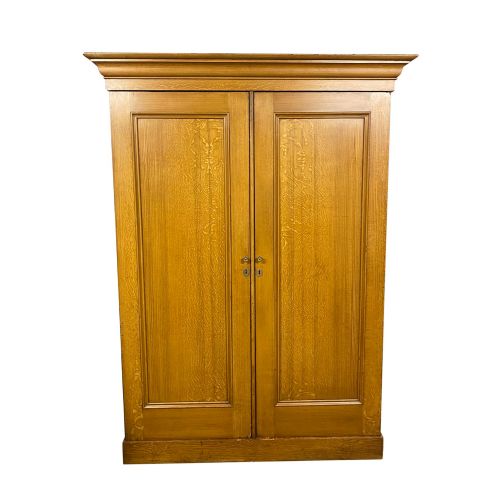
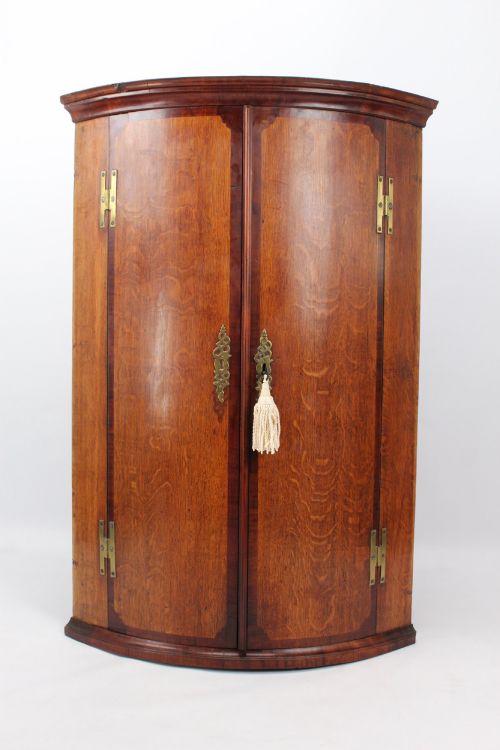
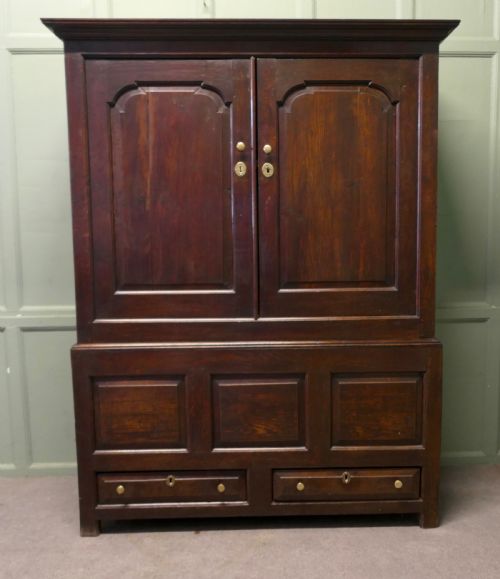
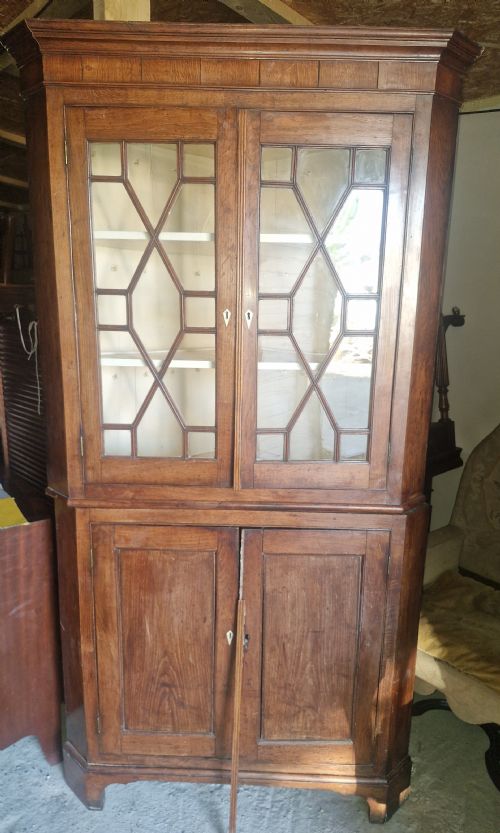
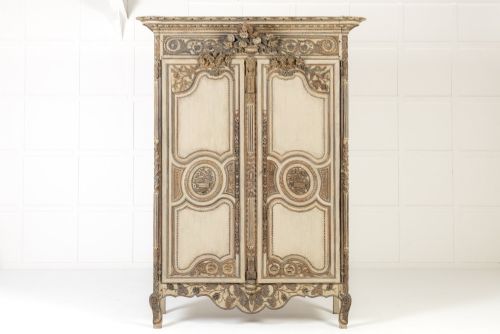
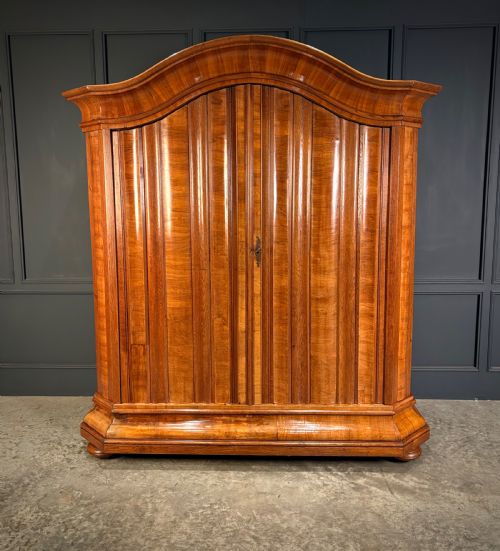
When you search for an antique oak double cupboard, you encounter substantial timber storage units spanning from the seventeenth century through to the 1930s. The selection ranges from towering Georgian housekeepers' cupboards and Welsh two-stage presses down to compact corner units and French armoires.
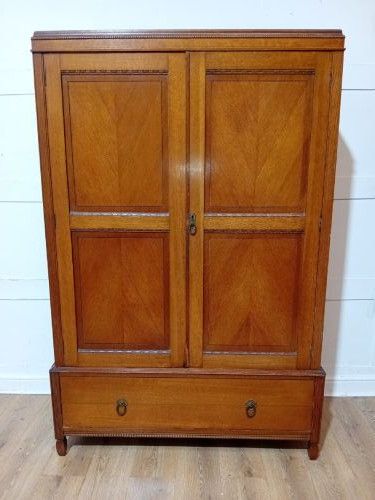
You are most likely to meet pieces from the eighteenth and nineteenth centuries, alongside Edwardian and 1920s wardrobe adaptations. These forms include floor-standing corner cabinets, linen presses, and double wardrobes built with two primary doors.
Regional variations appear frequently, from English country workshops to French provincial makers and Dutch houses. Each form serves a domestic storage need, utilising the density and grain of oak to house clothes, linen, or household provisions.
How they were made
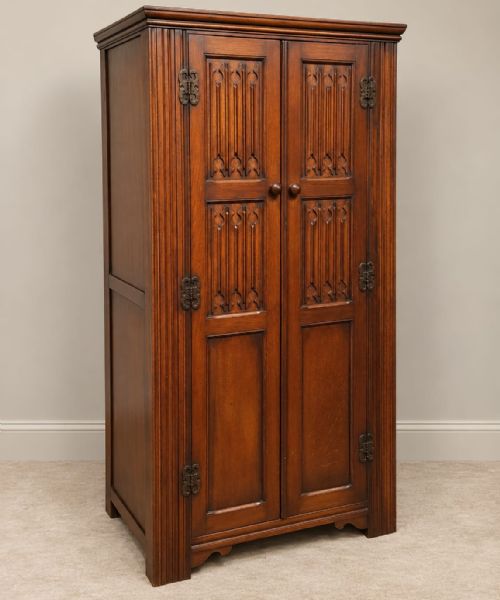
Joiners and cabinet makers constructed these cupboards primarily from solid oak, sometimes pairing the timber with walnut, pine, or scumble paint finishes. Iron and brass hardware, including hinges, key escutcheons, and handles, secured the heavy double doors.
Construction techniques rely on traditional joinery, with panelled doors set into sturdy frames to accommodate the natural movement of timber over time. Carving, cross-banding, and limed finishes appear on pieces influenced by Gothic Revival, Baroque, and Renaissance styles.
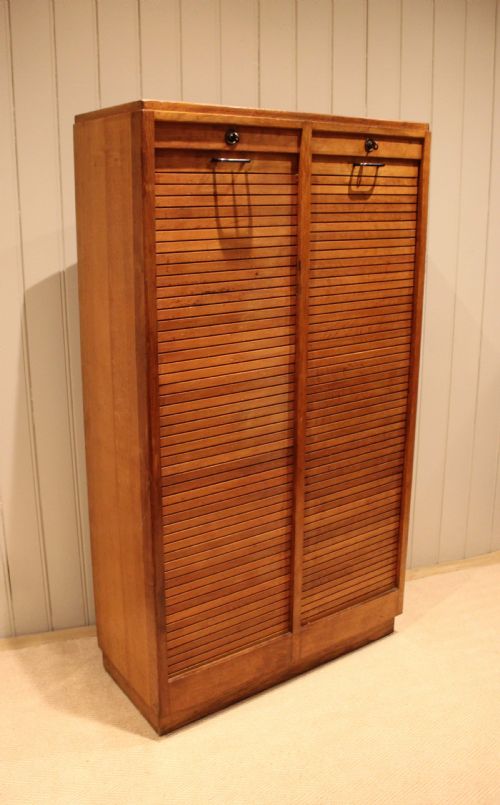
Some office filing cabinets disguise themselves behind French oak tambour doors, proving that paperwork has long sought a rustic disguise.
What varies in quality
The architectural ambition of the cornice, the depth of the hand-carving on the panels, and the choice of secondary timbers separate standard utility cupboards from high-status pieces. Finer examples display symmetrical grain selection, cross-banded veneers, and untouched period brassware.
Proportion and scale dictate the visual weight of the cupboard, where well-balanced proportions in two-stage and corner formats elevate the piece above plain storage boxes. The integrity of the original hinges and locks similarly distinguishes untouched examples from heavily restored ones.
Harris Lebus·Maple and Co
The Antique Oak Double Cupboard Glossary
- Compactum
- A large wardrobe or cabinet designed with internal divisions for hanging space, shelves, and drawers. These pieces maximise interior storage within a single footprint.
- Housekeeper's cupboard
- A large storage piece, often built in two stages, used traditionally for storing household linen and provisions. They combine upper cupboards with lower drawers or doors.
- Linen press
- A tall cupboard featuring sliding trays or shelves in the upper section for folded textiles, mounted above a base of drawers. Georgian and Victorian examples are frequently found in oak.
- Scumble paint
- A decorative surface treatment applied to mimic the grain and appearance of more expensive timbers like oak. 19th-century pieces sometimes utilise this technique over pine.
- Tambour
- A flexible shutter door constructed from narrow vertical strips of wood glued to a canvas backing. This mechanism allows the door to slide smoothly around a curved cabinet corner.
- Two-stage
- A piece of furniture built in two distinct vertical sections, typically a smaller upper cabinet resting on a larger base. This modular construction aided transportation in older homes.
Antique Oak Double Cupboard: Frequently Asked Questions
How do I date an oak cupboard?
Examine the construction methods, tool marks on the interior boards, and the style of the mouldings and hardware. Eighteenth-century pieces often feature hand-planed surfaces and pegged mortise and tenon joints.
Later Victorian and 1920s examples show machine-sawn timber and different fastening techniques. Comparing the hinges and handles to known period styles helps narrow down the decade.
What is a two-stage corner cupboard?
A two-stage corner cupboard consists of an upper display or storage cabinet that sits securely on top of a matching lower base unit. These pieces fit directly into room corners to utilise floor space efficiently.
They appear frequently in Georgian and Regency inventories, offering both closed storage and shelving. The division into two parts made transport through domestic stairways manageable.
Are oak cupboards suitable for modern clothes storage?
Many larger oak cupboards, such as compactums and armoires, adapt easily into modern wardrobes with the addition of hanging rails. Their deep interiors and sturdy shelving accommodate folded garments and bulky items.
Measuring the internal depth is essential, as older wardrobes can be shallower than modern clothing hangers require. Freestanding placement allows them to serve bedrooms without fitted wardrobe installations.
How should I care for antique oak timber?
Maintain a stable room temperature away from direct heat sources and radiators to prevent the oak from drying out and splitting. Apply a quality beeswax polish occasionally to nourish the grain and protect the surface.
Avoid excessive moisture and wipe spills immediately with a dry cloth. Regular gentle dusting preserves the patina built up over centuries of use.